Commercial general contracting in Grand Prairie, TX works best when one crew owns site prep, concrete, structural shell, and exterior-envelope work instead of an owner chasing five separate subcontractors. Grand Prairie's mix of industrial corridors, retail strips, and growing multifamily development means permitting, material lead times, and sequencing all look a little different depending on what you're building. This guide breaks down what a commercial general contractor actually handles here, what the city requires before you break ground, and how to vet a contractor before you sign anything.
What Commercial General Contracting Covers in Grand Prairie, TX
A commercial general contractor coordinates the pieces an owner shouldn't have to manage directly: site grading, concrete, structural shell, fencing and security, and final exterior finishes.
Delivery method changes how that coordination happens.
- Design-bid-build (fixed price): Design is finished first, then contractors bid on a completed set of drawings. Best when scope is locked and changes are unlikely.
- Construction Manager at Risk (CMAR): The contractor joins during design to shape cost and constructability before drawings are final.
- Design-build: One contract covers both design and construction. According to the Federal Highway Administration, design-build is a delivery method where a single entity performs both the design and construction work under one contract, which shifts coordination risk onto the contractor instead of the owner.
Grand Prairie layers its own permitting process on top of whichever method you choose. The city's Building Inspections Division requires an approved permit for all new commercial structures regardless of size, and every trade working on the project must be licensed and registered with the city before work starts.
For scope that touches structure, mechanical, electrical, or plumbing, plan on submitting architectural, structural, and site plans before review even begins. Buildings larger than 5,000 square feet need an engineer's seal on structural, electrical, plumbing, and mechanical plans, and metal buildings need an engineer's seal on structural plans regardless of size.
Commercial Construction Services We Provide in Grand Prairie
We focus on the scopes that make up the bulk of commercial general contracting work in this market: site and structural shell, concrete, fencing and security, and exterior-living upgrades for business properties. We don't claim to build hospitals or high-rise towers, and we'd rather tell you that up front than oversell a capability we don't have.
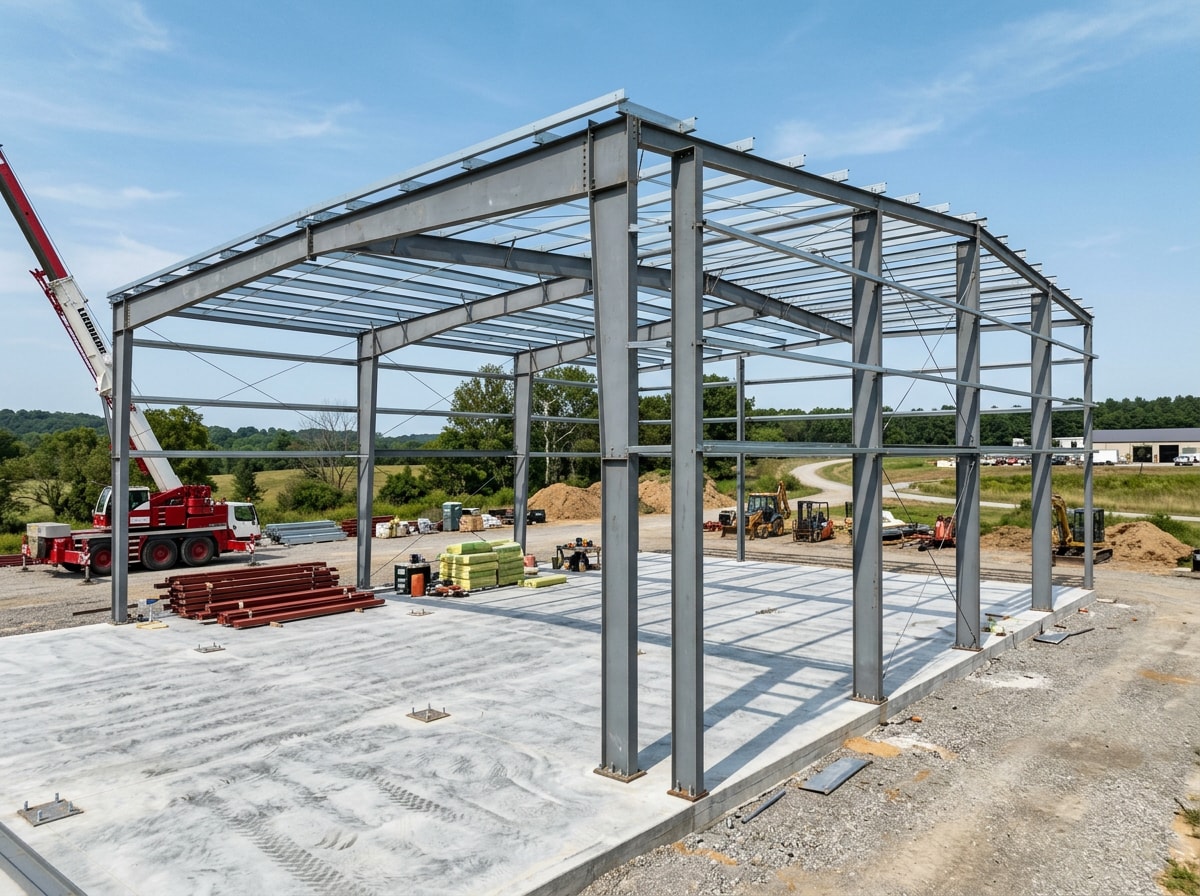
Metal, Pole, and Steel Building Construction
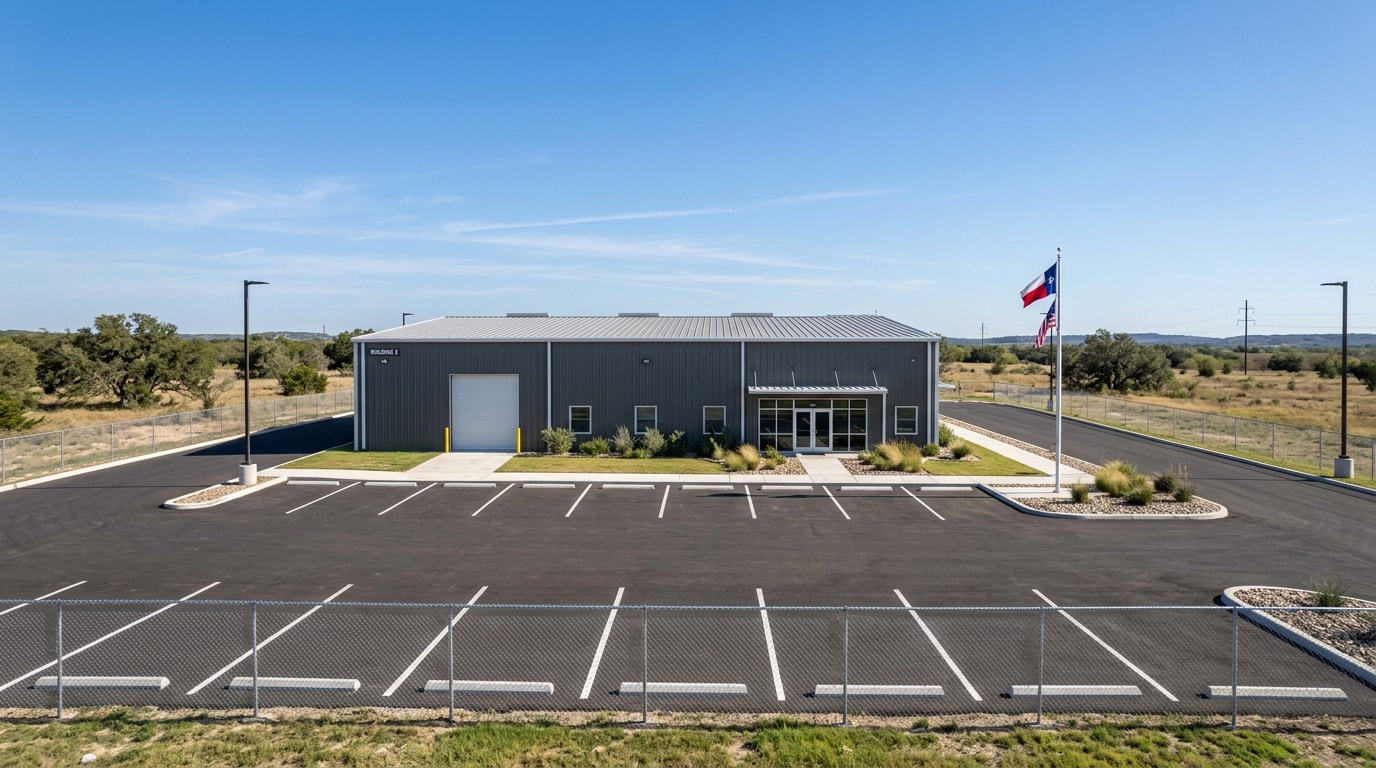
Warehouses, storage facilities, and light-industrial shells in Grand Prairie are often tilt-wall or pre-engineered metal buildings. We handle metal building construction, pole building construction, and steel building construction for owners who need a durable shell without a custom architectural build.
Concrete and Site Work
Every commercial project starts below grade. Our concrete contractor team handles site preparation and grading, concrete foundation pouring, concrete parking lot building, and concrete driveway installation. Grand Prairie requires a separate paving permit for commercial driveway and sidewalk work, so this scope gets inspected on its own schedule.
Commercial Fencing and Security
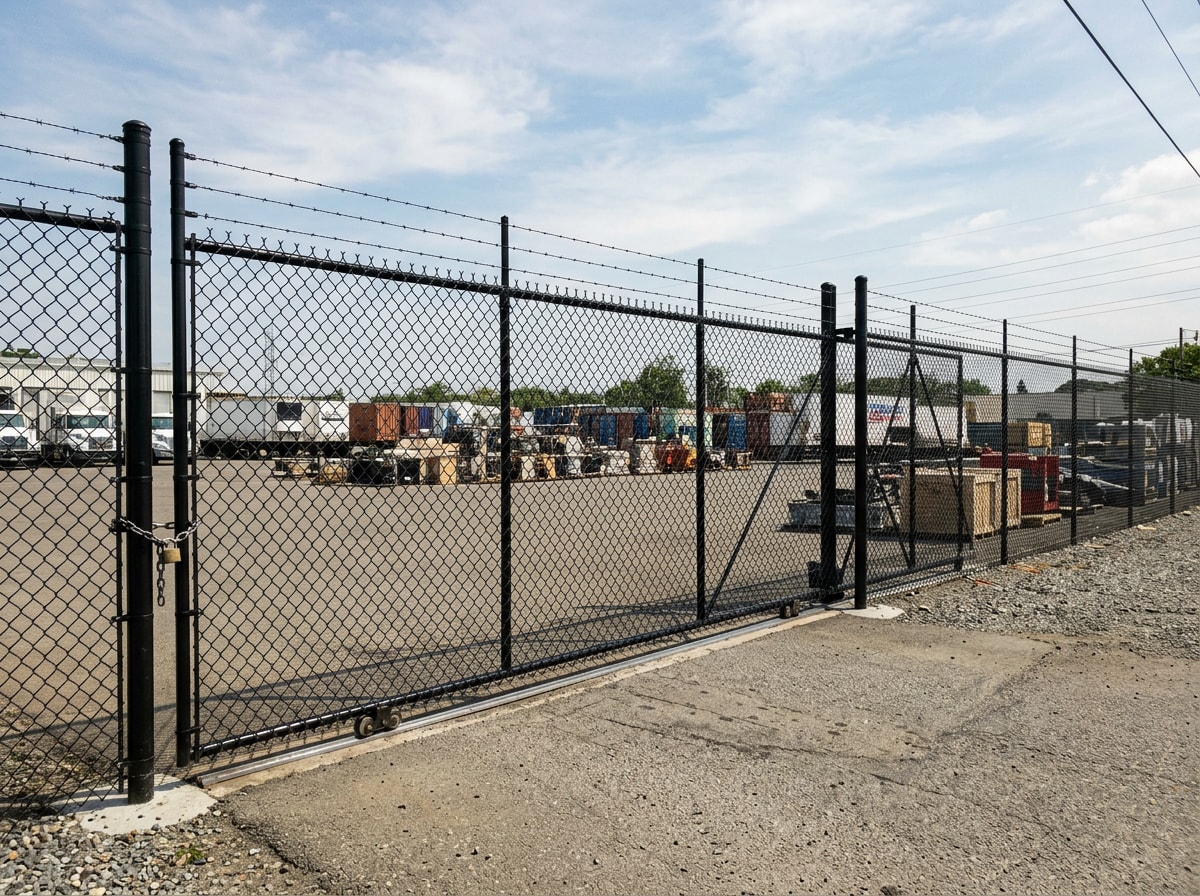
Perimeter security, storage yard enclosures, and site screening are permit items in Grand Prairie just like any other structure. All commercial fences require an approved city permit and must be installed to code. Our fence contractor division handles commercial fence repair, residential and commercial fences, wrought iron fencing, and chain link fencing.
Retaining Walls and Erosion Control
Grading and drainage problems show up fast on commercial lots with heavy parking or loading areas. We build retaining wall installation, concrete retaining walls, and erosion control construction to keep site drainage working the way it was designed.
Commercial Decks, Patio Covers, and Outdoor Spaces
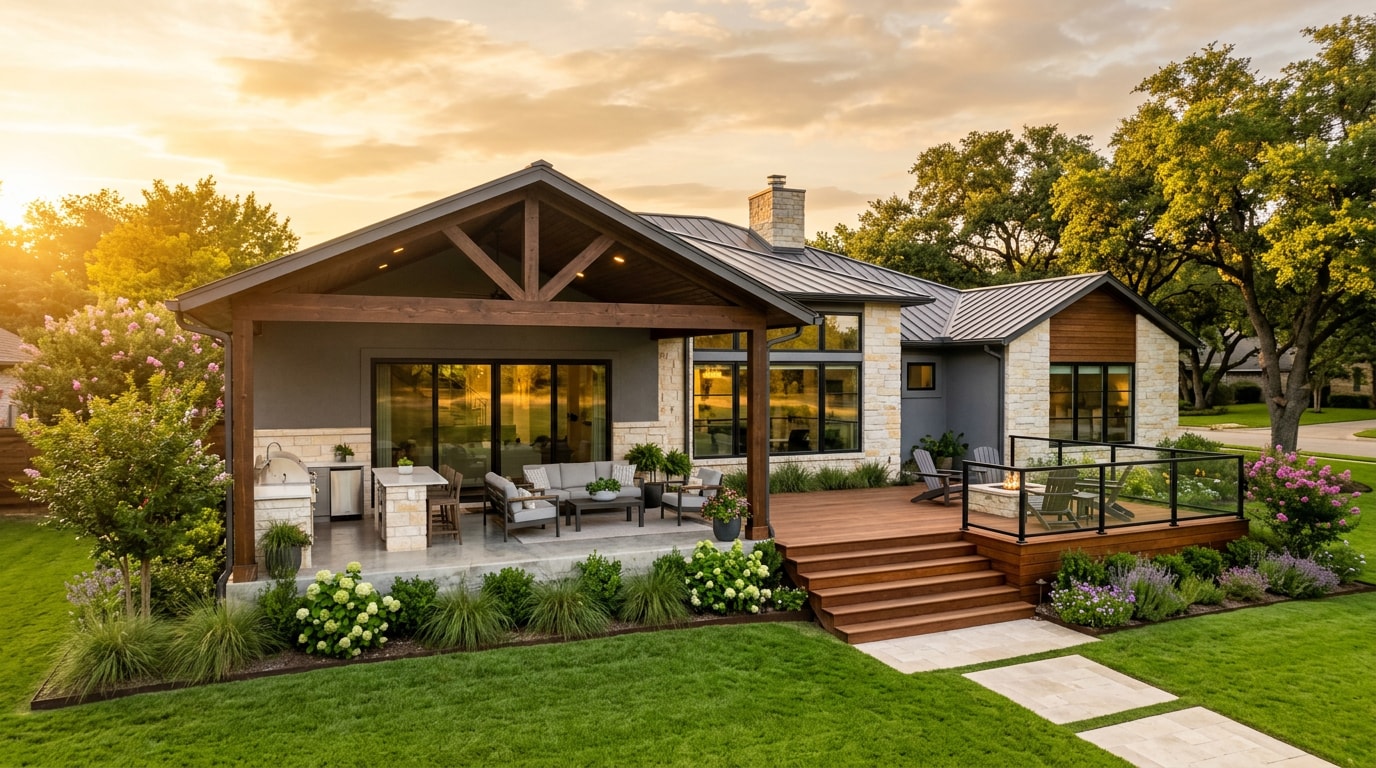
Restaurants, offices, and multifamily properties increasingly add outdoor seating and common areas. We handle commercial deck building, commercial deck services, patio covers, and pergola and gazebo construction for properties that want usable outdoor space without a full architectural redesign.
Additions, Remodels, and General Building Work
Existing commercial buildings need interior finish-out, additions, and general repairs more often than ground-up builds. Our general contractor team covers commercial projects, general building construction, and detached garage building for accessory structures.
Our projects page shows completed work across these scopes if you want to see finished results before you call.
Permitting and Timeline in Grand Prairie
Texas does not license general contractors at the state level, so commercial contracting here runs on city registration, insurance, and bonding rather than a statewide credential. Specialty trades are the exception: electrical, plumbing, and HVAC work still requires state licensing through the Texas Department of Licensing and Regulation, regardless of who the general contractor is.
Grand Prairie's own permit categories break commercial work into separate tracks: new construction, interior finish-out, electrical, mechanical, plumbing, paving, irrigation, demolition, and fencing each get their own permit and inspection path. Permitting requirements vary considerably depending on the scope of the project, so a tenant finish-out moves through review much faster than a ground-up shell with new utilities.
Plan for these general timeframes:
| Project Type | Typical Review Complexity |
|---|---|
| Interior finish-out / tenant improvement | Lower; existing structure and utilities already approved |
| New commercial shell (metal/pole building) | Higher; structural, site, and utility plans reviewed together |
| Paving, driveway, or parking lot work | Separate permit track, reviewed independently |
| Commercial fence or site screening | Separate permit, must meet code and ordinance requirements |
| Additions to an existing structure | Depends on whether load-bearing or utility changes are involved |
Because Grand Prairie borders Arlington, Irving, Dallas, Fort Worth, and Mansfield, a project near a city line sometimes needs confirmation of which jurisdiction actually governs the permit. That's a detail worth confirming before you budget a timeline.
DFW Service Area Coverage
We build throughout the south and west DFW corridor, not just inside Grand Prairie city limits. That matters for owners with multiple properties or sites that straddle city boundaries.
If you're planning a ground-up build elsewhere in the metro, our new home contractors guide for Cedar Hill walks through the same site-to-finish sequencing we use on commercial shells.
Why Local Growth Matters for Commercial Builds
Grand Prairie's population has climbed past 200,000 residents according to U.S. Census Bureau estimates, and that growth shows up directly in commercial permitting volume. More rooftops mean more demand for warehouse and distribution space, retail strips, and multifamily amenities, which is exactly the project mix driving commercial activity across the corridor right now. A contractor who already works this market knows which inspectors review which scope and how long each permit track actually takes, which matters more than it sounds like when a schedule is tight.
Safety and Code Compliance
Site work, concrete, and structural shell scopes carry real safety exposure during construction, from excavation to material handling to fall protection on structural work. Compliance on every one of our site and structural scopes follows OSHA's 29 CFR 1926 construction industry standards, which cover everything from scaffolding to excavation protection. That's a baseline, not an extra, on any job where a crew is on a ladder, in a trench, or working around heavy equipment.
Ready to scope a project? Get a free estimate and we'll walk through which permit track applies before we quote anything.
FAQ
Does Texas require a license for commercial general contractors?
No. Texas does not issue a statewide general contractor license, so most commercial contractors operate under local city registration instead. Specialty trades, including electrical, plumbing, and HVAC, do carry separate state licensing requirements through the Texas Department of Licensing and Regulation, so confirm those credentials for any subcontracted trade work.
What permits does a commercial project need in Grand Prairie?
It depends on scope. Grand Prairie's Building Inspections Division issues separate permits for new construction, interior finish-out, electrical, mechanical, plumbing, paving, irrigation, demolition, and fencing, and each one gets inspected on its own track. A single project often needs several of these permits running at once.
How long does commercial permitting take in Grand Prairie?
There's no single number. Permitting requirements vary considerably depending on the scope of the project, and a tenant finish-out with no structural changes moves faster than a new shell with new utilities, grading, and a full structural plan review.
What's the difference between design-build and CMAR?
Design-build puts design and construction under one contract and one point of responsibility, which can speed up delivery. CMAR brings the contractor in during design to price and sequence the project before drawings are final, but design and construction stay on separate contracts. Fixed-price design-bid-build keeps both phases fully separate and works best when scope won't change.
What should I ask before hiring a commercial general contractor in Grand Prairie?
Ask what project types they actually self-perform versus subcontract, who manages day-to-day site coordination, and how they handle change orders. Ask for proof of insurance and city registration, and ask to see finished local work rather than renderings. Those answers tell you more than a sales pitch ever will.
Do you handle additions and remodels, or only ground-up builds?
Both. Interior finish-out, additions, and general repairs on existing commercial buildings make up a large share of this work, not just new shells. Reach out with your project scope and we'll tell you directly whether it's a fit.
This guide was prepared by the general contracting team at P&S Fencing, who coordinate site work, concrete, structural shell, and exterior-envelope scopes for commercial clients across the DFW Metroplex. Have a project to discuss? Contact us directly.