A new construction plumber Alvarado, TX homeowners hire for a ground-up build isn't patching an old pipe or chasing a leak. They're installing an entire water and waste system from blueprints, before a single wall closes. Get this trade wrong on a slab-foundation home and you're not calling for a repair later, you're cutting into finished concrete.
That's the real reason this phase of a build deserves more scrutiny than almost any other trade decision you'll make.
What a New Construction Plumber Actually Does
A new construction plumber designs and installs the entire water supply and drain-waste-vent (DWV) network from architectural plans. They work alongside the framer, electrician, and foundation crew rather than showing up after the home is finished.
The scope typically covers:
- The water service line from the street
- Interior supply piping and DWV piping
- Vent stacks and sewer connections
- Rough-ins for every bathroom, kitchen, and laundry area
- Water heater piping, exterior hose bibs, and final fixture connections
None of this happens outside of code. Every pipe run, vent, and connection has to satisfy the plumbing code adopted in the jurisdiction before an inspector signs off. Texas is among the jurisdictions adopting the International Plumbing Code , and the IPC provides minimum regulations for plumbing facilities while allowing for new and innovative products, materials, and systems . You can review the current code text directly through ICC's Digital Codes library if you want to see the standard your contractor is building to.
Why a General Contractor Manages This Trade, Not Just a Plumber
Here's what most plumbing company websites won't tell you: on a true new-build project, the plumber is one of six or seven trades that all have to hit their marks in sequence. Miss a coordination window and the whole schedule slides.
That's the role a general contractor plays. At P&S Fencing & Construction, our general contracting team vets and schedules licensed plumbing subcontractors as part of full new home construction and ground-up construction projects in Alvarado and across Johnson County, so homeowners aren't left managing six separate trade contracts on their own.
If you're closer to the planning stage and still comparing delivery methods, our guide on design-build contractors in Alvarado, TX walks through how that vetting process typically works before a shovel ever hits the ground.
The Three Stages of New Construction Plumbing
Nearly every new-build plumbing scope moves through the same sequence. Knowing what happens at each stage tells you when to ask questions, and when it's too late to make a change cheaply.
| Stage | What Happens | When It Happens |
|---|---|---|
| Rough-in | Underground supply/waste lines laid and pressure-checked; above-ground DWV piping runs through framing | Before slab pour, during framing |
| Top-out | Vent stacks installed through the roofline; full system pressure test | After framing and roofing complete |
| Trim-out | Toilets, faucets, sinks, water heater installed; full function testing | Near project completion |
Rough-In: The Point of No Return on a Slab
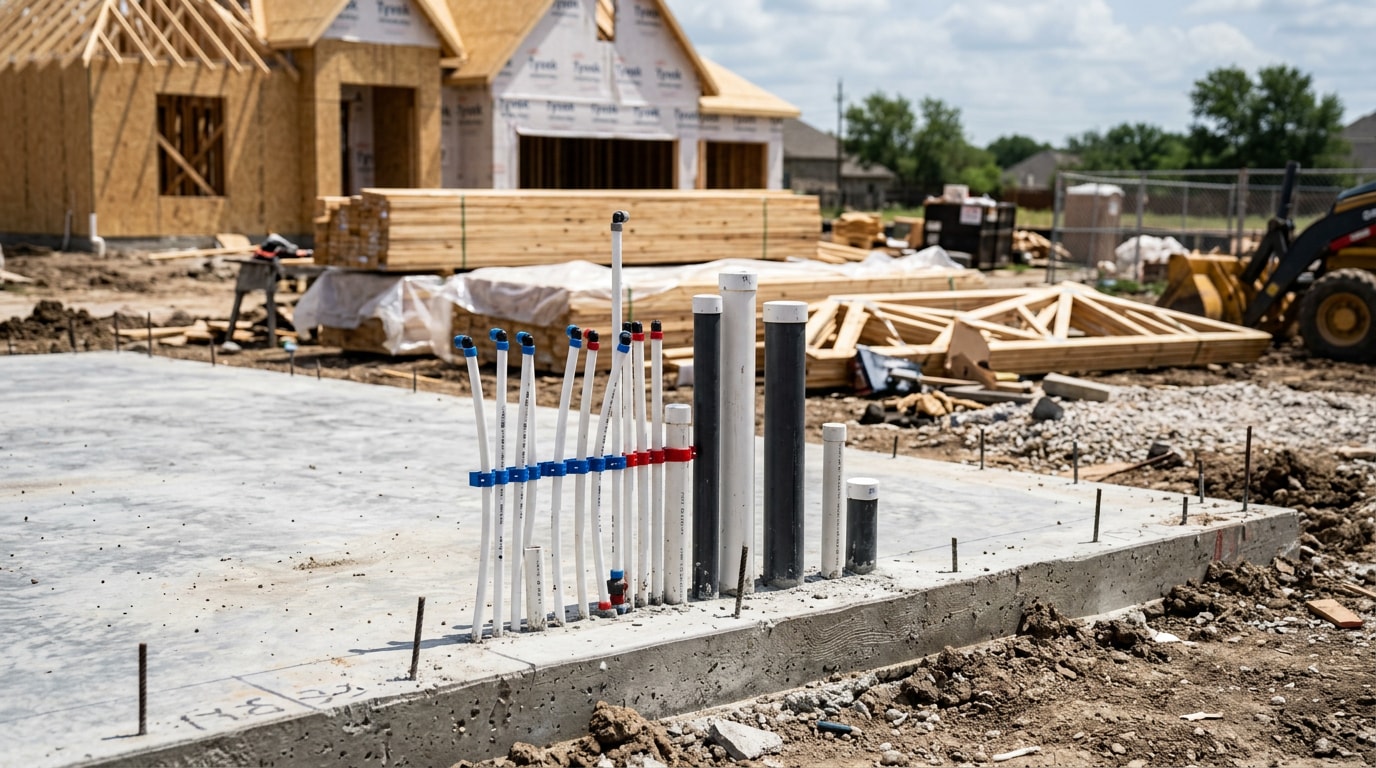
On a slab-foundation build, which is the standard across Johnson County, underground plumbing has to be exactly right before concrete covers it. There's no crawlspace or basement to access it later if something's off.
That raises the stakes on the pour itself. The plumber, framer, and foundation crew need to sign off together before concrete trucks arrive, because there's effectively no going back once it sets.
Top-Out: Where Problems Get Caught Before They're Expensive
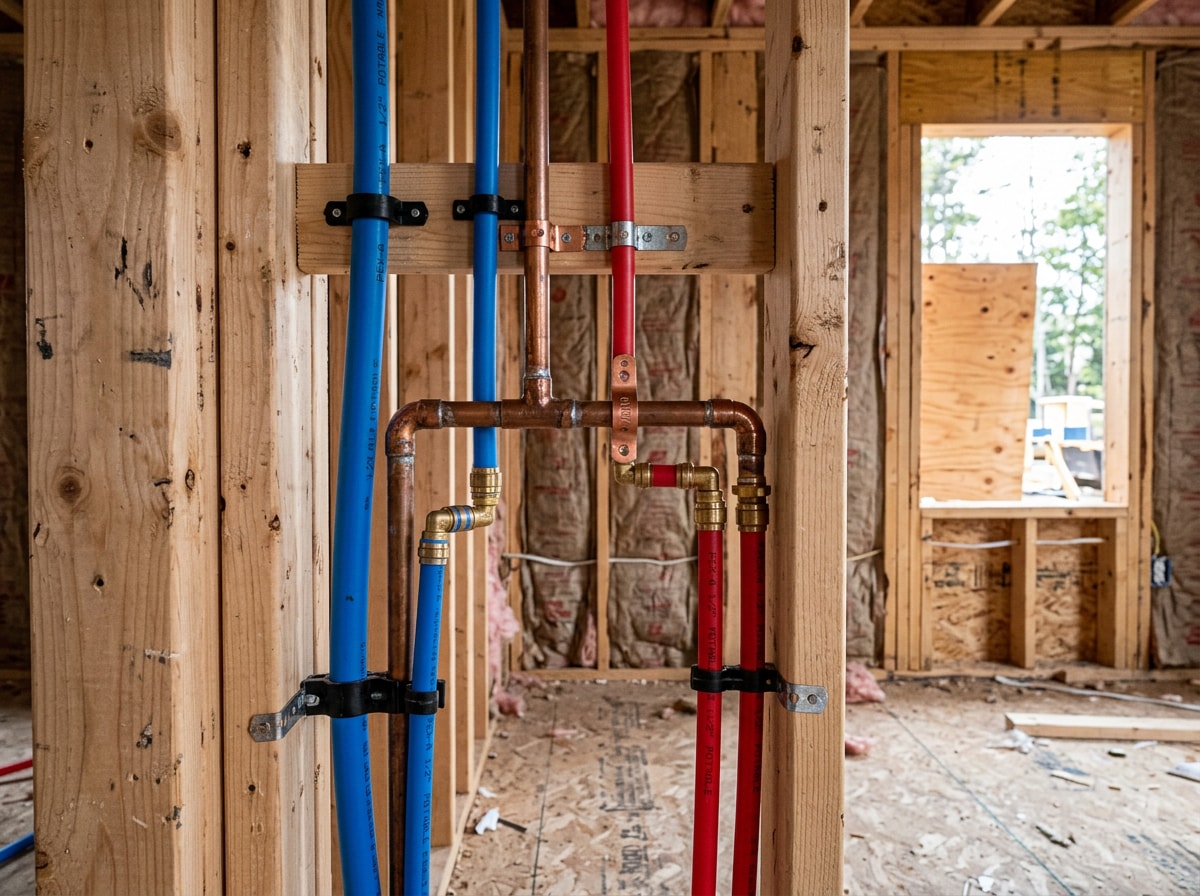
Once framing and roofing are done, the plumber installs vent stacks that connect the DWV system to outside air, so drains function properly and sewer gas doesn't back up into the home.
Before anything closes in, the system undergoes pressure testing. Water or air is pushed through the lines to confirm every joint holds without leaking. This step catches problems while they're still cheap to fix, long before an inspector or homeowner would ever see them behind a wall.
Trim-Out: The Phase Homeowners Actually See
Trim-out is where fixture selections made earlier either fit cleanly into the rough-in or create last-minute headaches. A plumber doing this work checks water pressure, drainage flow, and shutoff valves before calling the job complete.
What New Construction Plumbing Costs in 2026
Plumbing rough-in is almost never priced as a standalone line item on a full build quote. It's bundled into the overall construction contract, so here's what the national data actually shows.
Plumbing, excluding fixtures, averaged $27,180 per home, or 6.3% of total construction cost , according to the National Association of Home Builders' most recent construction cost survey. For context, the average total construction cost of a typical single-family home in that survey was $428,215 .
| Trade (Rough-In, Excludes Fixtures) | Avg. Cost (NAHB National Data) | Share of Total Construction Cost |
|---|---|---|
| Plumbing | $27,180 | 6.3% |
| Electrical | $27,383 | 6.4% |
| HVAC | $26,938 | 6.3% |
Source: NAHB Cost of Constructing a Home survey
These are national averages, not an Alvarado-specific quote. Lot conditions, bathroom count, and pipe material all move the final number, which is why a detailed bid from your general contractor matters more than any per-square-foot rule of thumb.
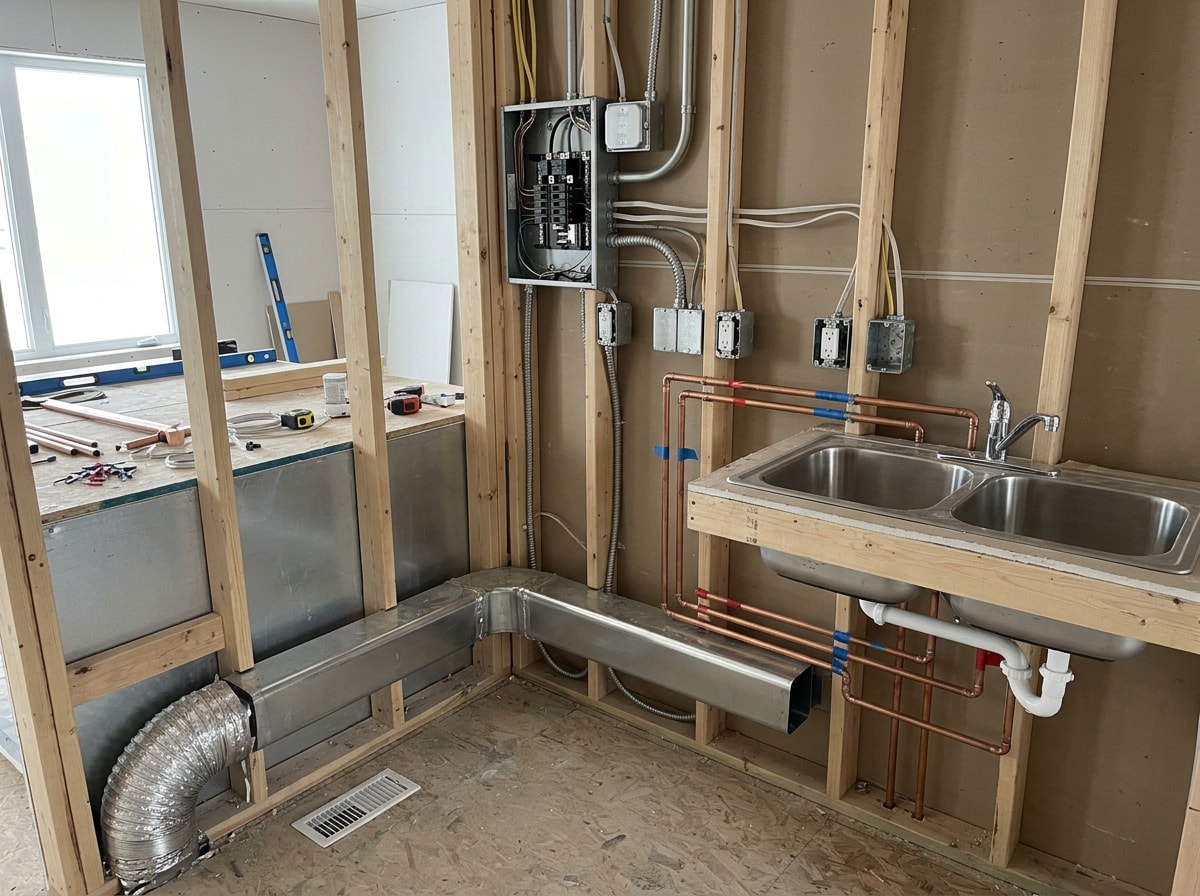
On material choice, PEX has become the default for most new residential builds in Texas because of faster installation time and fewer fittings compared to copper, though some builders still spec copper for specific runs like water heater connections.
Verifying Licensing Before You Sign Anything
The Texas State Board of Plumbing Examiners is the state agency responsible for licensing and regulating plumbers in Texas . Any subcontractor working on your build's plumbing system should hold an active license through that board, and your general contractor should be able to confirm it before work starts, not after an inspector asks.
Watch for these red flags when vetting any contractor or GC overseeing this trade:
- Vague timelines with no rough-in, top-out, or trim-out milestones
- No verifiable new-build project history, only repair jobs
- Reluctance to confirm who pulls permits and when
- No proof of insurance for the plumbing subcontractor specifically
Questions to Ask Before You Sign
- How many new-construction homes has your plumbing sub completed in the past year?
- Who coordinates scheduling between the plumber, framer, and electrician?
- Which stages are covered under the base bid versus billed separately?
- What's the process if a fixture change comes up mid-build?
- Who handles the final pressure test and inspection coordination?
Getting clear answers here is the core of hiring a team you can trust through the whole build, not just the first phase. Get a free estimate and we'll walk through how we structure plumbing coordination on your specific project.
Common Mistakes That Cost Homeowners Money
Planning Too Late
Waiting to loop in the plumbing trade until after the floor plan is locked reduces flexibility dramatically. Bathroom, laundry, and kitchen island placement all affect pipe routing. If no one checks that against the plan early, those choices can force costly rework once rough-in starts.
Choosing Fixtures After Rough-In
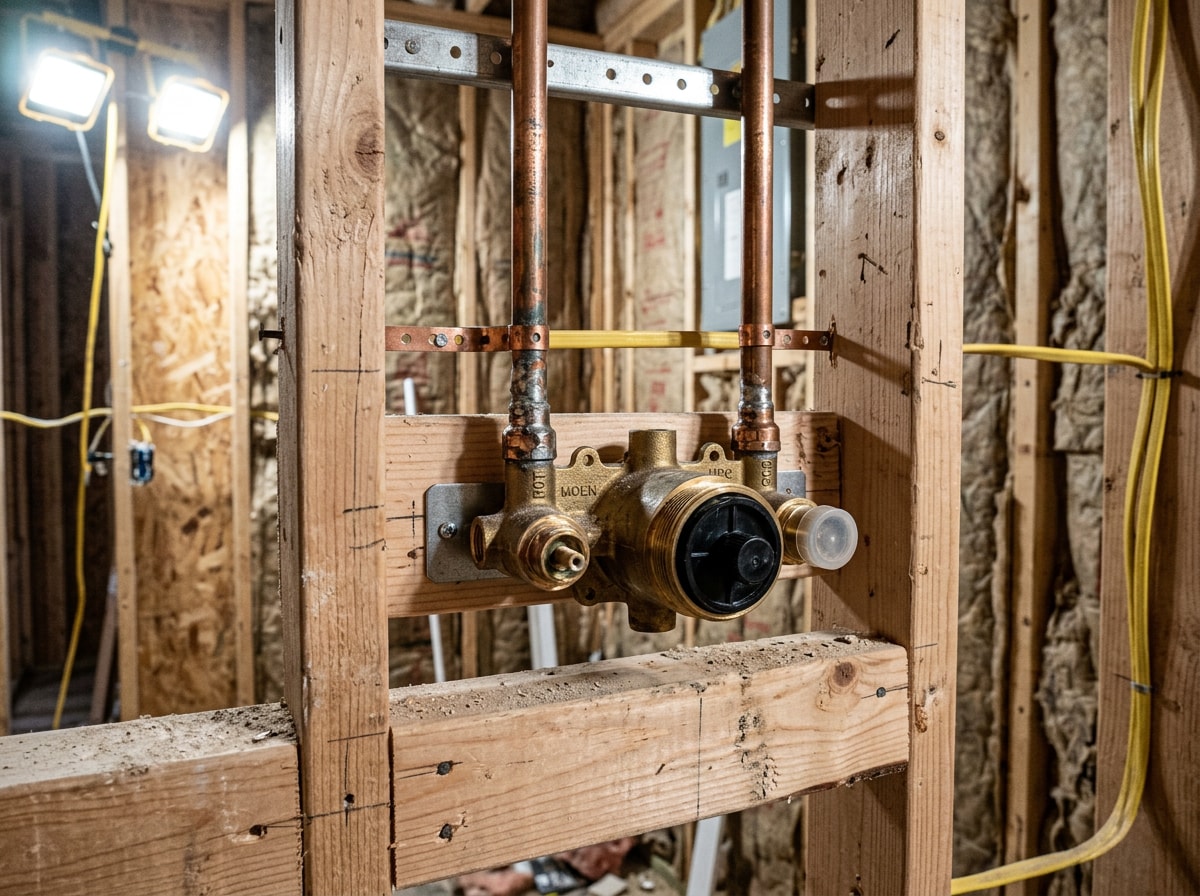
Freestanding tubs and wall-mounted faucets often need specific rough-in placement that standard fixtures don't. Picture a wall-mounted faucet chosen after rough-in is already complete: correcting it means opening a finished wall and relocating the supply line, versus a five-minute conversation before rough-in that would have placed it correctly the first time.
If your project also involves site work like a new driveway, patio, or retaining wall tied to the same build timeline, browse our completed projects to see how we sequence trades on full builds in the area.
FAQ
How early should I bring a plumber into a new construction project?
During the design or pre-construction phase, before groundbreaking. Bringing the trade in that early lets them influence layout decisions, pipe routing, and code compliance from day one, rather than reacting to choices that are already locked in.
Do I need a permit for new construction plumbing in Alvarado?
Yes. A plumbing permit is required before rough-in work begins. On a general-contractor-managed build, the GC and licensed plumbing subcontractor coordinate pulling permits and scheduling the required inspection at each major phase.
What's the difference between rough-in and trim-out plumbing?
Rough-in is the underground and in-wall piping installed before drywall goes up. Trim-out happens near the end of the build, when visible fixtures like toilets, faucets, and the water heater are installed and tested.
Does P&S Fencing & Construction handle plumbing directly, or coordinate with subcontractors?
As your general contractor, we vet, schedule, and oversee licensed plumbing subcontractors as part of the full build, confirming licensing, permits, and inspection sign-off at every stage rather than leaving that coordination to the homeowner.
How much does new construction plumbing cost?
Nationally, plumbing rough-in averages roughly $27,180 per home, or 6.3% of total construction cost, per NAHB's most recent survey. Your actual number depends on home size, bathroom count, and pipe material, which is why a detailed bid beats a flat per-square-foot estimate.
About the Author
This guide was prepared by the project management team at P&S Fencing & Construction, a licensed general contractor serving Alvarado, TX and the greater Johnson County area, including Midlothian, Waxahachie, and Burleson. Our team coordinates licensed trade subcontractors, including plumbing, on ground-up residential builds. Questions about an upcoming project? Contact us directly.