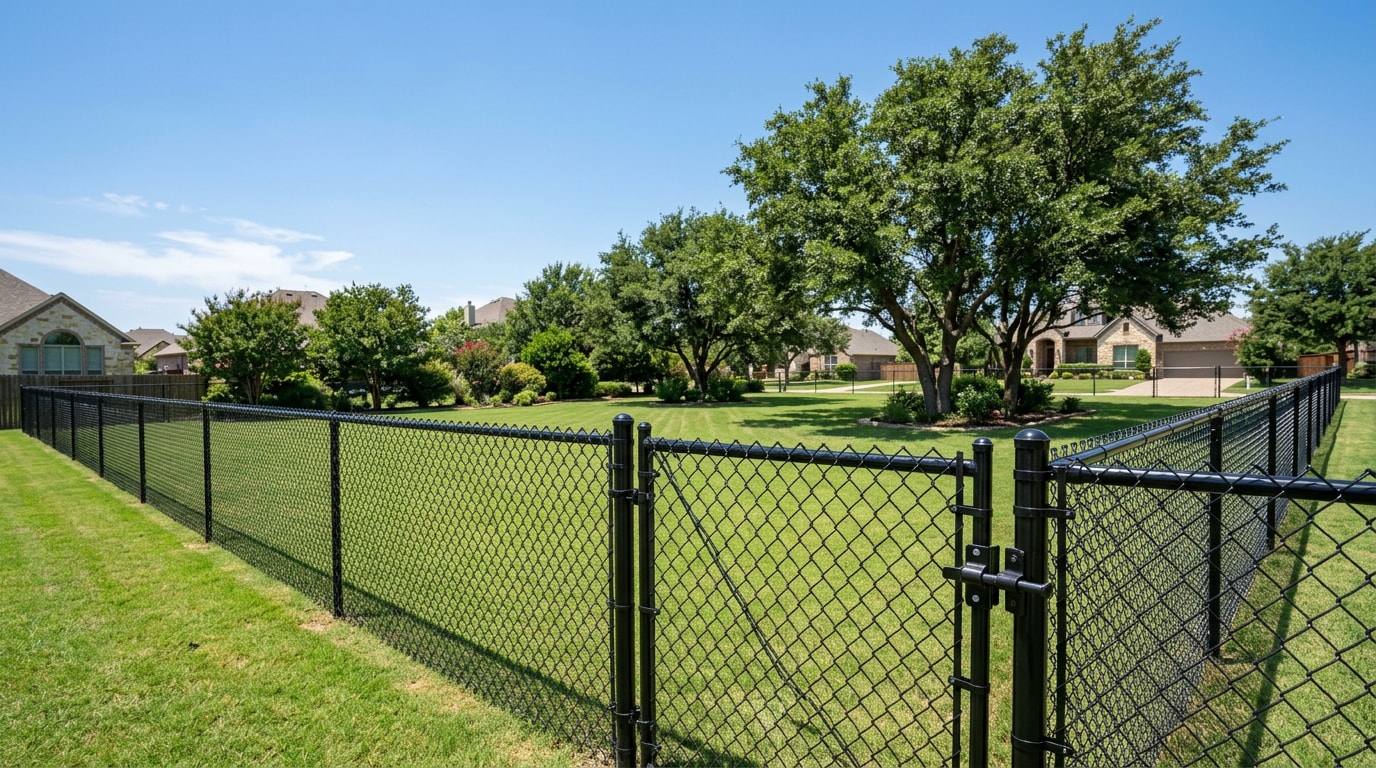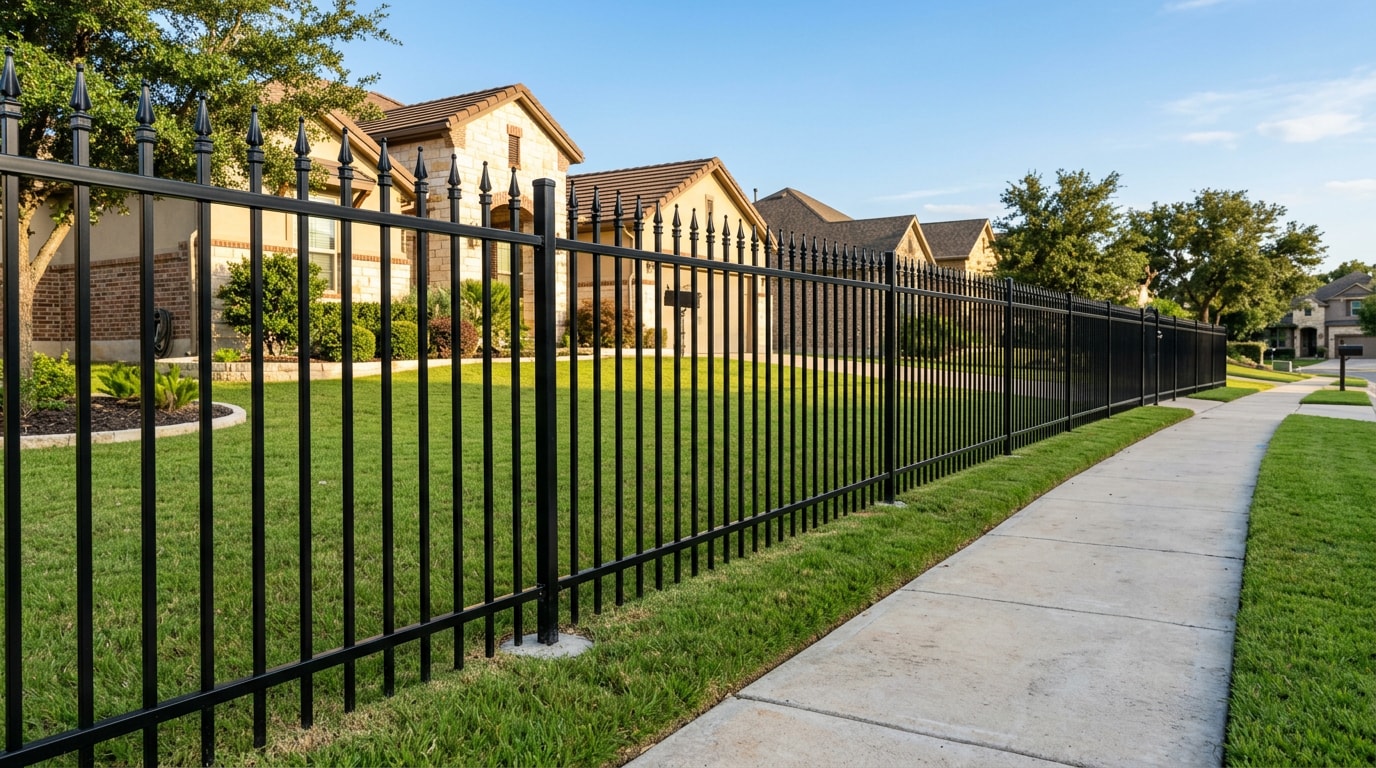
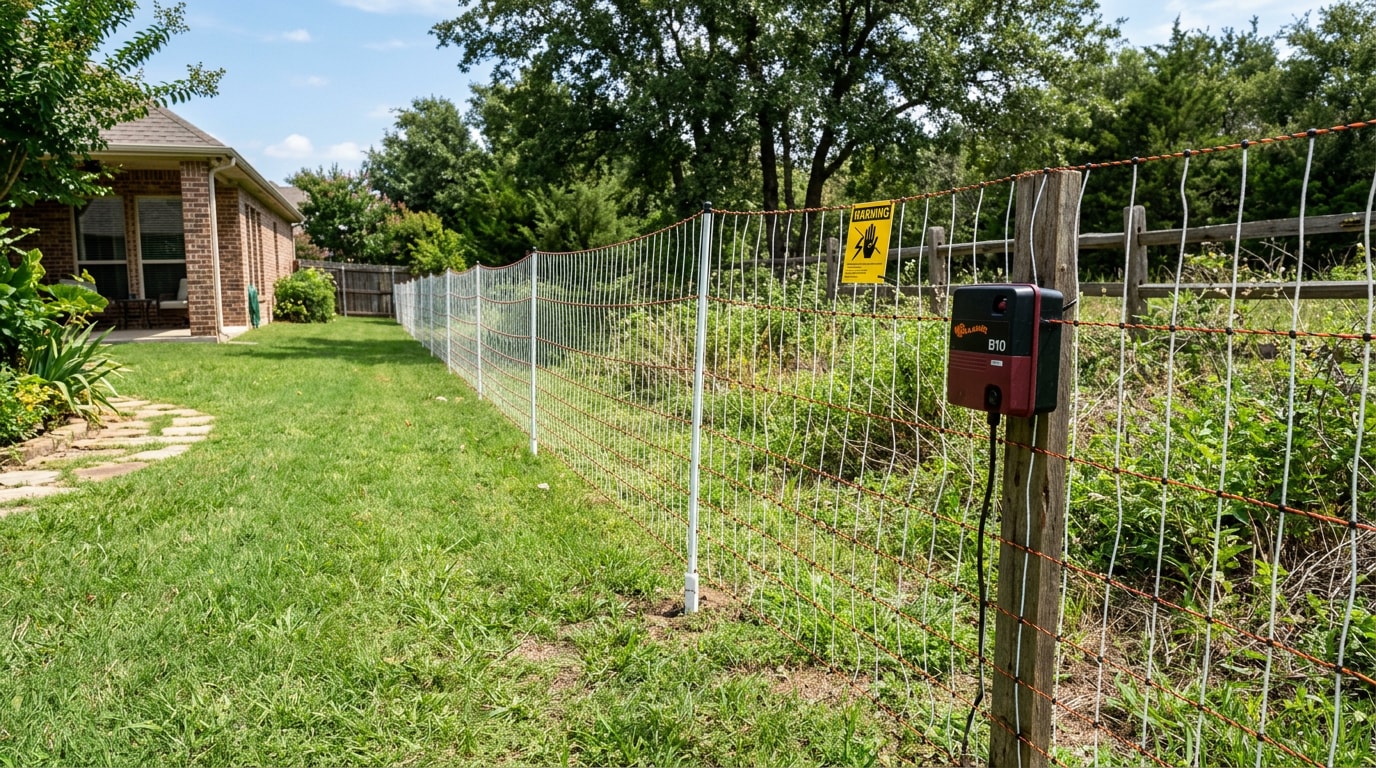
Electric fence netting in Richardson, TX gives homeowners and small-acreage owners a portable way to keep coyotes, raccoons, and loose dogs away from chickens, gardens, and livestock. It goes up in minutes without digging a single post hole, then rolls up and moves wherever the next predator problem shows up. This guide covers how it works, what a complete setup requires, and the local soil quirks worth planning around before you buy a roll.
What Is Electric Fence Netting?
Electric fence netting is a portable mesh fencing system made from lightweight plastic netting woven with horizontal conductive strands and supported by built-in step-in posts. It's also known as electric poultry netting, electric mesh fencing, or electric net fencing. The netting carries a mild electric pulse designed to teach animals to respect a boundary without physically trapping them.
Unlike a wood or wire fence, the netting is not meant to be a permanent physical barrier. As Virginia Cooperative Extension puts it, an electric fence is a psychological barrier, and livestock should be "trained" to it so their first exposure happens in a low-stress environment where they can explore and receive a memorable shock . That same psychological-barrier principle is why the netting works on predators, pets, and poultry alike.
Why Richardson, TX Properties Use Electric Fence Netting
North Texas backyards and small-acreage properties around Richardson deal with backyard flocks, vegetable gardens, and steady predator pressure from coyotes, raccoons, and the occasional loose dog. Electric fence netting answers all three without the cost or permanence of a built fence.
A few reasons it keeps showing up on local properties:
- No digging required. Built-in step-in posts mean one person can set up an entire fence line in about 10 minutes once they've done it a time or two.
- Fully portable. The same roll can move between a spring garden bed and a fall poultry run, or shift as livestock rotate through pasture.
- Multi-purpose. It handles garden perimeter protection, predator deterrence around coops, and general containment for sheep, goats, or pigs on smaller lots.
- Temporary dog boundaries. It works as a quick, movable yard boundary for dogs in properties without a permanent fence.
If predator pressure around poultry is the main driver, our pet fencing guide for North Texas properties covers related fencing options worth comparing. For larger or permanent livestock containment, it's also worth looking at our farm fence installation services alongside netting.
How Electric Fence Netting Works
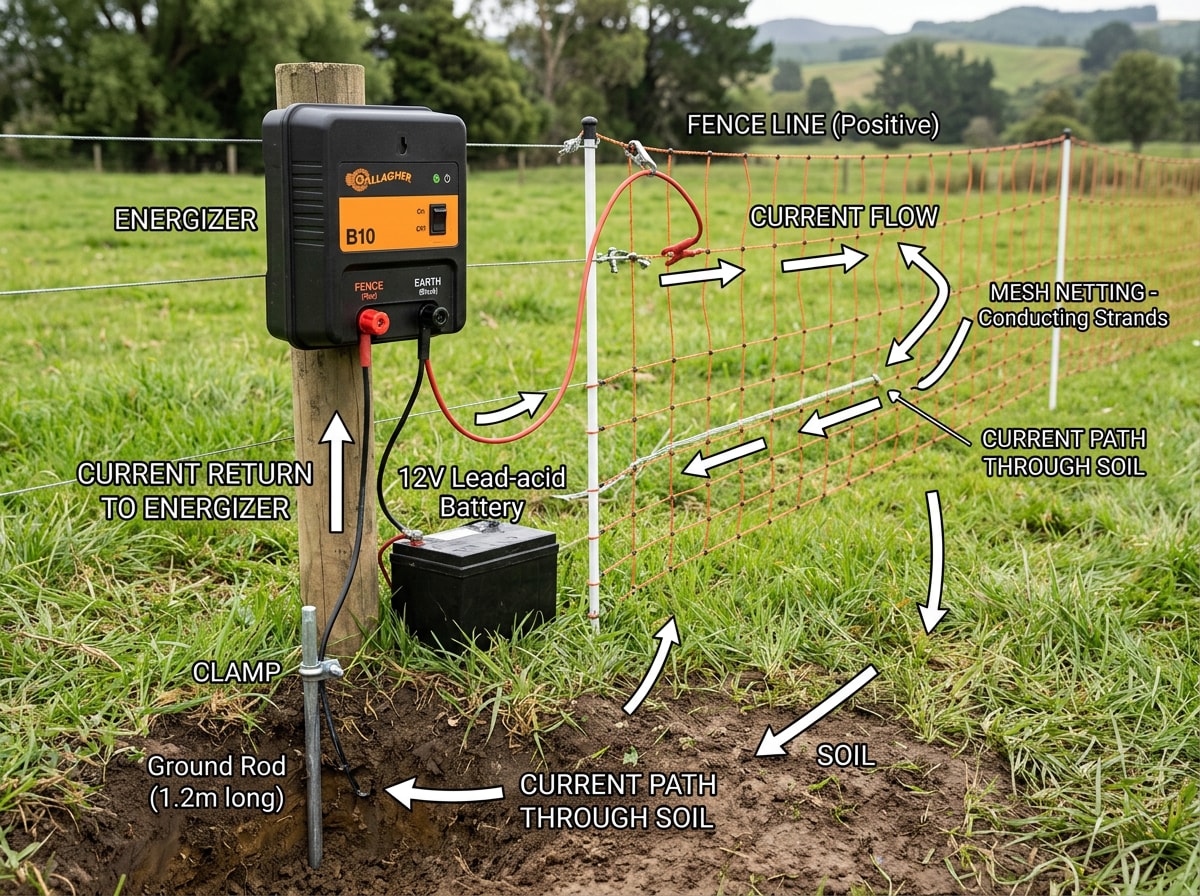
Electric fence netting sends a brief high-voltage pulse through horizontal conductive strands woven into the mesh. An energizer charges every strand except the bottom one, which rests on the grass. When an animal touches an energized strand, it completes a circuit through the ground and gets a short, startling shock.
Picture it as a loop. The energizer pulses current out through the lead wire to the netting's conductive strands. When a strand meets a grounded animal, current passes through the animal into the earth. It then returns to the energizer through a ground rod. That loop is what makes the fence work rather than just sit there charged.
Sizing the energizer correctly matters more than most buyers expect. A practical rule from one output joule per mile of fence applies to larger installations, while home-scale netting energizers are typically rated much lower since the runs are shorter. As Virginia Cooperative Extension's energizer guidance notes, matching output to fence length and vegetation load prevents the two most common complaints: a weak shock and a damaged energizer.
What You Need for an Electric Netting Setup
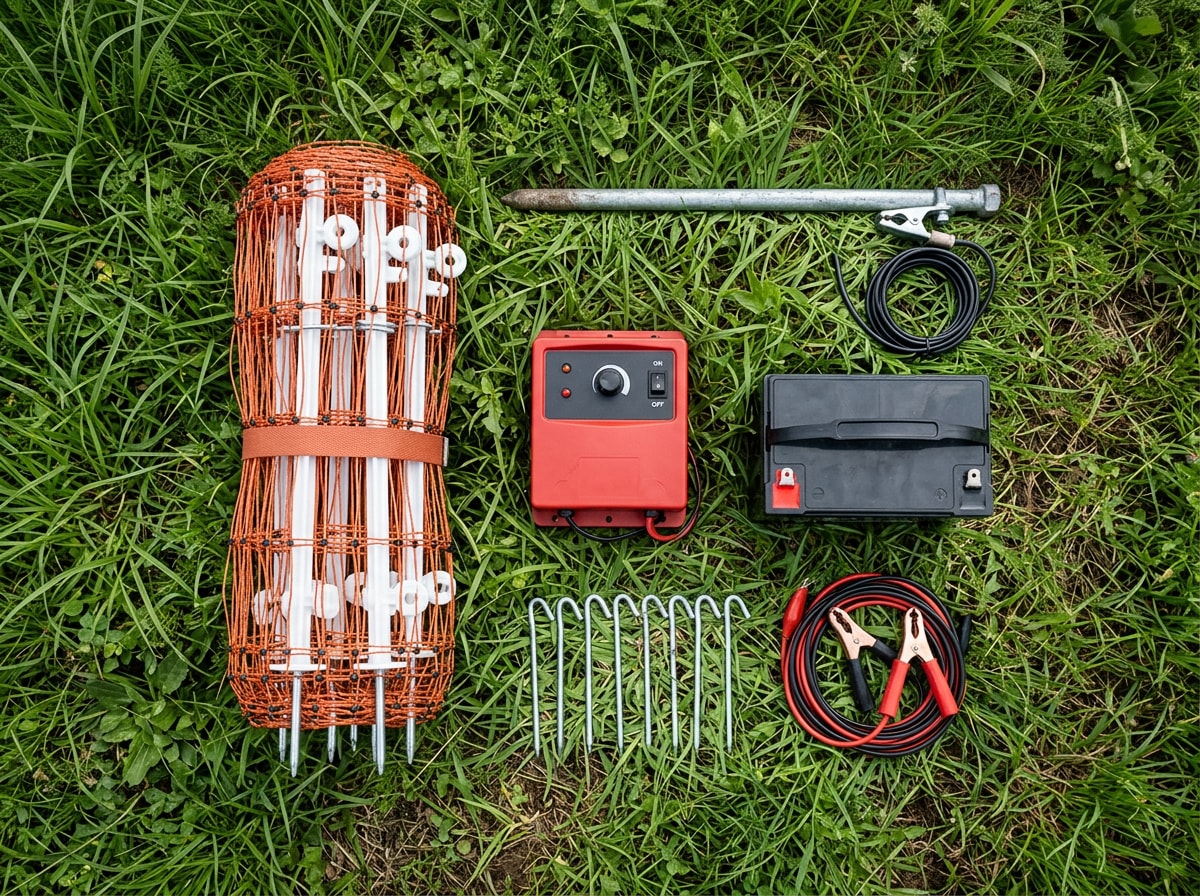
A complete setup starts with the netting itself and builds out from there:
- A roll of electric netting with step-in posts built in
- Galvanized ground pegs and a small repair kit for patching broken strands
- An electric fence energizer sized to the netting's total length
- A metal ground rod
- A lead-out cable for mains power, or a 12-volt battery for off-grid locations
None of these parts require brand loyalty. Most energizers and ground stakes sold for electric netting are interchangeable across manufacturers. What matters is matching output to load: checking the joule rating matters because doubling the joules doubles the shock , so undersizing the energizer for a long run or heavy grass line is the fastest way to end up with a fence that won't deter anything.
Classifying the equipment correctly also helps when shopping. Michigan State University Extension groups polywire, polytape, braided twine, and electric netting together as temporary portable fencing , which is the category most home energizers and accessories are built for. If you'd rather have a professional handle sizing and setup, request a free estimate and we'll match the equipment to your layout.
How to Install Electric Fence Netting
Richardson-area clay soil deserves a note before you start. Dense clay can resist a standard ground rod, especially during dry summer stretches. That matters because electrified fences rely on moisture in the soil to conduct electricity and deliver an effective shock , according to Texas A&M AgriLife Extension. A longer rod, or a second grounding point near a downspout or regularly watered area, often fixes a weak ground in clay soil.
Choose Your Fence Line
Pick a flat or gently sloping area with reasonable access to power. Clear away tall grass, sticks, and thick weeds along the planned line, since anything touching the net can drain power and weaken the shock.
Unroll the Net
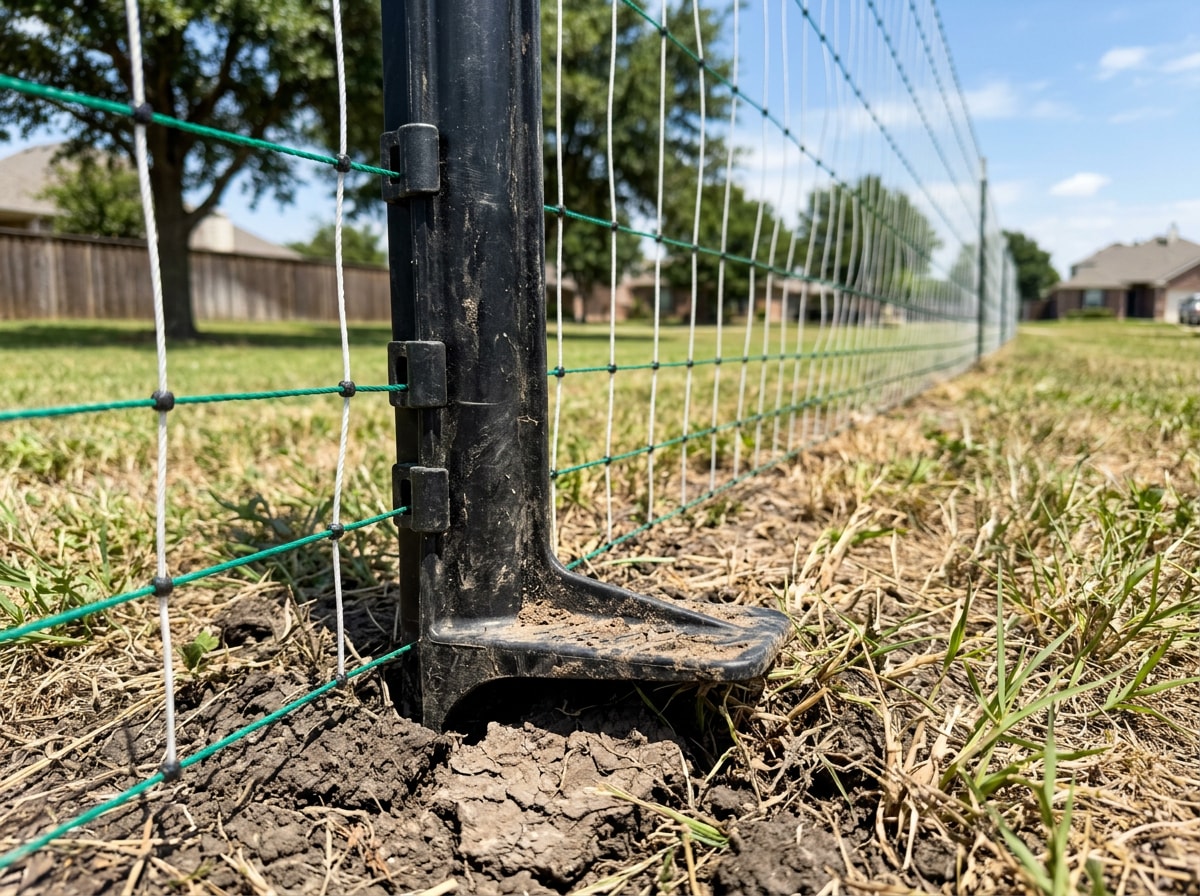
Walk the roll out along the cleared line, pressing each step-in post into the ground as you go. Keep the netting taut but not stretched, and avoid dragging it across rough ground that could snag or tear a strand.
Step in the Posts
Press each post into the ground at roughly a 90-degree angle to the fence line. Lightly tension the net between posts so it stands upright without sagging. Use a rubber mallet if the soil is hard, rocky, or compacted clay.
Power Up the Netting
Drive a ground rod fully into moist soil near the energizer location. Use a low-impedance energizer sized for the netting's full length, then connect the orange jumper clip to the netting and the green jumper clip to the ground rod. Double-check both connections before powering on. A loose clip is one of the most common reasons a newly installed fence tests weak.
Using Electric Fence Netting Effectively
Getting the netting installed is only half the job. Using an electric fence tester or voltage meter is the most reliable way to confirm the fence is working as intended, rather than guessing based on a light touch.
Check the line after storms, after mowing nearby, and periodically through the season. Grass regrowth and shifting soil moisture both affect performance, and a quick weekly walk-through catches most problems before they become a breach.
Common Problems with Electric Fence Netting
Electric netting sags without support posts at corners and ends, which is one of the most common complaints from first-time users. Reinforcing those stress points with sturdier corner posts usually solves it.
Other recurring issues trace back to planning rather than the product itself:
- Skipping a careful perimeter measurement before buying netting
- Under-sizing the energizer for the total fence length
- Using the wrong lead-out cable when running from mains power instead of a battery
- Voltage loss from a grounding failure, particularly in dry soil where the rod can't make solid contact
Most of these problems show up as a weaker-than-expected shock, which is why routine voltage testing matters as much as the initial install. If your property keeps losing a fight with North Texas clay or you want a permanent solution instead of a seasonal one, our team can walk the site and recommend options through our fence contractor services.
FAQ
Won't Animals Just Fly or Jump Over the Fence?
Clipping a bird's wings doesn't hurt it but does reduce its ability to take flight over netting that stands 42 to 48 inches tall. Electric poultry netting won't stop very young birds small enough to slip through the mesh openings, so chicks typically need a secondary barrier until they're larger.
Is Electric Fence Netting Safe for Animals and Pets?
Electric fence netting is designed to startle, not injure. A good energizer delivers an intense pulse lasting around 0.0003 seconds, a duration so short it eliminates the risk of fire or sustained current , per University of Maine Cooperative Extension. Most pets and livestock touch an energized strand once and avoid it afterward.
Caution still applies around very young, elderly, or health-compromised animals, and netting should never be installed where it could trap wildlife against a solid barrier.
What Voltage Do I Need for Electric Fence Netting?
Voltage needs depend on what you're deterring. Garden pests and small predators generally need less than a determined coyote pushing through dry fur, so matching the energizer to the toughest animal on the property (not the easiest) avoids a fence that looks charged but doesn't deter anything. A fence tester is the only reliable way to confirm actual output, since published energizer specs assume ideal, well-grounded conditions.
How Long Does Electric Fence Netting Last?
Lifespan depends heavily on sun exposure, storage habits, and how often the netting gets moved. Constant UV exposure breaks down the plastic strands over time, while mower damage, livestock rubbing, and rodent chewing cause most early failures. Storing netting indoors during the off-season and keeping grass trimmed along the line are the two biggest factors in extending its working life.
How Often Should I Check or Test My Electric Fence Netting?
A weekly check with a dedicated fence tester is a reasonable baseline for most properties, with more frequent testing during storms, droughts, or mowing season. If voltage readings drop unexpectedly, the issue is usually vegetation contact, a loose connection, or a grounding problem rather than the netting itself.
How Much Does Electric Fence Netting Cost to Install?
Electric fence netting costs less upfront than a permanent wood or metal fence since there's no digging, concrete, or permanent posts involved. Exact pricing depends on the total length and height of netting, the power source (mains, battery, or solar), and how many gated sections you need. For a number specific to your layout, get a free estimate and we'll price it based on the actual fence line.
Do I Need a Permit for Electric Fence Netting in Richardson, TX?
Most portable, seasonal electric netting doesn't require a building permit since it isn't a permanent structure. That said, homeowners in subdivisions with an HOA should check deed restrictions before installing it, and anyone fencing near a sidewalk, easement, or property line should confirm local setback rules with the city first.
About the Author
This guide was written by the fencing team at P&S Fencing, a Texas-based fence contractor serving Richardson and the surrounding Metroplex. Our crews install and troubleshoot both temporary netting systems and permanent fencing on residential and small-acreage properties, and the clay-soil grounding notes above come directly from service calls on local installs. Questions about a specific property? Contact us or request a free estimate.