Fence posts in Mansfield, TX, USA have to clear a specific set of city requirements before the first hole gets dug, covering post material, diameter, spacing, and footing depth. Mansfield's shifting clay soil adds a second layer that most generic how-to guides skip entirely, and skipping it is why posts lean within a year of going in. This guide covers the code numbers, the clay-soil depth math, and the full installation sequence, whether you're hiring it out or setting posts yourself.
What Mansfield's Fence Code Requires for Fence Posts
Mansfield's city code doesn't leave post specifications open to interpretation. Material, diameter, spacing, and footing depth are all written out, and skipping any one of them is the most common reason a fence fails inspection or needs repair within a few years.
Post Material, Diameter, and Spacing
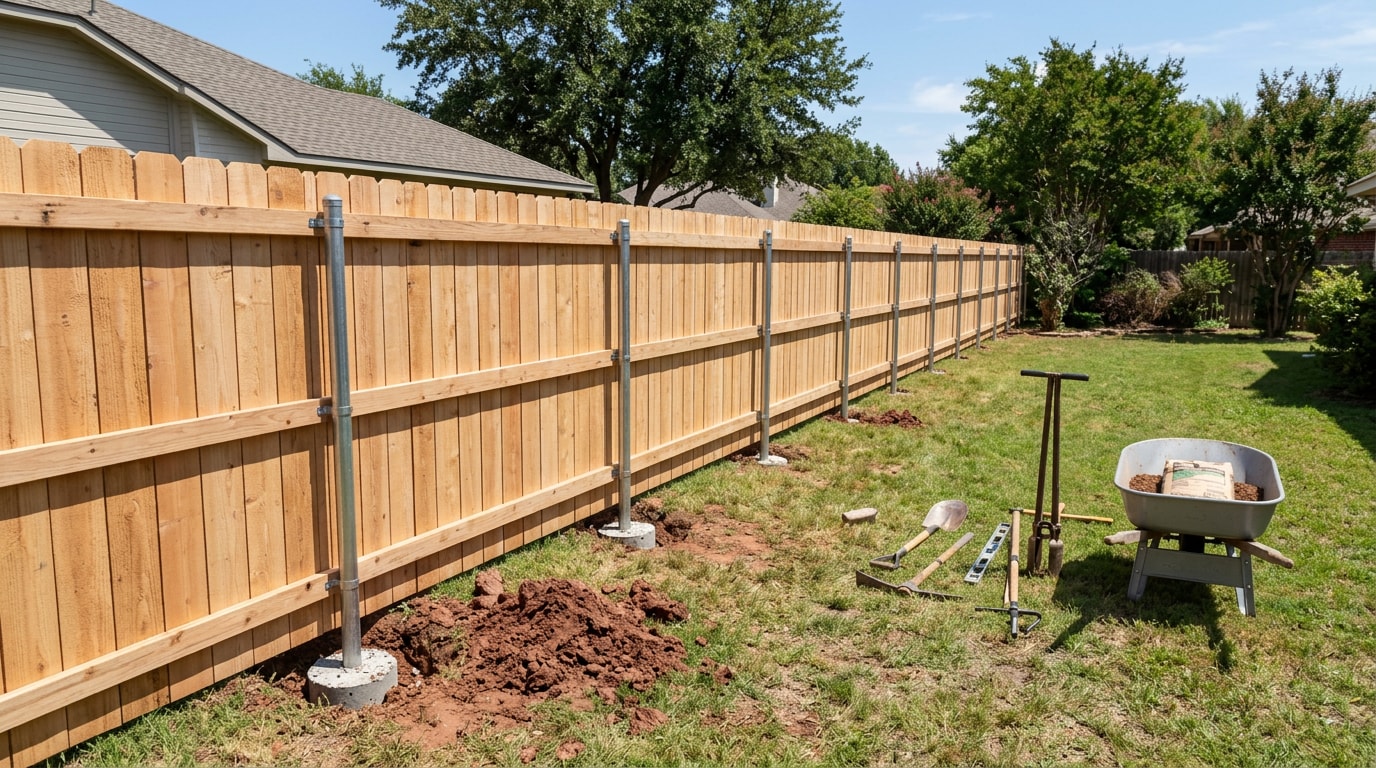
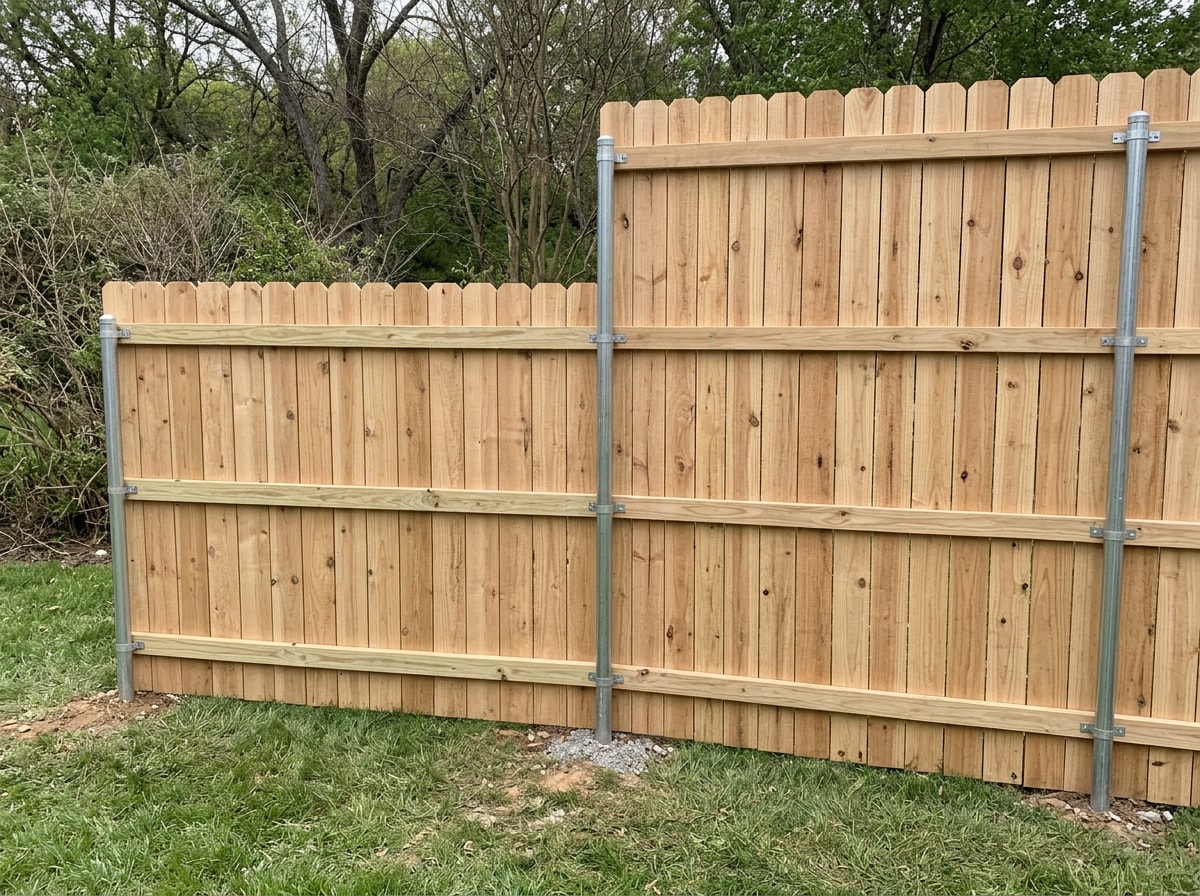
Mansfield's fence construction standards require all vertical posts to be two and three-eighths inch (2 3/8") minimum outside diameter standard pipe gauge galvanized steel . Because the standard calls out a specific pipe diameter and material, wood posts alone don't satisfy this spec on a code-compliant privacy fence. Posts also need to sit no more than eight feet on center , set in concrete footings along the property line.
Footing Depth and Stringers by Fence Height
Footing depth scales with fence height. The standard sets minimum concrete post footing depth at twenty-four inches for fences that are six feet in height and thirty-six inches for fences that are eight feet in height . Stringer counts scale the same way: fences that are six feet in height must have three horizontal stringers, and fences that are eight feet in height must have four horizontal stringers . Posts and stringers also have to face the inside of the fence, not facing the street or adjacent properties .
Residential privacy fencing in Mansfield tops out at eight feet; the maximum height for a residential privacy fence is eight feet .
Do You Need a Permit First?
Permit rules depend on height and how much of an existing fence line is being touched. The city's code compliance guidance states that a fence permit from the Development Services Department at City Hall is required when replacing a fence taller than 5 feet and when more than half of the total fence is being replaced . Separately, the fence construction standards note that replacement or repair of an existing wood privacy fence that is less than fifty percent of the total linear footage of fencing on the property is exempt from the construction standards, but a permit is always required for any fence construction greater than six feet in height .
Because these thresholds interact (height, percentage replaced, and new versus repair work), confirm the exact permit trigger with the city's Fence Permit Application before scheduling any digging. Property owners in Mansfield, TX can also have a licensed crew pull the permit as part of the install.
How Deep Should Fence Posts Be in Mansfield's Clay Soil?
A widely used manufacturer guideline for setting posts calls for hole depth equal to one-third the overall post height . That baseline holds up fine in stable, well-draining soil.
Mansfield sits on the stretch of North Texas dominated by expansive clay. The area's dominant soil type, Houston Black, developed from calcareous clays and marls deposited during the Cretaceous Age , and it's dark, sticky, and moldable when wet, which is why it's often called "black gumbo." That clay swells when saturated and shrinks hard during dry spells, and a post set only to a generic national minimum can start leaning after the first heavy rain cycle, long before it would fail in sandier ground.
The safest approach combines both numbers. Match Mansfield's code minimums (24 inches for a 6-foot fence, 36 inches for an 8-foot fence) against the one-third-length rule, and use whichever number is deeper. That gives the post enough bearing depth to resist the seasonal heave-and-shrink cycle this soil is known for, instead of relying on a generic average built for different ground conditions.
Common Fence Post Mistakes in Mansfield's Clay Soil
The most frequent error we see on post resets is treating hole depth as one-size-fits-all. A depth that holds fine in a neighboring county's sandier, faster-draining soil can leave a post under-anchored once it's set in Mansfield's clay.
In certain pockets of Mansfield, the ground visibly pulls away from post bases during the driest stretch of summer, then swells back against them after fall rains. That cycle loosens a post gradually, even one that was set correctly on day one. The fix isn't always a deeper hole. Sometimes it's better compaction, added gravel for drainage, or a fresh concrete collar poured around an existing post.
A simple habit catches most of these problems early:
- Walk the fence line after heavy rain or a hard freeze-thaw cycle.
- Look for posts that have visibly shifted out of plumb.
- Check for gaps that have opened at the base of any post.
- Confirm gate posts still line up square with the latch.
Step-by-Step: How to Install a Fence Post
Once code and depth questions are settled, the physical work follows a consistent sequence whether you're setting one replacement post or an entire fence line.
Mark, Dig, and Prep the Hole
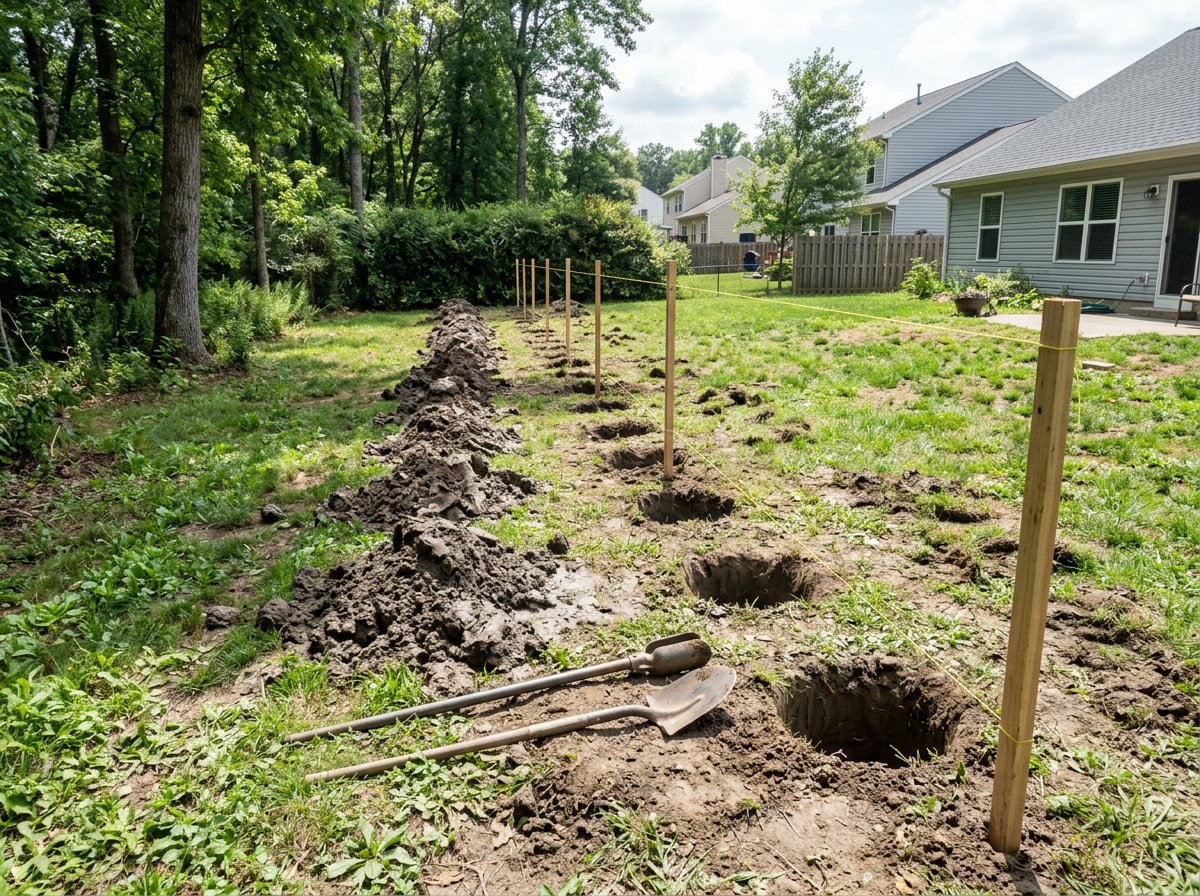
Start by staking and stringing the fence line, then mark each post location. Standard spacing runs 6 to 8 feet apart, and Mansfield's code caps it at 8 feet on center for privacy fencing.
Dig each hole about three times the diameter of the post , deep enough to match the code minimum or the one-third-height rule, whichever is greater. In Mansfield's clay, expect digging to slow noticeably once you hit the denser subsoil layer a foot or two down.
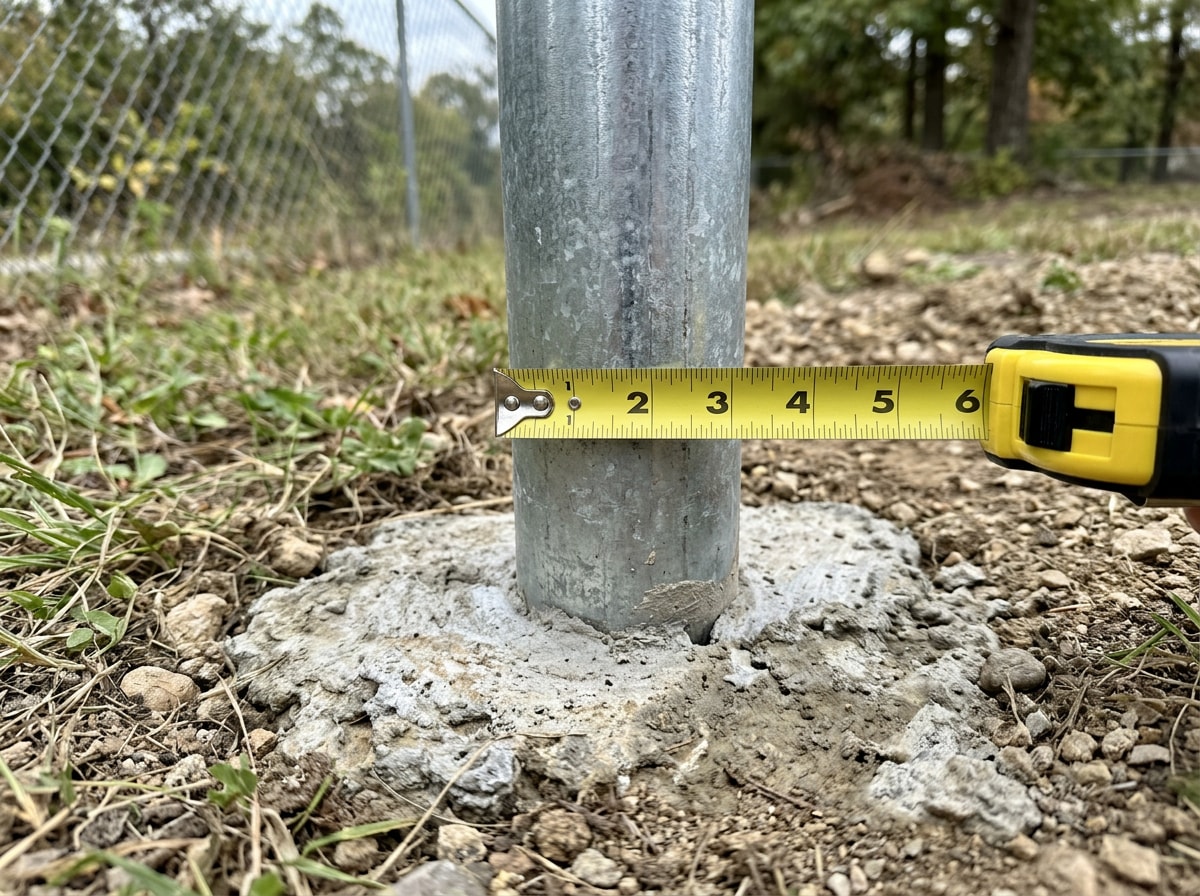
Clear loose soil from the bottom of the hole, then tamp the sides and bottom until firm and place about 6 inches of all-purpose gravel or crushed stone in the hole to aid drainage . This base layer keeps the post from sitting in standing water after a heavy rain, which matters more in clay soil than in sandy ground.
Anyone unsure about getting layout or depth right on a full fence line can have a fence contractor confirm the plan before digging begins.
Concrete vs. Gravel: Choosing a Post-Setting Method
Concrete is the most common way to set a fence post because it hardens into a solid collar that holds the post firmly in place. Pour the mix to within a few inches of ground level, then taper the surface away from the post so rain runs off instead of pooling against it .
Gravel alone is a lighter-duty alternative, more common on temporary or low-load posts. In clay soil, gravel without concrete keeps draining instead of trapping moisture against the post, but it won't hold as firmly under lateral load from a tall privacy fence or a gate.
Cure times vary by product. Standard concrete mix manufacturer guidance calls for waiting at least 24 hours before the post takes any strain , while fast-setting formulas can be ready for light loads in a few hours. Rushing this step before attaching rails, panels, or gate hardware is a common reason posts shift later. For exact ratios and cure windows, check the concrete manufacturer's technical data sheet for the product in use.
Choosing Fence Height and Post Spec
With code and depth questions settled, the remaining decisions come down to height and how the posts get specced out.
| Fence height | Minimum footing depth | Horizontal stringers | Typical use |
|---|---|---|---|
| 6 feet | 24 inches | 3 | Yard separation, pet containment, basic privacy |
| 8 feet | 36 inches | 4 | Pool enclosures, street-noise buffering, maximum residential privacy |
Most Mansfield property owners build at six feet, which covers yard separation, pet containment, and basic privacy screening. Eight feet is the ceiling for residential privacy fencing and is typically reserved for pool enclosures or added street-noise buffering. Taller fences mean deeper footings and an extra stringer, so height decisions should be locked in before any post goes in the ground.
Homeowners weighing materials beyond the post spec itself (cedar pickets, wrought iron, or wood styles) can browse wood fence and privacy fencing options, or start with a fence post installation or repair quote. Homeowners outside Mansfield working through similar material decisions may find the split rail fence materials guide useful for comparing wood options.
When a Post Needs Repair Instead of Replacement
Not every leaning or loose post means starting over. A post that's shifted slightly out of plumb but still has sound wood or intact pipe can often be reset with fresh gravel, re-tamped soil, and a new concrete collar rather than a full pull-and-replace. A post with visible rot at the base, a cracked footing, or one that's snapped below grade usually needs full replacement, since patching a compromised footing rarely holds through another wet-dry cycle.
If you're not sure which category a leaning post falls into, a quick inspection answers it faster than guessing. Get a free estimate and have a crew assess whether a reset or a full fence repair and replacement makes more sense for your specific posts.
FAQ: Fence Posts in Mansfield, TX
Do I need a permit for fence posts in Mansfield, TX?
It depends on height and how much of the fence is being touched. A permit is required when replacing a fence taller than 5 feet or when more than half of the total fence is being replaced , and a permit is always required for any fence construction greater than six feet in height , regardless of how much is being replaced. Confirm your specific project with the city's Development Services Department before digging.
How deep should fence posts be in Mansfield's clay soil?
Use whichever number is deeper: the city's minimum footing depth (24 inches for a 6-foot fence, 36 inches for an 8-foot fence) or the one-third-of-post-height rule . In expansive clay, going shallower than the code minimum is the most common cause of early leaning.
How far apart should fence posts be?
Mansfield code sets no more than eight feet on center as the maximum spacing for privacy fence posts. Most residential installations land right at that 8-foot maximum to minimize the number of footings needed.
What's the maximum fence height allowed in Mansfield?
The maximum height for a residential privacy fence is eight feet. Fences at or above that height, or any fence over six feet regardless of how much is replaced, require a permit.
Can I use wood posts for a privacy fence in Mansfield?
No. The construction standard specifies 2 3/8-inch minimum outside diameter galvanized steel pipe for vertical posts , so wood posts alone don't meet the code spec, even if wood pickets are used for the fence panels themselves.
What should I do if my fence posts start leaning after installation?
A post that's leaning right after it's set should be corrected immediately, before the concrete cures, since waiting only makes the fix harder. For posts that lean over time from soil movement, resetting the post with fresh gravel and a new concrete collar usually solves it; posts with rot or a cracked footing typically need full replacement.
Ready to get fence posts set to Mansfield code the first time? Visit {{SITE_URL}} to see current services, or get a free estimate and have the layout, depth, and footings confirmed before anyone digs.