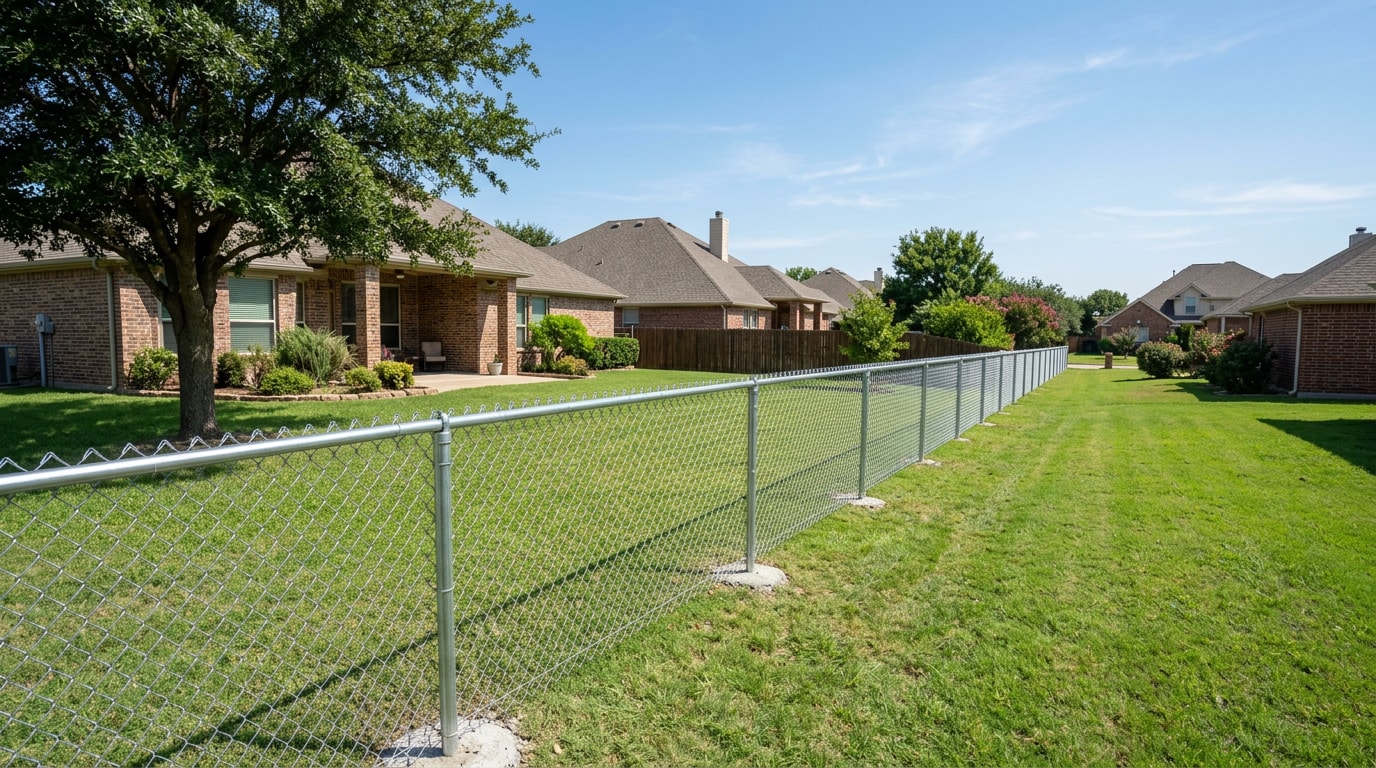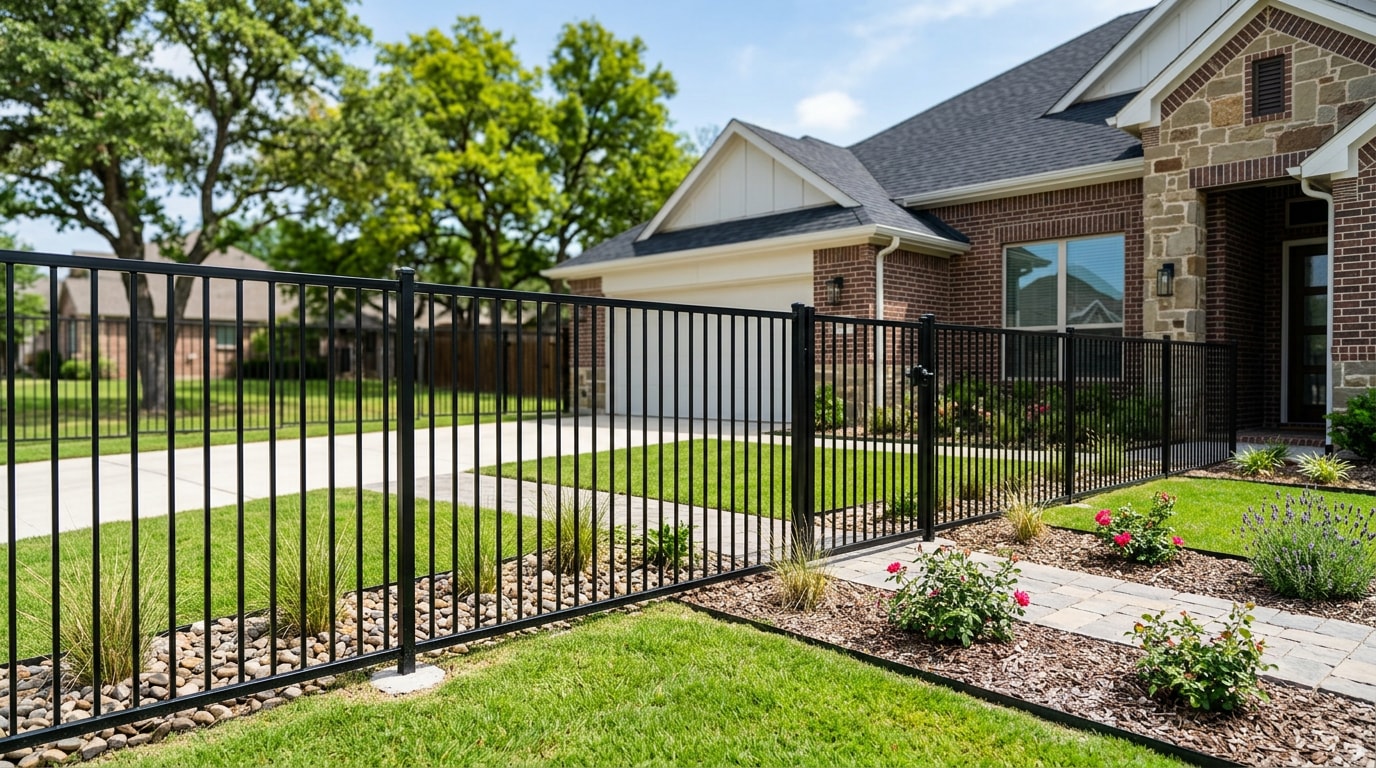
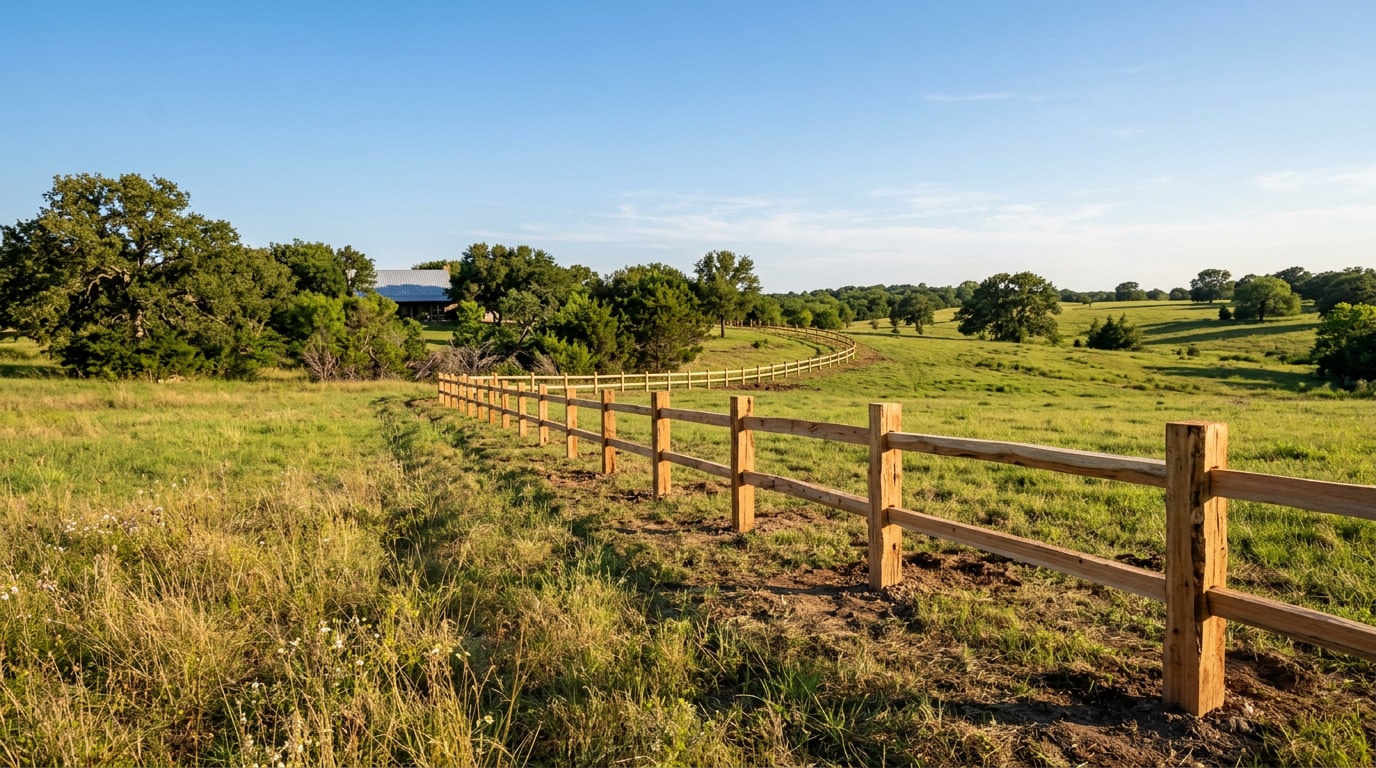
Choosing the right split rail fence materials in Duncanville, TX comes down to three things: how long you want the fence to last, how much upkeep you're willing to do, and what you're trying to keep in or out. This guide compares every material option on the market today, cedar, black locust, pine, vinyl, and metal rails, plus the clay soil and storm factors that affect how long each one actually lasts here.
Visit P&S Fencing and Decking to see our services and request a free estimate.
What Is Split Rail Fencing?
Split rail fencing is an open-style fence made of horizontal rails fitted directly into holes or notches cut into vertical posts. There are no pickets, no boards, and usually no fasteners holding the rails in place, just gravity and a snug fit.
The design traces back to colonial farmland, where settlers used whatever timber was nearby to mark property lines without blocking airflow or sightlines. Today the same rustic look defines a boundary along a front yard, pasture, or acreage without the enclosed feel of a privacy fence. On its own, the open design won't stop smaller pets, but wire or mesh backing turns it into an effective pet barrier while keeping the rustic look intact.
Types of Split Rail Fences
Most split rail fences come in 2-rail or 3-rail configurations, and the rail count changes both the look and the function.
- 2-rail: Sits roughly 2.5 to 3 feet tall. Best for decorative boundary marking.
- 3-rail (sometimes stacked to 4-rail): Climbs closer to 4 feet. Better at discouraging livestock or large pets from wandering through.
Rural property-line projects tend to favor the taller configurations, while residential yards often go with 2-rail setups for a cleaner, more open look. The right choice depends on whether the fence needs to contain anything or simply mark a line.
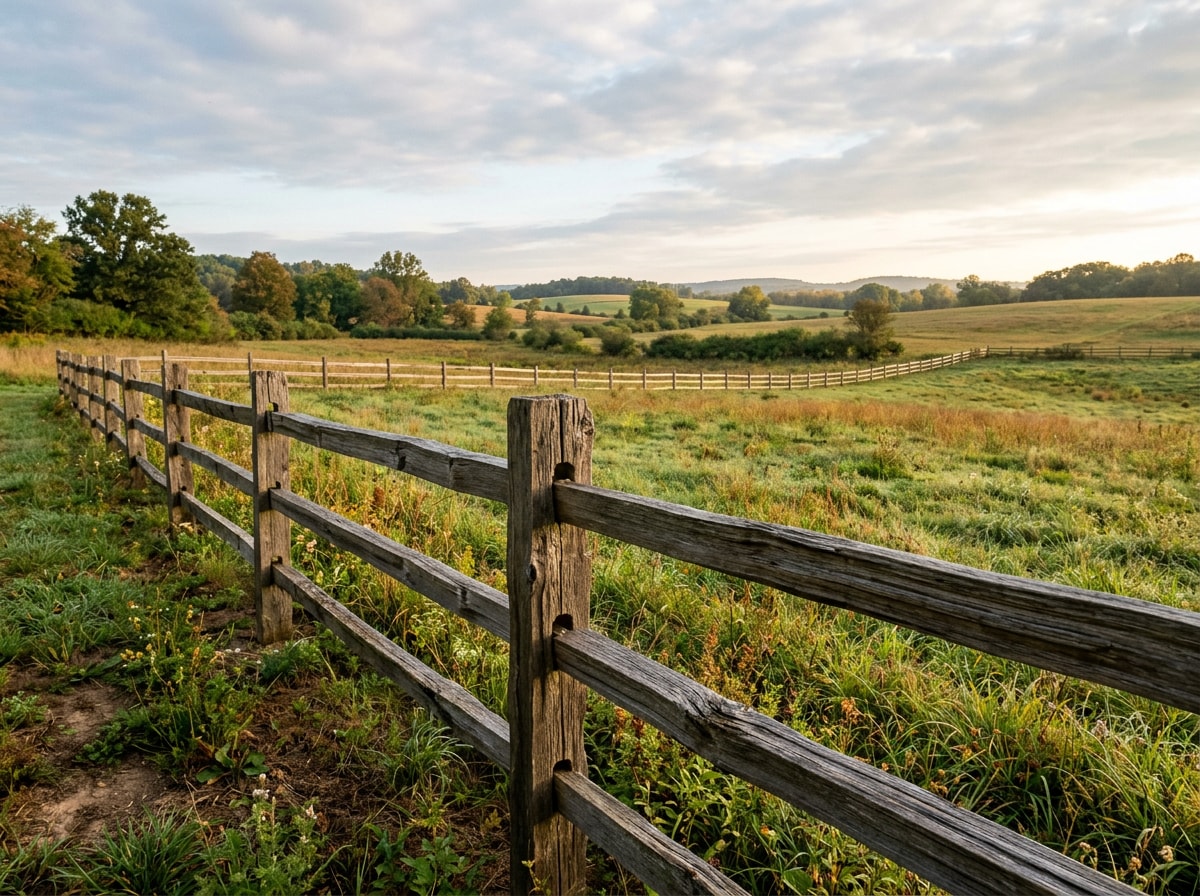
For a broader look at wood fence styles beyond split rail, see our wood fences page.
Split Rail Fence Materials in Duncanville, TX: At a Glance
Material choice drives cost, lifespan, and maintenance more than any other decision in a split rail project. The table below compares the most common split rail fence materials so you can weigh them before getting into the details of each.
| Material | Installed Cost/ft | Typical Lifespan | Maintenance | Best For |
|---|---|---|---|---|
| Western Red Cedar | $12–$22 | 15–20 years | Low–moderate | Most residential yards |
| Black Locust | $18–$30 | 25–40+ years | Very low | Long-term rural boundaries |
| Pressure-Treated Pine | $10–$18 | 10–15 years | Moderate | Budget-conscious projects |
| Vinyl | $18–$30 | 20–30 years | None | No-maintenance buyers |
| Steel / Aluminum | $20–$35 | 30+ years | Very low | High-traffic or livestock areas |
| HDPE | $18–$28 | 20–25 years | Low | Animal-safe enclosures |
| Concrete | $14–$27 | 40+ years | Very low | Maximum durability, niche use |
Pricing varies by rail count, supplier, and terrain, so treat these as planning ranges rather than quotes. For current material options, browse our fence material options page.
Western Red Cedar
Western red cedar is the most popular split rail fence material because it balances a natural look with real rot-resistant properties, without the premium price of rarer species. Research from the USDA Forest Products Laboratory notes that redcedar "is renowned for being very resistant to decay" , which backs up cedar's long track record as a fencing wood. Performance still drops in consistently wet, shady, or humid spots where moisture sits against the wood.
Cedar split rail typically runs $12 to $22 per foot installed, with a realistic lifespan of 15 to 20 years when it's kept off damp ground. Actual longevity still depends heavily on local soil moisture and installation quality.
Black Locust
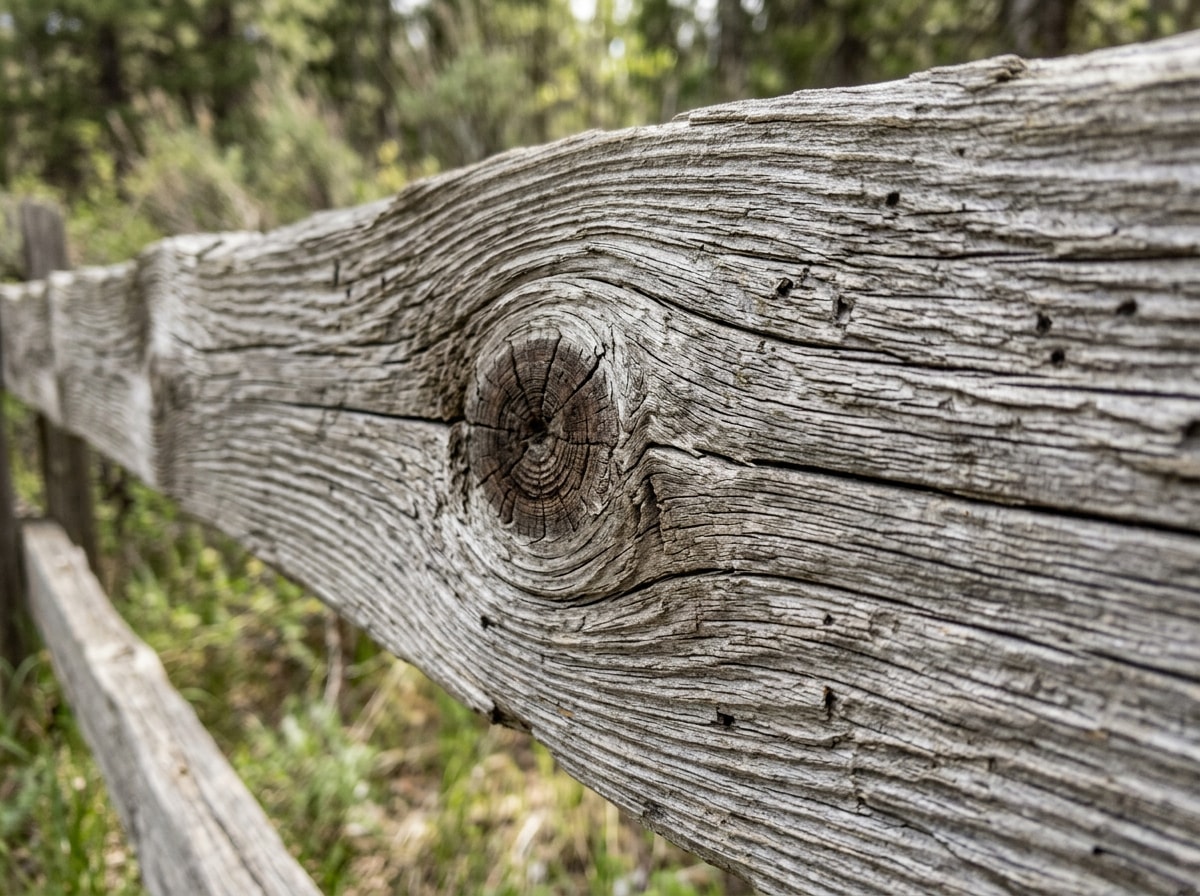
Black locust is widely regarded as the longest-lasting fence wood available in North America, with posts and rails that can hold up for 25 to 40 years or more without chemical treatment. Heartwood of black locust is noted among woods with exceptionally high decay resistance , which is part of why it outperforms most domestic species underground and above it.
The tradeoff is availability and price. Black locust fence materials typically cost more than cedar, often $18 to $30 per foot installed, and sourcing can be inconsistent since it isn't farmed as widely as pine or cedar.
Pressure-Treated Pine
Pine is the budget pick. Pressure treatment resists rot and insects for a while, but the wood still needs more frequent staining, sealing, or board replacement than cedar or locust. Expect $10 to $18 per foot installed and a working lifespan closer to 10 to 15 years.
Vinyl Split Rail
Vinyl split rail appeals to homeowners who want a true no-maintenance fence. There's no staining, sealing, or rot to worry about, and cleaning typically means an occasional hose-down.
Vinyl runs $18 to $30 per foot installed, higher upfront than most wood options, but it can offset that over time by skipping recurring maintenance costs. One caveat: vinyl can become brittle and crack in hard freezes, so it generally performs better in moderate climates than in areas with deep, sustained cold snaps.
Modern Rail Alternatives: Steel, Aluminum, HDPE & Concrete
Beyond wood and vinyl, a handful of modern materials show up on larger properties and acreage.
- Steel and aluminum rail fencing offer real strength with minimal upkeep, a fit for properties that need a tougher boundary than wood provides.
- HDPE rails bring some flexibility to the mix, which matters for livestock containment since the give reduces injury risk compared to rigid materials.
- Concrete rail fencing is the heaviest-duty option on this list, built for maximum durability, though it's a niche choice rarely used for typical residential yards.
These alternatives tend to cost more than wood but see far less residential demand. They're worth knowing about mainly if you're fencing larger acreage or working livestock. Our horse fences page and farm fence installation page cover containment-focused builds in more depth.
How to Choose the Right Split Rail Material
The right material depends less on appearance and more on the fence's actual job. A decorative front-yard boundary has very different needs than a containment fence for pasture animals, and climate and budget narrow the field further.
Is Vinyl Split Rail Better Than Wood?
Vinyl isn't universally "better" than wood, it's a tradeoff between no-maintenance convenience and natural aesthetic appeal. If you want zero upkeep and don't mind a more uniform look, vinyl usually wins. If you prefer the texture and warmth of real wood and don't mind occasional staining or replacement, cedar or pine still has the edge for most homeowners.
What Kind of Wood Is Used to Make Split Rail Fences?
The most common wood types for split rail include cedar, pine, and black locust, with poplar or hemlock sometimes used for the rails themselves in certain regions. Spruce shows up occasionally in colder climates where it's locally abundant. Each species has a different balance of cost and durability, which is why cedar remains the default choice for most residential projects while locust gets reserved for buyers prioritizing longevity over price.
Do Split Rail Posts and Rails Have to Be the Same Material?
No, mixed-material builds are common and often smart. Posts take the most stress and sit in direct ground contact, so builders frequently use a premium, rot-resistant species like locust for posts while using cheaper pine or poplar for the horizontal rails. Since posts typically fail before rails do, putting the better material where it matters most stretches the budget further without shortening the fence's overall service life.
2-Rail vs. 3-Rail: Which Fits Your Property?
- Budget-focused buyers who want a classic rustic look without a big upfront cost generally do best with pressure-treated pine or standard cedar in a 2-rail layout.
- Those planning a long-term property line that won't need replacing for decades should lean toward black locust or vinyl, even at a higher starting price.
- A low-maintenance priority, especially for a busy household, points toward vinyl or a metal rail option that removes staining and sealing from the to-do list entirely.
- Properties with livestock or heavy animal traffic generally need 3-rail or 4-rail HDPE or steel configurations for real containment strength.
There's no single "best" answer here. It's about matching the material's strengths to what the fence needs to do on your specific property. For a deeper look at a similar rail layout, our 3-rail wood fence guide for Waxahachie walks through spacing and layout decisions that carry over to split rail projects.
Built for Duncanville's Clay Soil and Storms
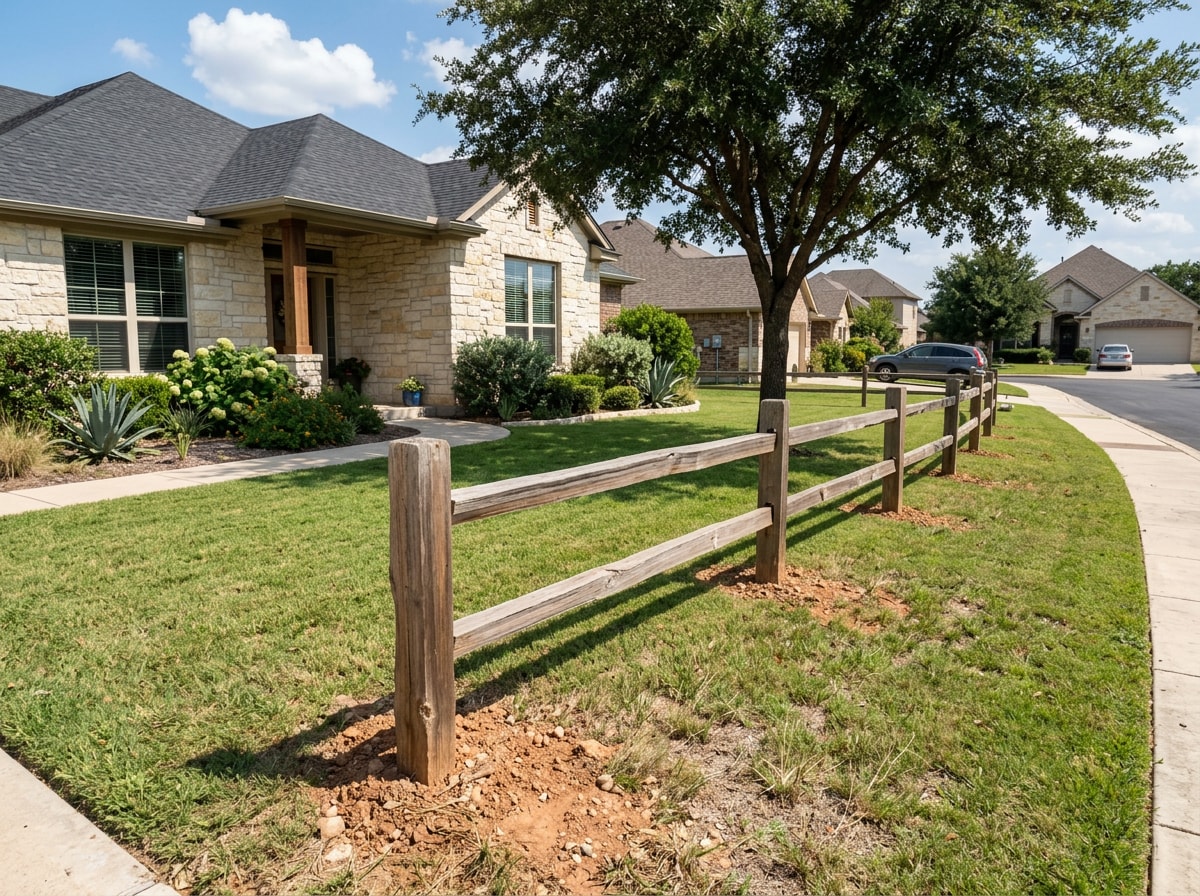
Local conditions matter more than most buyers expect. Duncanville sits on clay-heavy soil that expands and contracts with moisture swings, which can gradually shift or loosen fence posts if they aren't set deep enough or properly tamped.
North Texas also averages more than 46 days with thunderstorms per year according to National Weather Service climate normals for the Dallas/Fort Worth area, and that seasonal storm activity puts real stress on taller rail configurations over time. Rot-resistant wood like cedar or black locust tends to hold up better here than untreated softwoods, since the region's hot, humid summers accelerate decay in lower-grade lumber.
Permits and HOA Rules in Duncanville
Duncanville's building department requires a permit for building or replacing a fence , so it's worth confirming your project's status before buying materials rather than after. HOA communities in the area may also layer on their own height or material restrictions beyond what the city requires.
Checking the city's permit and inspection services page before purchasing materials can save a return trip to the supplier if your plans need adjusting. If you're unsure whether your neighborhood has additional rules, our Duncanville service area page is a good starting point for local guidance.
DIY or Full Install, You Choose
Split rail is one of the more DIY-friendly fence styles out there, thanks to its simple post-and-rail design with no fasteners or pickets to align. Many homeowners with basic tools and a weekend can set posts and drop in rails without major complications.
That said, professional installation starts to make more sense on larger acreage, uneven or rocky terrain, or anywhere permit paperwork and property line surveys come into play. Our crews have set split rail posts through Duncanville's clay-heavy ground enough times to know where shallow holes and poor tamping cause problems down the road, and a crew can move faster across long runs while catching grading issues before they become post-stability problems.
Ready to compare options for your property? Request a free quote to get started, or browse our full fence contractor services to see everything we install.
FAQ
What Is a Split Rail Fence?
A split rail fence is an open-style fence made of horizontal wood or synthetic rails fitted into vertical posts, with no pickets or boards between them. It's also called a post-and-rail or ranch rail fence, used mainly for marking boundaries rather than privacy or security.
What Is the Best Wood for a Split Rail Fence?
Western red cedar offers the best overall balance of cost, looks, and rot resistance for most homeowners. Black locust is the better pick if long-term durability matters more than upfront price, since it can outlast cedar by a decade or more. Pine remains the most budget-friendly option but needs more frequent maintenance and replacement.
How Much Do Split Rail Fence Materials Cost?
Materials alone, not counting labor, typically run $6 to $10 per foot for pine, $8 to $15 per foot for cedar, and $14 to $22 per foot for black locust. Vinyl and aluminum materials usually land between $12 and $22 per foot. Installed costs run higher once labor, posts, and gates are factored in.
How Long Does a Split Rail Fence Last?
Lifespan depends heavily on material and climate. Wood options generally last 10 to 25 years depending on species, pine on the shorter end, black locust on the longer end. Vinyl and other synthetic materials typically last 20 to 30 years with essentially no maintenance required.
Will a Split Rail Fence Keep My Dog in the Yard?
Not on its own. The open design has gaps wide enough for most dogs to slip through. Adding welded wire or mesh along the inside of the rails closes those gaps while keeping the rustic look.
Do I Need a Permit for a Split Rail Fence in Duncanville?
Yes. Duncanville's building department requires a permit before you build or replace a fence, regardless of style. Confirm the specifics for your lot and height plans with the city's permit office before ordering materials.