Aluminum fencing panels in Maypearl, TX typically run $22 to $45 per linear foot installed, with pool-code and privacy styles pushing toward the higher end. Acreage lots, pool additions, and simple yard upgrades each call for a different panel gauge and budget. This guide breaks down 2026 pricing, panel styles, and what Maypearl's heavy clay soil means for your installation before you request a quote.
2026 Aluminum Fence Panel Cost at a Glance
Most homeowners pay between $20 and $45 per panel for a standard 6-foot-wide section, which includes materials, fabrication, and hardware. A standard 6 ft wide by 4 ft high panel costs about $20-$40 per panel, with complete runs priced by linear foot at roughly $22-$38 per foot depending on profile and finish.
Pricing shifts quickly once you move into specialty styles. Classic picket aluminum runs about $30-$50 per linear foot, ornamental styles with decorative scrollwork run $40-$70 per linear foot, and pool-grade panels built to meet safety codes typically run $35-$60 per linear foot.
Quote shopping gets confusing fast because pricing isn't standardized across the industry. Ask five different aluminum fence companies for a quote, and you'll probably get five different numbers ranging anywhere from the low $20s to $60 a foot depending on how each contractor bundles materials and labor.
| Project Scope | Estimated Material Cost | Estimated Labor Cost | Installed Total |
|---|---|---|---|
| 100 linear ft, basic residential | $1,200-$2,000 | $1,000-$2,500 | $2,200-$4,500 |
| 150 linear ft, ornamental | $2,000-$3,200 | $1,300-$3,550 | $3,300-$6,750 |
| 250+ linear ft, pool-code or privacy | $4,500-$7,000 | $2,800-$6,500 | $7,300-$13,500 |
These ranges are a starting point, not a quote. The fastest way to get an exact number for your property is to request a free estimate from a local crew who can walk your fence line in person.
What Are Aluminum Fence Panels?
Aluminum fence panels are preassembled sections built to fit between posts, forming a continuous, uniform boundary line. Each panel is shaped from lightweight aluminum, welded into its final pattern, then finished with a powder-coated layer that resists rust and holds color for years.
Because panels arrive mostly complete, aluminum installs faster than fence systems built piece by piece on site. The material is light enough to maneuver on uneven ground without sacrificing the rigidity needed to hold a straight fence line across a long run.
Aluminum Fence Panel Styles and Where Each One Fits
Aluminum panels aren't one-size-fits-all. Manufacturers produce several distinct styles, each suited to a different job.
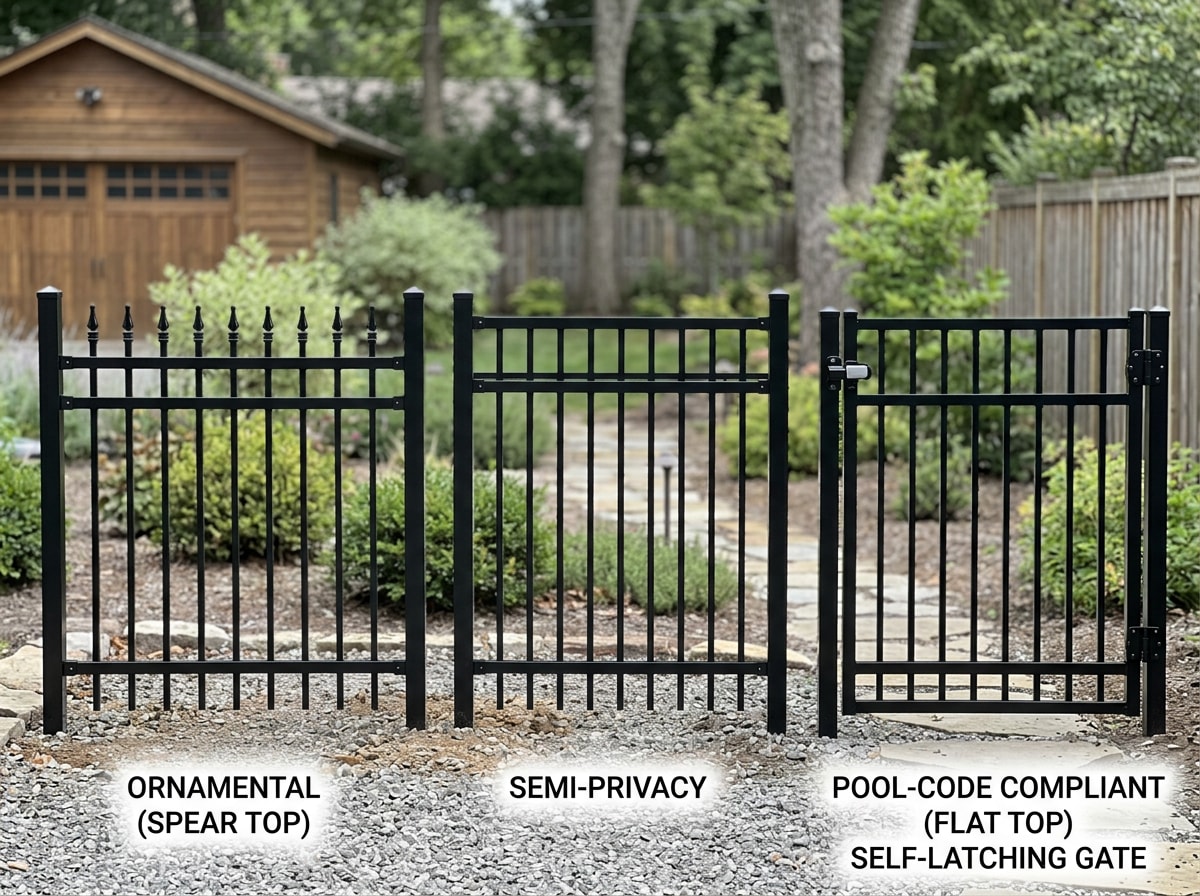
- Basic residential (3-4 ft): Front yard borders and curb appeal.
- Standard ornamental (4-5 ft): General-purpose residential fencing.
- Pool-code fencing: Tighter picket spacing built for safety-barrier compliance.
- Privacy-style aluminum: Closely spaced or semi-solid panels for backyards and patios.
- Commercial-grade (6 ft or taller): Businesses and high-traffic sites.
Privacy-oriented designs cut down on visibility, which works well around patios, pools, and commercial properties that need more screening. Decorative or ornamental panels often add arched tops, finials, or scrollwork for a more estate-style look.
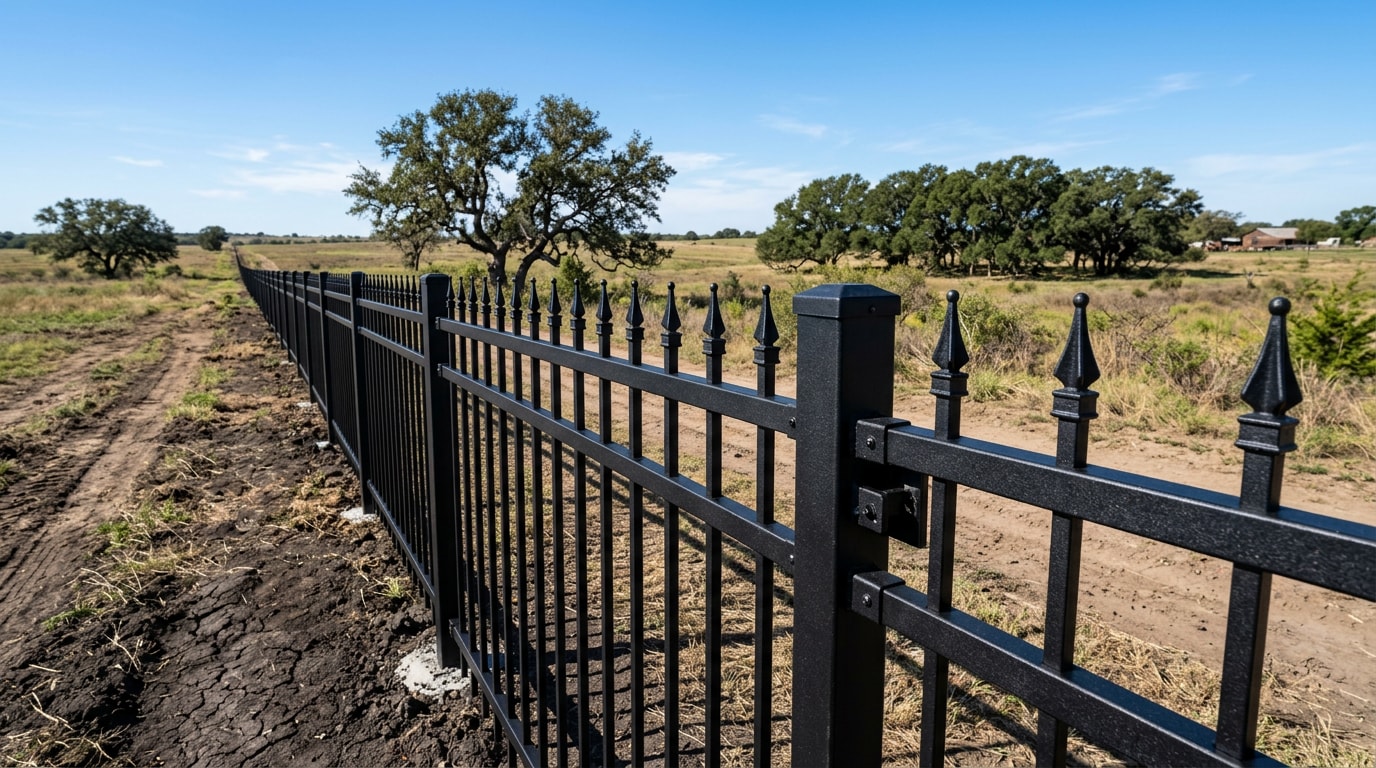
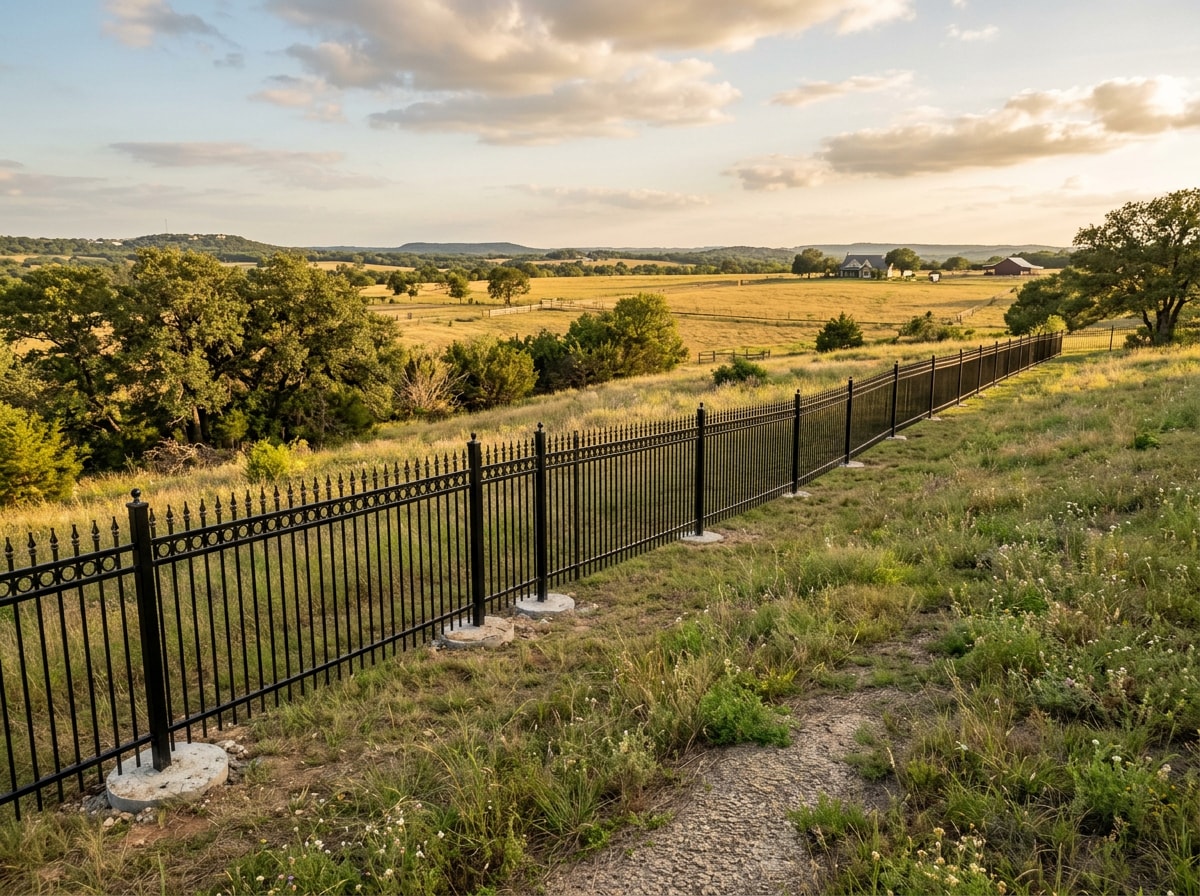
On the larger rural and acreage lots common around Maypearl, standard ornamental or commercial-grade panels tend to hold up better across long, open runs. Privacy styles built for compact suburban backyards flex more over unsupported spans.
A mixed approach often fits larger Texas lots better than running one style the whole way around. Privacy panels make sense close to the house. Ornamental panels work along the outer boundary. Explore the full range of metal fencing options before deciding which combination fits your property.
What Maypearl's Clay Soil Means for Your Fence Posts
Maypearl sits in Ellis County on Texas Blackland Prairie soil. Maypearl sits on Blackland Prairie expansive clay, which swells when saturated and shrinks in drought, stressing slab foundations and other structures set into the ground.
That same clay affects fence posts, not just house foundations. Post holes set too shallow in this soil can heave during wet winters and loosen during dry Texas summers, which is a detail most national pricing guides never mention because they aren't written for this soil type.
A crew familiar with local ground conditions will typically set posts deeper and use properly sized concrete footings to counter the seasonal swelling common in Ellis County clay. This is one of the first things worth asking about when comparing bids for acreage or rural lots around Maypearl.
Why Aluminum Fence Panel Prices Vary
Not all aluminum is the same thickness. Heavier-gauge panels resist dents and wind pressure better, but that durability costs more upfront. Thinner, budget-grade aluminum is easier on the wallet today but tends to flex more over long, unsupported spans common on rural lots.
Panel height, width, and finish quality are the strongest price levers. A decorative picket pattern or heavier-gauge alloy can push per-panel material costs up by 30% or more.
Aluminum ornamental fence systems built in the U.S. are also expected to meet a structural benchmark. ASTM F2957 defines minimum selection criteria and test procedures to ensure an ornamental aluminum fence system has sufficient strength to withstand reasonable loads and forces , which is part of why thicker-gauge, code-tested panels cost more than bargain imports.
Cost-Saving Moves When Budgeting Aluminum Panels
A few practical moves can meaningfully lower the final number:
- Order during the off-season. Late fall through early winter often comes with better scheduling availability.
- Compare quotes per-linear-foot, not just per-panel. A low per-panel price sometimes hides a higher labor markup.
- Bundle gate and post orders into the same purchase as the panels, which usually costs less than ordering separately later.
- Stick with standard heights. Custom picket spacing and nonstandard heights add fabrication time and cost.
Key Benefits That Make the Investment Worth It
Aluminum fence panels combine lightweight construction with real structural strength, which is part of why they've become a go-to for both residential yards and commercial property lines.
Lifespan is where aluminum tends to separate itself from other materials. Unlike steel or wrought iron, aluminum doesn't rust. The corrosion resistance of aluminum is due to its tendency to form a compact oxide layer over the surface, and the oxide formed offers a high resistance to corrosion.
That natural resistance is a major reason low-maintenance fencing buyers lean aluminum over painted steel or wrought iron. A properly finished panel holds up with little more than an occasional rinse.
Installation: What to Expect Before the Crew Shows Up
Aluminum fence installation usually starts with panels that arrive pre-assembled, which speeds up on-site work. Crews mainly set posts, level each panel, and secure hardware rather than building sections from raw material.
Sloped yards sometimes need racked or stepped panels to follow the ground's natural contour instead of leaving gaps underneath. This is common on rural Texas lots where grading isn't always flat.
For pool fence projects, height and gate hardware have to meet recognized safety-barrier guidance before the fence can pass inspection. A pool barrier should be at least 4 feet high around the entire perimeter, with self-closing and self-latching gates that open out from the pool. Confirm these details with your installer before panels are ordered, not after the crew finishes.
If you're ready to put a number on your specific property, the fastest path is a short visit from a local crew. Request your free estimate and get a per-foot price based on your actual fence line, not a national average.
Why Trust This Guide
This guide was put together by the P&S Fencing and Decking team, who install aluminum, wrought iron, and wood fencing across Maypearl and the surrounding Ellis County communities. We've set posts in the same Blackland Prairie clay described above, which is why the local soil guidance above comes from field experience, not a national template. Reach the team directly through the contact page with questions about your specific lot.
For a closer look at panel pricing in a neighboring market, see our metal fence panels guide for Venus, TX.
FAQ
Is aluminum fencing cheaper than steel or wrought iron?
Generally, yes. Aluminum is lighter and easier to fabricate, which keeps both material and installation costs down compared to steel or wrought iron. Wrought iron requires heavier posts, more labor, and ongoing rust maintenance that aluminum doesn't need, making aluminum the more budget-friendly option for most buyers.
Can I install the aluminum fence panels myself?
Aluminum panels are lightweight and often arrive pre-assembled, which makes DIY installation more realistic than with heavier materials. Aluminum panels are lightweight and often arrive pre-assembled, and going the DIY route can save $15 to $40 per linear foot in labor alone. That said, post setting and leveling still require accuracy, especially in Maypearl's clay soil, so uneven ground or long runs may be worth hiring out.
Why does pool fence cost more?
Pool-code aluminum pricing runs higher mainly because of code-driven requirements: specific height minimums, tighter picket spacing, and self-latching, self-closing gate hardware. Those add material and labor beyond a standard residential run.
How long does an aluminum fence typically last?
Most quality installations last twenty years or more with minimal maintenance, assuming the panels have a proper powder-coated finish from day one. Aluminum holds up particularly well in humid or rainy climates since it doesn't rust the way steel or iron eventually does without regular upkeep.
Is aluminum fencing more expensive than wood?
Upfront, aluminum is about the same or a bit higher than wood. Over time, aluminum tends to win out. Wood needs regular staining, sealing, and board replacement, while a powder-coated aluminum fence holds its finish for decades with minimal upkeep.
Do I need a permit for an aluminum fence near Maypearl?
Rules vary between incorporated Maypearl and unincorporated parts of Ellis County. Confirm height limits, setbacks, and any permit requirement with your local building department before ordering panels, especially on properties that straddle city and county lines.