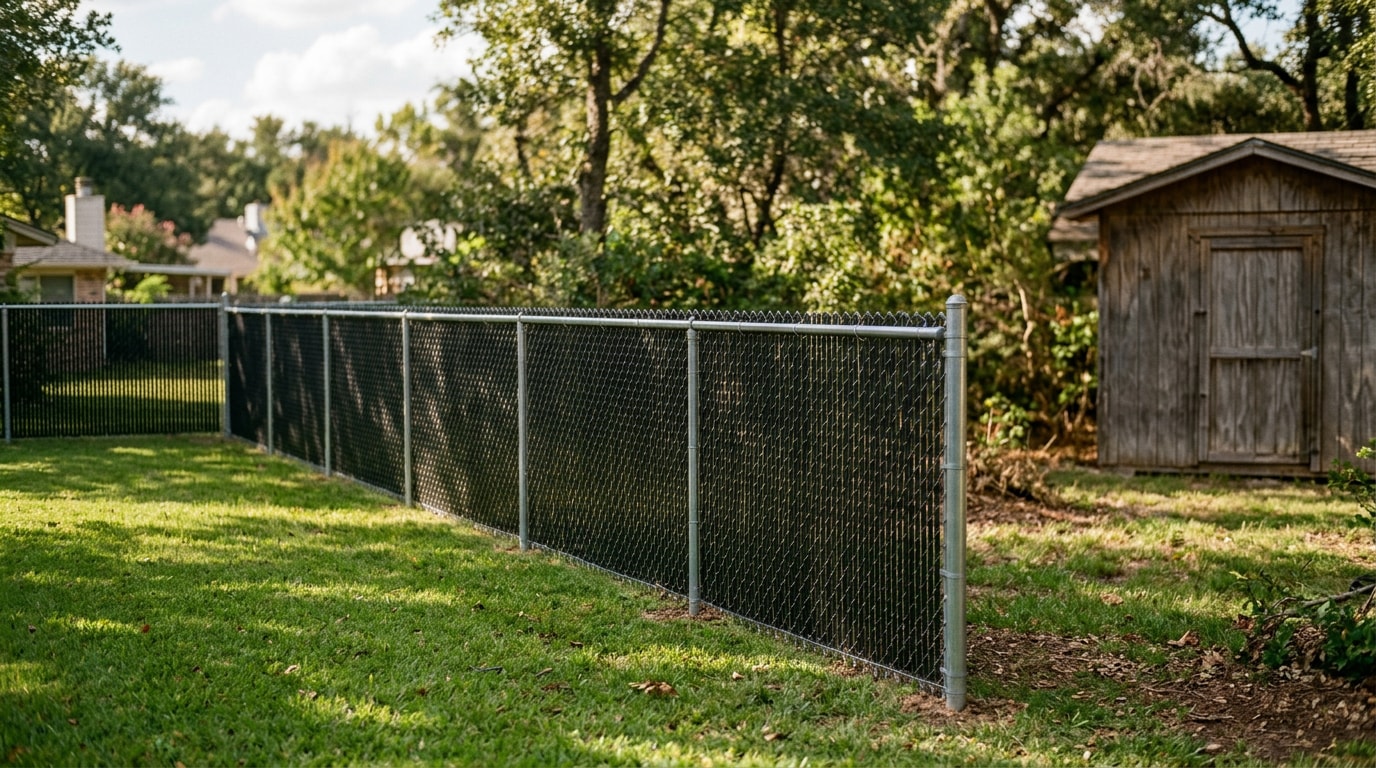
Fence slats in Lancaster, TX, USA turn an open chain-link fence into a private one without losing airflow or light. They're vertical or diagonal inserts woven directly through the mesh, and they're usually the fastest, least expensive way to add privacy to a fence you already have.
Before you order a bundle, though, it helps to know that Lancaster's own fence code sets limits on how solid a front-yard fence can be, which affects which slat style you can legally use. More on that below.
Types, Colors, and Privacy Levels of Fence Slats
Three slat styles cover most installations in Lancaster.
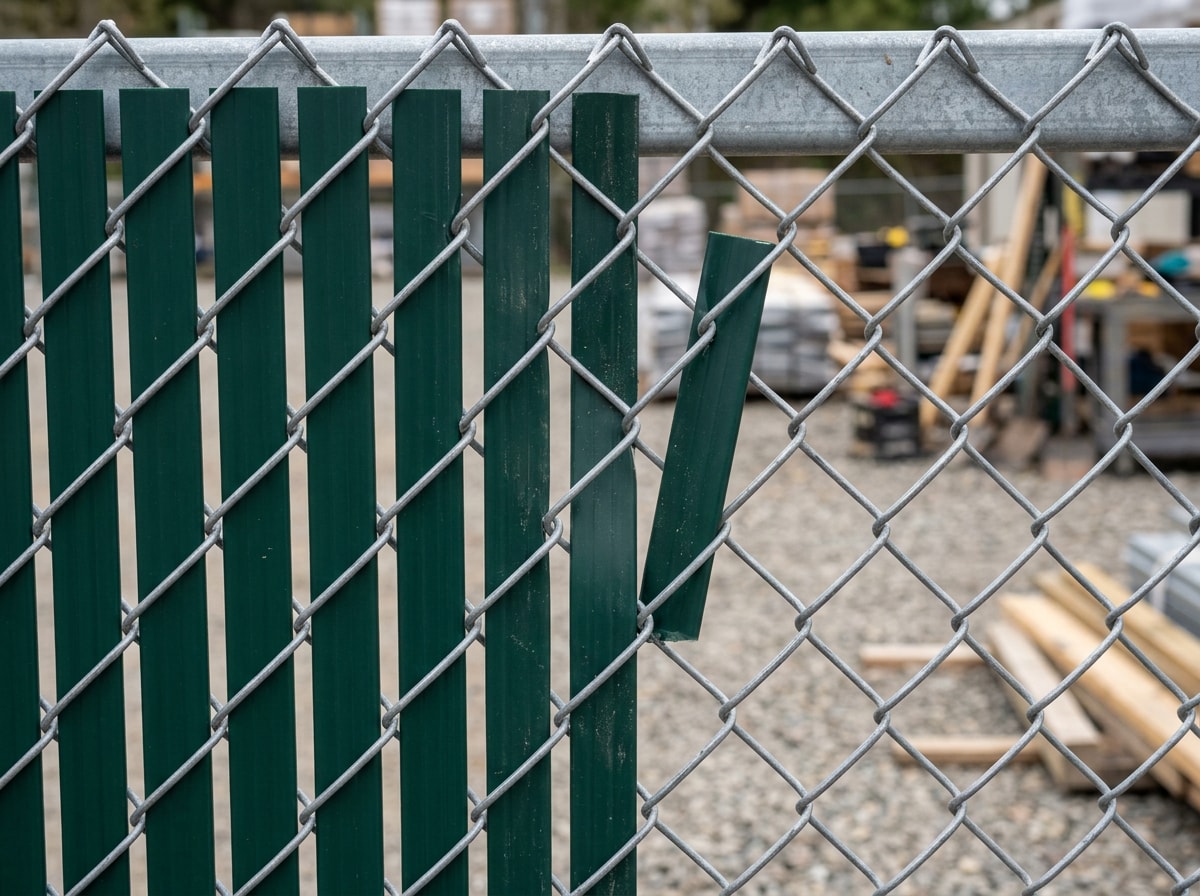
- Fence-weave (woven) slats run diagonally through the mesh instead of straight down.
Flat polyethylene strips woven diagonally through the chain link mesh provide approximately 70-75% privacy.
- Vertical bottom-lock slats slide straight down through the mesh and lock into a channel at the base.
These vertical slats lock into the bottom of the chain link fabric, provide approximately 85-90% privacy, and are faster to install than fence weave.
- Winged or double-wall slats have small fins that overlap neighboring slats to close extra gaps.
Common double-wall or locking slats are often described as providing privacy and wind-load factors around 80% to 90%, while some high-opacity products advertise up to 98% privacy on 2-inch mesh.
Standard colors include black, brown, green, white, and gray or beige, so slats can blend with landscaping or siding. One detail that's easy to miss: slats have to match the fence's mesh size. The wind load and privacy factor is approximately 98% for a 2-inch diamond and approximately 92% for a 2-1/4-inch diamond , so the same slat can look noticeably more or less private depending on which mesh it's woven into. For a closer look at how chain-link compares to other styles before you commit, our chain-link fencing page breaks down the material options.
Slat Style Comparison
| Slat Style | Privacy Level | Wind Load Impact | Best For |
|---|---|---|---|
| Fence-weave (woven) | ~70-75% | Lowest, most airflow passes through | Front yards, windy or open lots |
| Vertical bottom-lock | ~80-90% | Moderate | Backyards, standard residential runs |
| Winged / double-wall | ~90-98% | Highest, least airflow | Backyards, pool perimeters, storage yards |
No slat style fully replaces a solid privacy fence. Some sightlines and sound still get through, especially near gate seams. If full enclosure matters more than airflow, our privacy fencing options are worth comparing against a slatted chain-link setup.
Lancaster, TX Fence Codes and Permits for Slats and Chain-Link
This is the part most slat buyers skip, and it's the one that can get a front-yard fence flagged. Lancaster's building code sets different rules depending on where the fence sits on the lot.
| Location | Max Height | Openness Rule | Setback |
|---|---|---|---|
| Front yard | 4 feet | At least 50% open | 5 feet from front corners if over 4 feet |
| Rear or side yard | 8 feet | No openness minimum | Standard property line |
| Pool barrier | Separate guidelines apply | Openings restricted | Permit review required |
Fencing in the front yard may not exceed 4 feet in height and must be at least 50% open, i.e., picket fence.
Fences taller than 4 feet in height must also be set back from the front corners of the house a minimum of 5 feet. That 50%-open rule matters here: a winged slat rated at 90-98% privacy on a front-yard chain-link fence could push it past what the code allows, while a fence-weave slat in the 70-75% range is a safer bet for that location. Fencing in rear yards may not exceed 8 feet in height , with no openness minimum, which is why most homeowners save the densest slats for the backyard.
All new and/or replacement fences require a building permit prior to construction in Lancaster, and swimming pool barrier fences are subject to a different set of guidelines than a standard yard fence. Retrofitting slats onto an already-permitted chain-link fence usually doesn't require a new permit on its own, but it's worth a quick call to the city's building division before installing a high-coverage style on a front-yard fence or anywhere near a pool.
Choosing and Installing Fence Slats on a Chain-Link Fence
A few factors narrow down the right choice: matching mesh size, the condition of the existing fence, the privacy level wanted, and whether the posts can handle added wind load from higher-coverage slats.
Wind load is the detail most DIY installs miss. Chain link industry guidance explicitly warns that fences with windscreens or privacy slats may require a wind load strength analysis for post size and spacing. A bare mesh fence passes most of the wind right through it; slats turn that same fence into a partial sail, and the denser the slat, the more force the posts have to absorb.
When our crews retrofit slats onto an older chain-link fence in Lancaster, post depth and spacing get checked before anyone talks about color. A sagging line post under new wind load is the most common callback we see on retrofits, not a bad slat choice.
Installation means weaving each slat vertically or diagonally through the mesh diamonds, usually with a locking channel at the bottom to keep rows tensioned and even. A sagging or damaged fence should be repaired first, since the added surface area puts more strain on weak sections, posts, and ties. We cover post spacing and depth requirements in more detail in our guide to fence posts and 2026 code compliance, and our team handles both fence repair and replacement and slat installation across the Lancaster area.
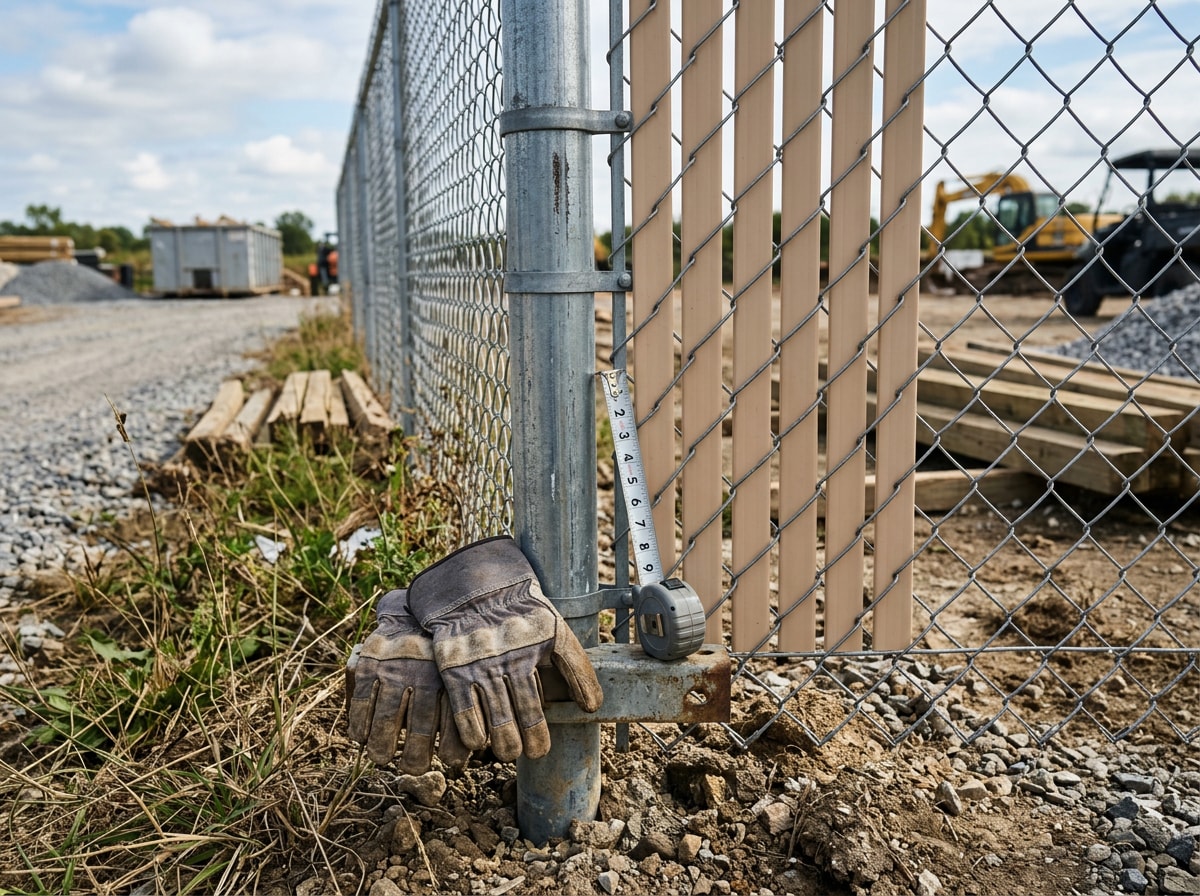
Can You DIY Fence Slat Installation?
Weaving slats into chain-link doesn't require specialized tools, and many homeowners install straightforward vertical slats themselves after confirming their mesh size. A pro makes more sense for taller fences, long runs, existing fence damage, or when a uniform, tensioned finish matters, such as on a commercial installation. Smaller residential jobs are usually fine as a DIY project; larger or commercial runs benefit from professional installation.
Chain-Link Options for Residential and Commercial Properties in Lancaster, TX
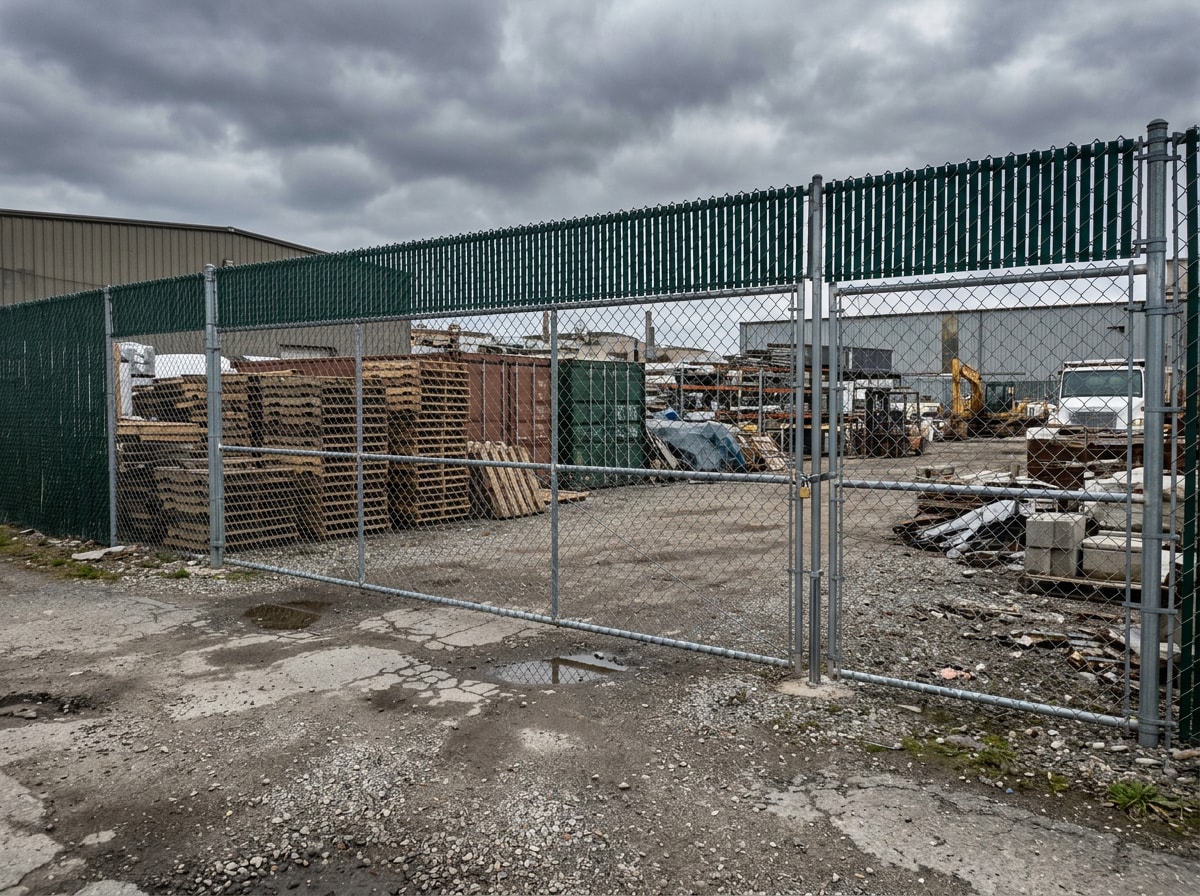
Residential privacy slats are a common upgrade for backyard or front-yard chain-link fences, giving homeowners more seclusion without sacrificing airflow or the open feel of a yard. Commercial and industrial properties use slats or windscreen material on warehouse perimeters, storage yards, and office fencing.
Slats work on both galvanized and vinyl-coated chain-link, so an existing fence rarely needs replacing just to add them. The Chain Link Fence Manufacturers Institute's product manual provides nationally recognized standards of quality for chain link fence fabric and framework , which is the baseline most slat manufacturers design their products to fit. See our galvanized fence options or browse metal fencing for material specifics, and for ongoing commercial properties our commercial fence repair service keeps slatted fences tensioned and upright after storms.
How Much Do Fence Slats Cost?
Fence slat cost generally runs on a per-linear-foot basis for materials, with added labor if a professional weaves them into a new or existing fence. Higher-coverage styles like winged or double-wall slats cost more per foot than fence-weave, and taller fences need more material overall.
On a new fence, chain link plus installed slats typically costs more than a wood or vinyl privacy fence , which blocks the view entirely without any add-on. That makes slats a better fit as a retrofit on a fence you already own than as a plan for a brand-new installation. Exact totals vary by style, height, and whether it's new construction or a retrofit, so treat any number you see online as a rough range, not a quote, until someone measures your specific layout. Request a free estimate for pricing specific to your fence line.
FAQ
What height should I choose for my chain-link fence in Lancaster, TX?
It depends on where it sits. Front yard fences in Lancaster may not exceed 4 feet in height and must be at least 50% open , while rear yard fences may go up to 8 feet with no openness requirement.
Anything over 4 feet in the front yard must also be set back a minimum of 5 feet from the front corners of the house. Pool areas follow a separate set of guidelines; see below.
Do I need a permit to add privacy slats to an existing fence?
All new and replacement fences in Lancaster require a building permit prior to construction. Adding slats to a fence that's already standing and already permitted usually doesn't trigger a new permit by itself, but check with the city's building division first if the fence is in the front yard or near a pool, since slat density can affect the openness requirement.
How do privacy slats affect wind load on a chain-link fence?
Adding slats turns open mesh into a partial wind sail, increasing load on posts and footings compared to bare chain-link. Industry guidance warns that fences with windscreens or privacy slats may require a wind load strength analysis for post size and spacing. Higher-coverage styles like winged slats catch more wind, so taller or more exposed fences may need sturdier posts and deeper footings.
How many fence slats do I need?
Measure your fence's total linear footage and count gates separately, since gate slats are often sized differently. Slats are typically sold in bundles sized to cover a set number of linear feet, so a quick measurement is usually enough to estimate how many bundles you'll need.
Will privacy slats work on a pool fence in Lancaster?
Swimming pool barrier fences are subject to a different set of guidelines than a standard yard fence. Spacing between vertical members in a pool barrier should not exceed 1¾ inches in width , which is why standard 2-inch mesh with slats, or a tighter mesh, matters for pool enclosures. Check with the city before finalizing a pool fence design.
Ready to compare slat styles against your actual fence line? Visit P&S Fencing and Decking or get a free estimate and we'll walk the property with you before you buy a single bundle.