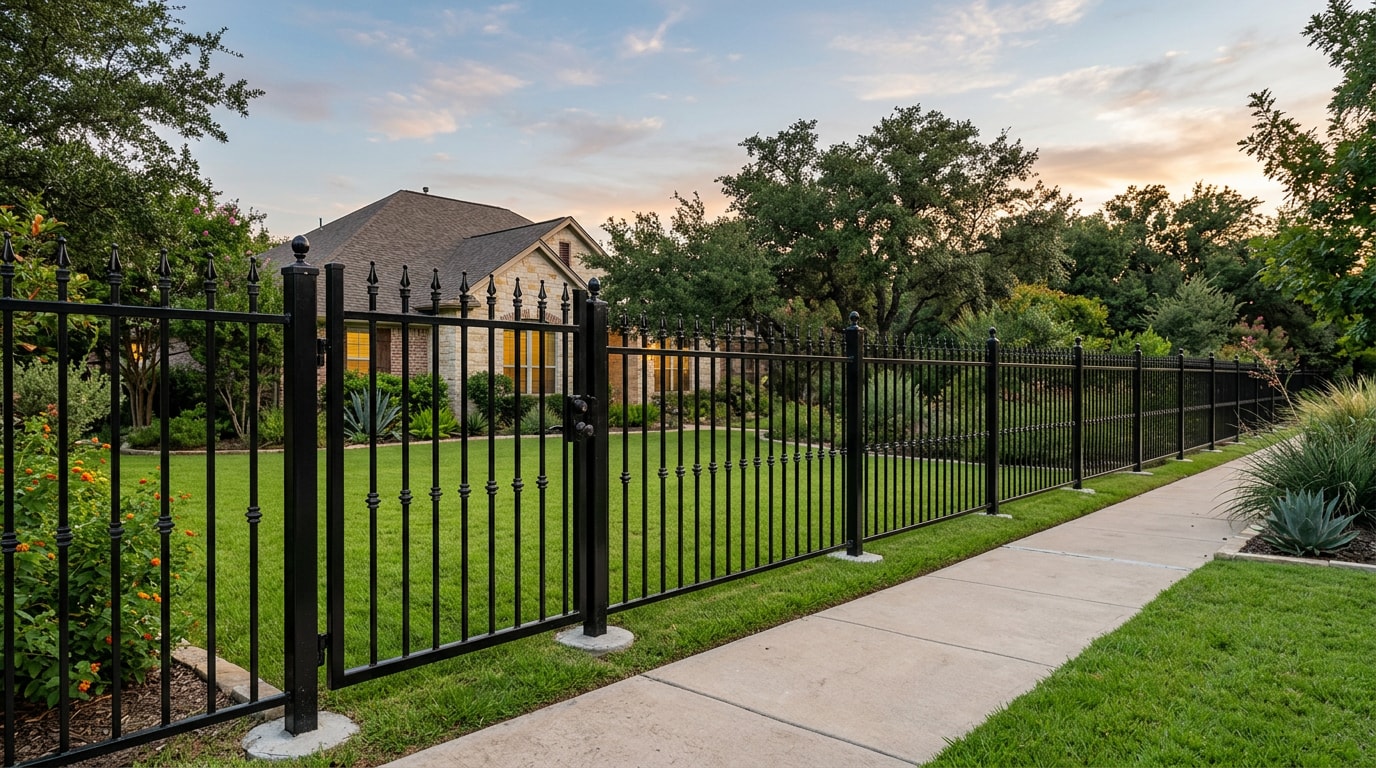
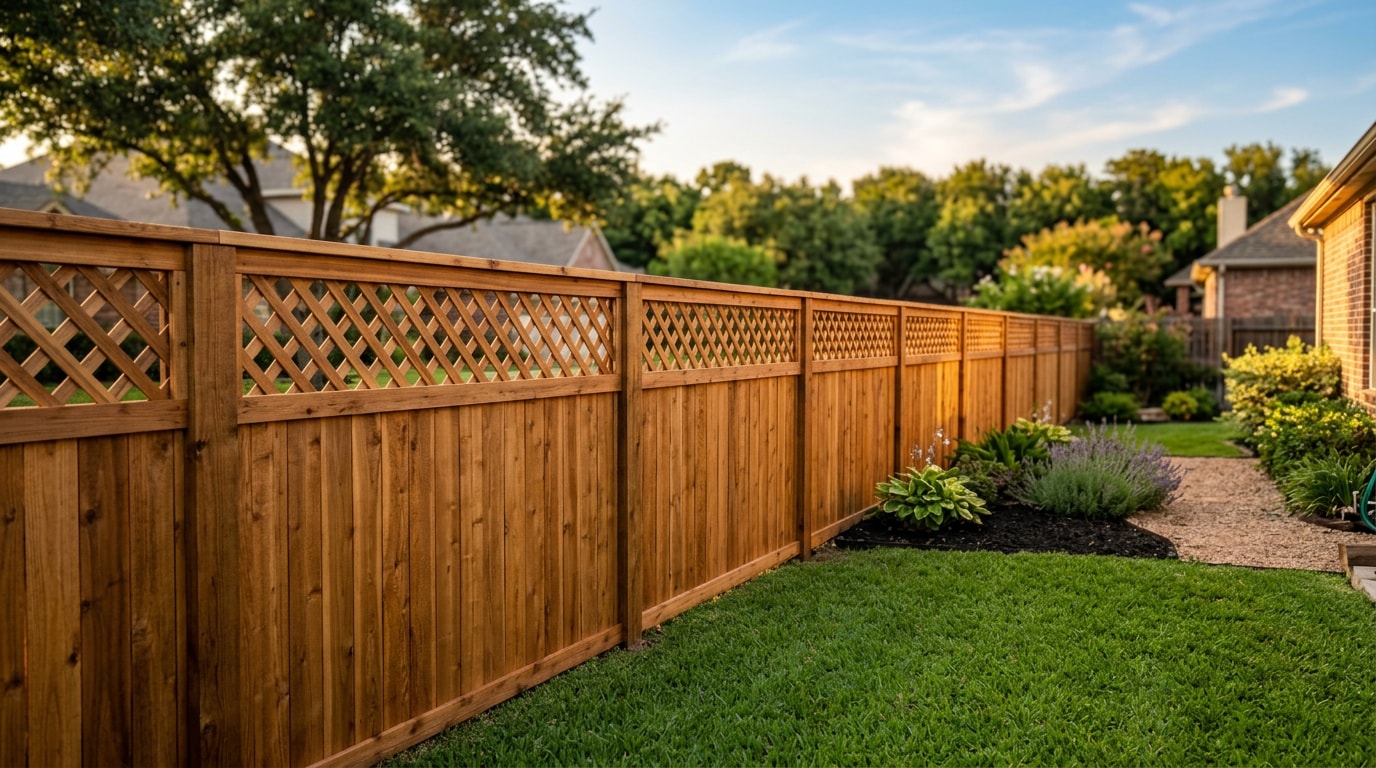
A lattice fence in Red Oak, TX adds privacy, airflow, and curb appeal for less than the cost of a full solid-board fence. Before you call a contractor, though, you need to know how the city's permit rules, the clay soil, and the pattern you choose will affect the finished product. This guide breaks down real material options, honest cost ranges, Red Oak's actual permit triggers, and the maintenance schedule that keeps lattice looking good for decades.
Lattice Fence Styles and Materials for Red Oak Homes
Lattice is built from one of four common materials: pressure-treated pine, cedar, vinyl (PVC), or composite. Each one trades off differently between upfront cost, appearance, and long-term upkeep.
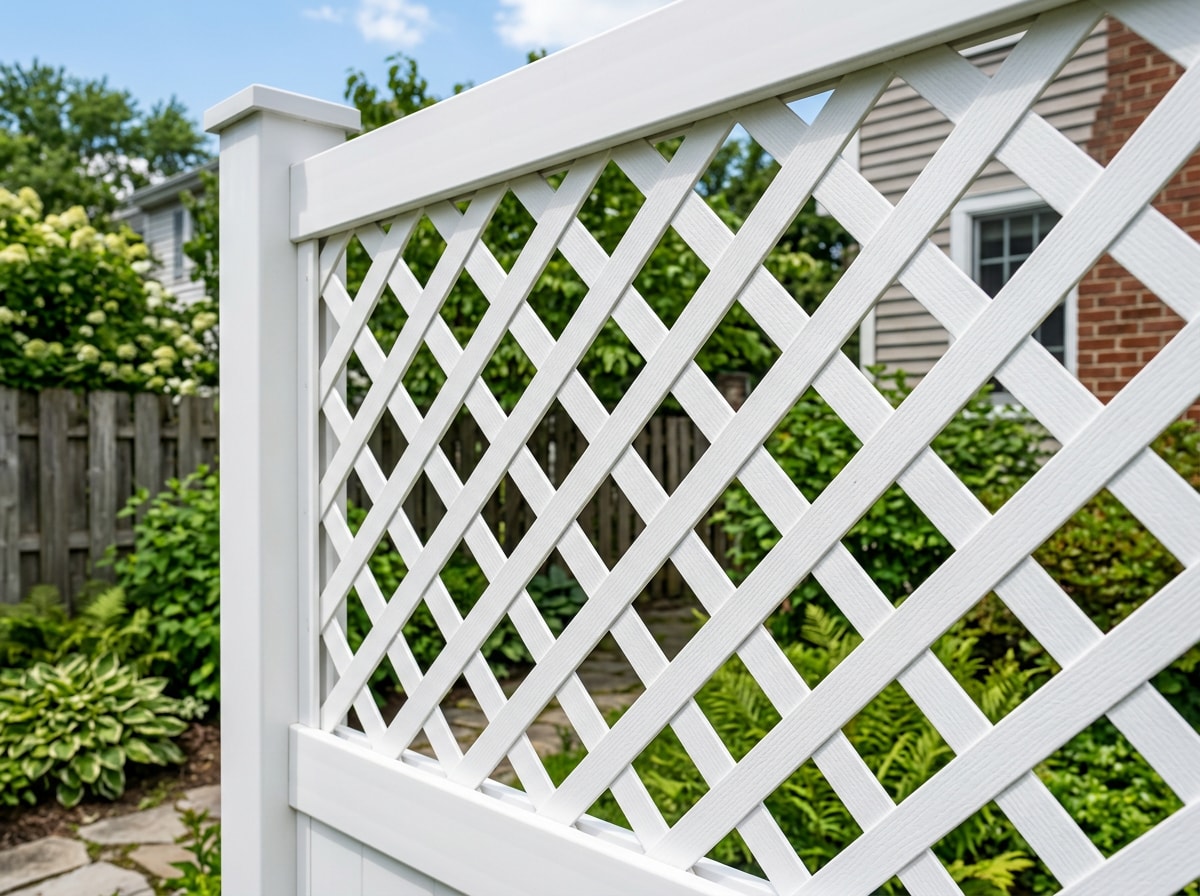
Pattern matters just as much as material. A tight diagonal crisscross weave blocks more sightlines than a wide square weave, so the pattern you pick directly controls how much privacy you actually get.
| Material | Look | Privacy Level | Relative Lifespan | Maintenance |
|---|---|---|---|---|
| Pressure-treated pine | Natural, rustic | Moderate | 10–15 years | Regular sealing needed |
| Cedar | Warm, upscale | Moderate | 15–20 years | Periodic staining/sealing |
| Vinyl (PVC) | Clean, uniform | Moderate-high (tight weave) | 20–30 years | Occasional washing |
| Composite | Wood-like, consistent | Moderate | 20–25 years | Minimal |
Quality vinyl lattice is generally manufactured to meet ASTM International's F964 standard for rigid PVC fencing and railing profiles. That standard covers material composition, weatherability, and dimensional tolerances, which is a useful benchmark when you're comparing vinyl lattice panels from different suppliers.
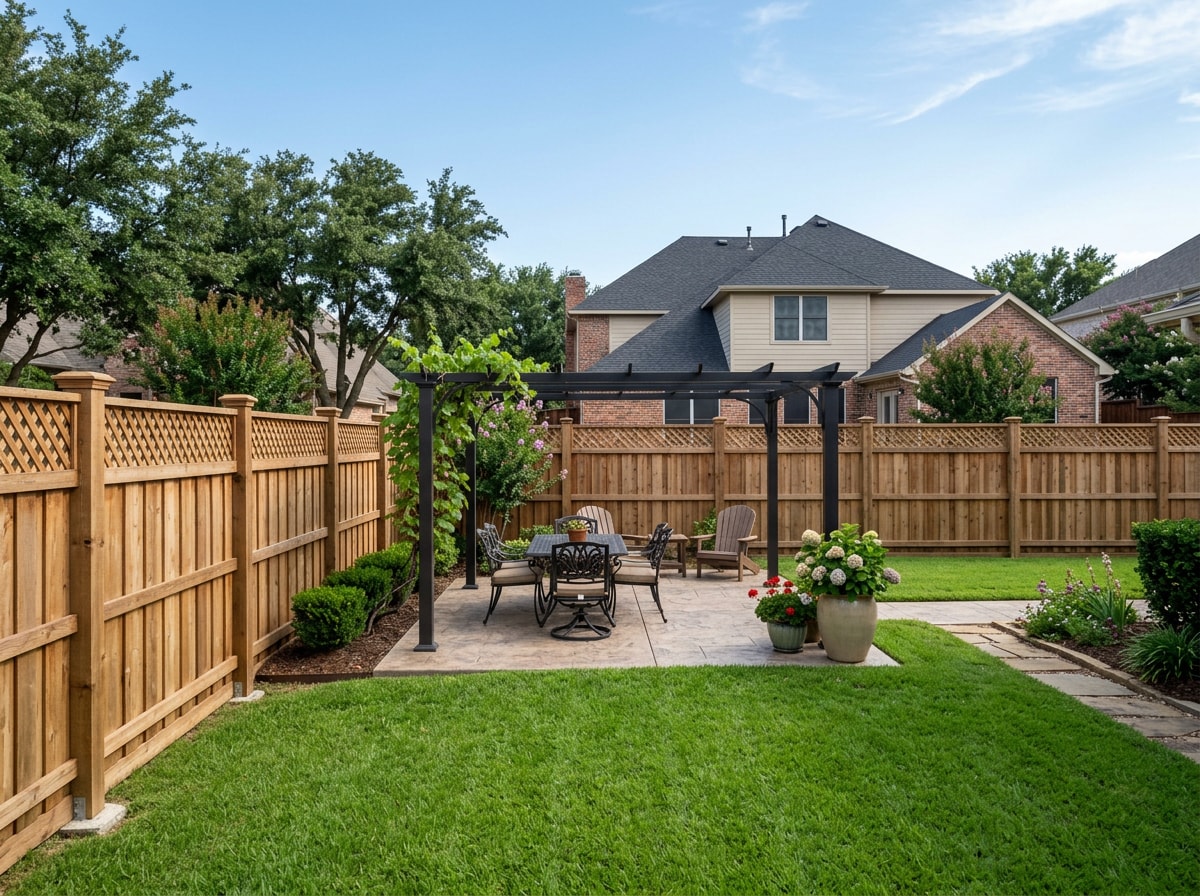
The Classic Privacy Fence With a Lattice Top
The most common lattice application in Red Oak isn't a full lattice fence at all. It's a solid privacy panel with an open lattice section running along the top one to two feet.
This gives you full privacy at eye level while still letting light and breeze move through above. A lattice topper also softens the look of an otherwise plain fence line without sacrificing the privacy that matters most, near patios, pools, and windows.
If you want to see how this pairs with other materials, our vinyl fence installation and cedar fence installation teams both build solid-bottom, lattice-top combinations as a standard option.
Where Lattice Fits Among Red Oak's Other Fence Options
Homeowners across Red Oak typically choose between cedar privacy panels, board-on-board construction, and tall 8-foot privacy fences for maximum seclusion. Lattice fills a different role: it's the semi-privacy, decorative option, used either as a standalone fence for a garden divider or as a topper on an otherwise solid run.
It's a strong pick if curb appeal and airflow matter more to you than total enclosure. One regional note worth flagging: Red Oak's clay-heavy soil and hot summers put real stress on wood fencing of any style, which we'll come back to in the maintenance section below.
If you're still comparing styles beyond lattice, browse the full range of fence contractor services we offer in the area, including privacy fencing and standard wood fence installation.
Pros and Cons of a Lattice Fence
A lattice fence trades some privacy and durability for better airflow, lower material cost, and more visual character than a solid panel fence. It works well for garden dividers, side-yard accents, or fence tops. It's a weaker choice if blocking a neighbor's full view is your main goal.
What lattice does well:
- Adds curb appeal and architectural interest to an otherwise plain fence line
- Lets air move through the yard instead of trapping heat against a solid wall
- Gives climbing plants and vines a structure to grow on
- Costs less in materials than a full solid-board fence of the same length
Where lattice falls short:
- Offers only partial privacy, not full visual blocking
- Uses thinner strips that are more fragile than solid panels
- Catches more wind load during storms because of the open weave
- Wears faster under direct Texas sun if the wood isn't sealed on schedule
A lattice-top addition running along a shared backyard fence line tends to perform well here, since the solid lower section still handles privacy and the lattice above is mostly decorative. A full lattice fence used as a stand-alone garden divider sees more flex and wear, because the entire structure is open weave with less structural backing behind it.
What a Lattice Fence Can't Do
Lattice alone won't fully block sightlines, and it isn't built as a security barrier. If total seclusion from neighbors or the street is your top priority, a full privacy fence with solid panels, not lattice, is the better fit. Accept these limitations upfront rather than discovering them after installation.
How Much Does a Lattice Fence Cost in Red Oak, TX?
Lattice pricing depends heavily on whether you're installing a full lattice fence or simply adding a lattice top to an existing or new privacy fence, plus which material you choose.
As a rough per-linear-foot guide:
- Pressure-treated pine lattice tends to run on the lower end of the price scale
- Cedar lattice sits in the middle
- Vinyl and composite lattice cost more upfront but need less upkeep over time
For context, installed cedar privacy fencing in the Red Oak area commonly runs in the mid-$20s to mid-$40s per linear foot, depending on material and height. That range covers a standard full privacy fence, not lattice-specific pricing. A lattice top added to an existing fence is typically cheaper than a full replacement, since it needs less material and less labor than building a new fence from the ground up.
Because every yard and fence condition is different, the most reliable way to get real numbers for your property is to request a free estimate based on your exact layout and material choice.
Permits, Height Limits, and HOA Rules for Lattice Fences in Red Oak, TX
Most homeowners don't realize that a lattice topper counts toward a fence's total measured height for permitting purposes. It isn't treated as purely decorative. Cities generally measure from grade to the top of the structure, lattice included, which can push a fence over a height threshold that otherwise wouldn't need a review.
Red Oak's own building department spells out the actual triggers. According to the city, a residential building permit is required for a new fence, for changing a fence's height, for moving a fence from its current location, or for replacing more than 25% of the pickets on an existing fence. That last trigger surprises a lot of homeowners doing a partial lattice-top retrofit.
A few other rules worth knowing before you plan a layout:
- The maximum allowed fence height in Red Oak is 8 feet
- On a residential lot, a fence generally cannot extend beyond the front building line, with narrow exceptions for Residential Estates zoning or lots of at least one acre
- A fence cannot obstruct any public right-of-way
- Fences must be built from wood, masonry, brick, wrought iron, wire, woven wire mesh, or similar compatible materials
Corner lots have an extra wrinkle. Red Oak's zoning code also restricts the height of fences, walls, and other obstructions within the visibility triangle near street intersections to no more than 2 feet, measured from the curb line. If your lot sits on a corner, that limit can affect where a taller lattice section is allowed to start.
Keep in mind that city permitting and HOA rules are two separate approval layers. Even a fence that meets Red Oak's height limit may still need separate architectural review if your neighborhood has an HOA. We've covered similar layered fencing rules in our breakdown of chicken wire fence rules for Irving, TX, if you want a sense of how differently neighboring cities handle fence material and height questions.
For Red Oak-specific installation details, our Red Oak, TX service area page covers local requirements, and our fence repair and replacement team can confirm whether a planned lattice retrofit crosses the 25% picket-replacement threshold before you start.
How Long Will a Lattice Fence Last, and What Maintenance Does It Need?
Lifespan and upkeep vary a lot by material. That difference is often what decides whether a homeowner picks wood or vinyl in the first place.
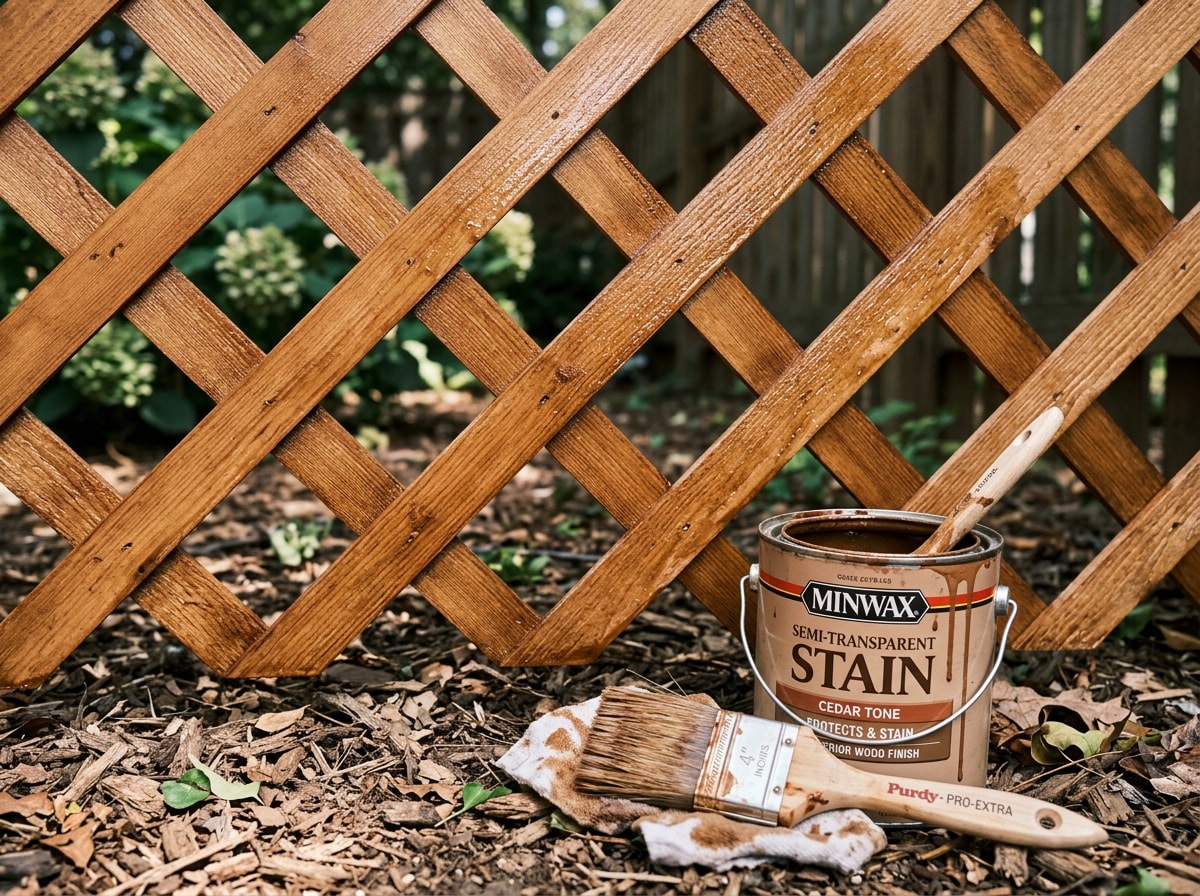
Vinyl lattice can last 20 to 30 years with little more than an occasional wash. Wood lattice generally needs resealing or staining every one to three years to hold up against sun and moisture.
Sealing isn't optional if you want wood lattice to last. Untreated or neglected wood can start showing rot and warping well within a decade, especially in a hot, humid climate like North Texas. The USDA Forest Service's Forest Products Laboratory publishes detailed guidance on water-repellent preservatives and fence maintenance that can meaningfully extend wood fence life when applied correctly and on schedule.
One practical caveat from the field: climbing vines and vegetation, a popular use for lattice, can trap moisture directly against wood surfaces and speed up rot even with regular sealing. In our installations across Red Oak's clay-heavy lots, we've also seen lattice toppers mounted on reinforced posts hold up noticeably better during high-wind spring storms than those set on standard wood posts alone.
Vinyl lattice maintenance, by comparison, mostly means an occasional rinse with a hose. That makes it the lower-effort choice for busy households, even though it costs more upfront.
Ready to compare options for your own yard? Browse recent completed fence projects or get a free estimate for a lattice fence, lattice topper, or full privacy fence install in Red Oak.
FAQ
Does a lattice fence need a permit in Red Oak, TX?
It depends on what you're doing. Adding a lattice topper to a brand-new fence, changing an existing fence's height, or replacing more than 25% of the pickets on a current fence all require a residential building permit from the City of Red Oak. A small decorative lattice panel that doesn't change your fence's height or footprint typically doesn't trigger a permit, but confirm with the city before you start.
How much does a lattice fence cost compared to a solid privacy fence?
A lattice topper added to an existing or new privacy fence usually costs less than a full solid fence of the same length, since it uses less material and less labor. A full stand-alone lattice fence can run less than solid cedar privacy fencing per linear foot, but it also offers far less privacy and wind resistance.
Is lattice fencing good for privacy or just decoration?
Lattice provides partial privacy, not full seclusion, since the open weave allows some visibility through the gaps. Pairing it with a solid lower section, a tighter weave pattern, or climbing plants improves privacy without losing the decorative effect.
What's the best material for a lattice fence in North Texas?
There's no single best material for every yard. Vinyl suits homeowners who want minimal upkeep and can handle Texas heat without warping. Wood or cedar suits those who want a natural look and lower upfront cost but are willing to reseal every one to three years. Composite splits the difference as a durable, low-maintenance middle ground.
How tall can a fence be in Red Oak, TX?
The maximum allowed fence height in Red Oak is 8 feet for standard residential rear and side-yard fencing. Front-yard placement is more restricted, and corner lots have an additional 2-foot height limit within the visibility triangle near intersections.
For help choosing the right style, material, and layout for your property, visit P&S Fencing or contact our team to schedule a free estimate.
About the author: This guide was prepared by the P&S Fencing project team, a Texas-based fence and outdoor living contractor serving Red Oak and Ellis County with custom lattice, privacy, vinyl, and wood fence installations. Questions about your specific lot or HOA? Reach out through our contact page.