
Hiring structural steel contractors in Ovilla, TX means vetting a crew whose work will outlast your lease, your loan, and possibly your own tenure at the company. Ovilla sits at the edge of the Ellis and Dallas county line, and the commercial corridor along Highway 342 keeps pulling in warehouses, light-industrial shops, and retail build-outs that all depend on a steel frame going up correctly the first time. This guide breaks down what these contractors actually do, how to check their credentials, and what 2026 pricing looks like before you put a deposit down.
What Does a Structural Steel Contractor Do?
A structural steel contractor manages the full lifecycle of a building's steel skeleton, from reviewing engineering drawings through fabrication and finally raising the frame on site. Understanding these three stages helps you ask sharper questions during a bid process and spot a contractor who truly controls quality end to end.
From Blueprint to Reality
Before any steel gets cut, a qualified contractor studies the architect's and engineer's drawings and translates them into detailed shop drawings. These documents specify every beam length, connection point, and bolt hole. A contractor skilled at this stage catches design conflicts early, which prevents costly rework once fabrication begins.
The Art of Steel Fabrication
Fabrication happens in a controlled shop environment, where steel is cut, drilled, and welded to the shop drawing specs. Reputable shops run quality control checks, including weld inspections, dimensional tolerance checks, and material certification reviews, before a single piece leaves the facility. This stage is where craftsmanship either shows up or falls short later on site.
Erection: Building the Bones
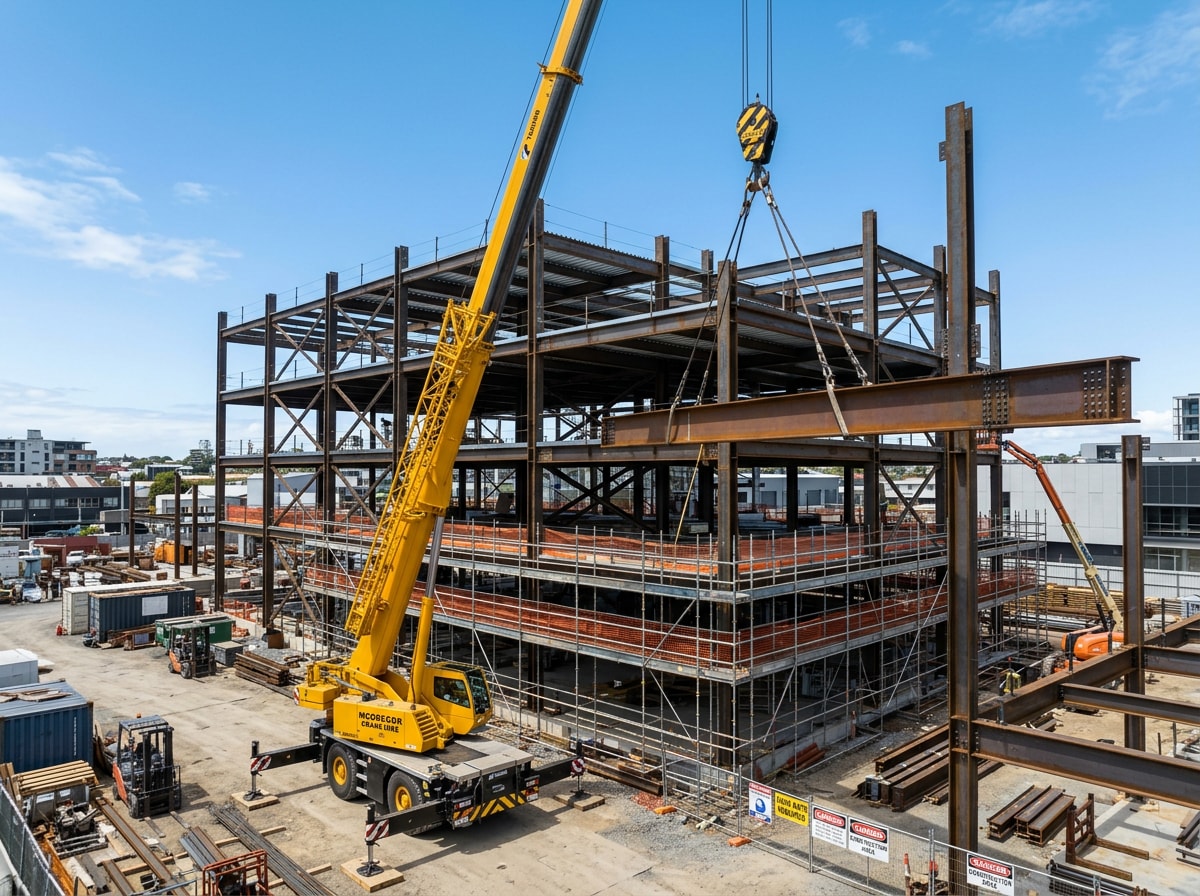
Erection is where the steel frame physically takes shape. A trained ironworker and erector crew bolts and welds members into place, often using cranes to set large sections in sequence. This is the most visible, and highest-risk, phase of the project, which makes crew experience non-negotiable.
Why Local Businesses Are Choosing Steel for Ovilla-Area Projects
Structural steel is a category of steel shapes engineered specifically for load-bearing construction, prized for its strength-to-weight ratio, stiffness, and resistance to weather. Unlike wood, it will not warp, rot, or attract termites, and modern coatings give it strong fire resistance for code compliance.
That durability matters more as Ovilla's business corridor fills in. Warehouses, offices, and light-industrial buildings along I-35E and Highway 67 increasingly go up in steel because it erects faster than masonry or wood framing and needs far less upkeep over the life of the building. A pre-engineered steel shell can often be enclosed in weeks rather than months, which matters when a lease start date or construction loan draw schedule is already set.
Low maintenance is the other draw. Steel does not need the periodic sealing, painting, or pest treatment that wood structures often require, so lifecycle costs tend to run lower even when the upfront bid is comparable to other framing methods. If your project is part of a larger renovation or expansion rather than a standalone building, it's worth reading our related guide on home renovations contractors in Ovilla, TX for how steel and remodeling scopes typically get sequenced together.

Many Ovilla business owners pair steel framing with broader metal building construction or full commercial projects services that cover site prep through interior finish-out.
How to Verify AISC Certification and Why It Matters
AISC certification is not a license to operate. It is a third-party audit confirming a fabricator's or erector's quality management system meets documented standards for a specific scope of work. The Building Fabricator (BU) program's governing documents outline certification requirements for building fabricators regardless of project size or complexity, and certification covers all aspects of structural steel fabrication from contract receipt through final delivery.
Fabricators and erectors are not certified under one blanket label. Depending on scope, a company may hold Building Fabricator (BU) certification for shop-fabricated building frames, Bridge Fabricator certification at the Simple, Intermediate, or Advanced level (SBR, IBR, ABR) for bridge work, or Certified Steel Erector (CSE) status for field erection, sometimes with added endorsements for seismic work or complex coatings.
Matching the certification to your project matters because a company certified only for simple building fabrication may not carry the quality controls needed for a complex, multi-story, or seismic-zone structure. Before hiring, ask to see the current certificate, confirm which program it covers, and check the listing directly through the AISC Certification Program.
Adherence to Safety Standards and Regulations
Steel erection ranks among the higher-risk trades in commercial construction, which is why a contractor's safety culture deserves real scrutiny, not just a mention in a sales pitch. Ask prospective contractors about their recordable incident rate, their OSHA compliance history, and how they train crews on fall protection and rigging before anyone works aloft.
Under OSHA's steel erection standard, all employees engaged in steel erection must be protected from fall hazards when working more than 15 feet above a lower level. That threshold is written into OSHA's steel erection standard, 29 CFR 1926 Subpart R, and any contractor you hire should be able to speak to it fluently, not vaguely.
A contractor with a genuine safety-first mindset will have documented PPE policies, regular safety meetings, and crews trained in proper lifting and rigging procedures. If a bidder can't produce a written site-specific erection plan on request, treat that as a red flag, not a formality.
Step-by-Step Hiring Checklist for Structural Steel Contractors
Once you've narrowed your list, use a practical checklist to compare Ovilla-area contractors apples-to-apples rather than relying on gut feeling alone.
- Confirm certification scope. Ask which AISC program (BU, SBR/IBR/ABR, or CSE) the company holds and whether it matches your project type.
- Check safety records. Request OSHA incident rates and ask how crews are trained under Subpart R.
- Review past projects. Ask for two or three references from jobs similar in size and scope, then call them.
- Compare communication style. Ask how often they'll report progress and who your single point of contact will be.
- Get a detailed proposal, not a one-liner. A thorough bid addresses site conditions, lead times, and finish scope, not just a bottom-line number.
Project Management Skills
Ask each contractor how they handle schedule management and whether they can share a proven delivery history on similar-sized jobs. Call the references and ask specifically whether deadlines and budgets held up through completion, not just whether the finished building looks good.
Next Steps: Contact and Consultation
Once you've shortlisted two or three candidates, schedule a site visit and request a detailed sample proposal. Compare how thoroughly each contractor addresses your site conditions, not just the price. Ready to start that conversation? Request a quote to get a project-specific consultation scheduled, or browse recent projects to see completed work before you commit.
Structural Steel Project Costs: A 2026 Breakdown
Steel project costs break down into four main drivers: raw material, fabrication and labor, finish or coating systems, and delivery logistics. Material prices move with mill output and tariff policy, and BLS data shows steel mill products rose 2.2 percent in September 2026 alone , so a quote from six months ago may no longer hold.
| Project Type | Est. Cost per Sq. Ft. (2026) |
|---|---|
| Steel kit (materials only) | $9 – $14 |
| Installed steel shell | $18 – $28 |
| Fully finished commercial building | $35 – $55+ |
These ranges shift based on site conditions, span length, and finish-out scope, so treat them as a starting point for budgeting conversations rather than a fixed quote. North Texas labor availability and steel pricing swings can push numbers toward the higher end during peak construction seasons. For a broader view of current material pricing trends, the Bureau of Labor Statistics Producer Price Index tracks monthly movement in steel and fabricated metal products.
Structural Steel vs. Other Framing Systems
Steel framing generally outperforms wood on span capability and fire resistance, and it beats concrete on build speed and weight-to-strength ratio, though concrete can edge out steel on raw compressive strength for certain foundations. Wood framing remains cheaper upfront for smaller structures but cannot match steel's clear-span flexibility for warehouses or large retail floor plans.
Concrete construction typically takes longer to cure and form before it becomes load-bearing, while steel frames can often be erected and ready for enclosure within days of delivery. Cost comparisons should always account for lifecycle maintenance, not just the initial framing bid, since wood requires more ongoing upkeep over a 20 to 30 year horizon. If your project also involves foundation work, our steel building construction and general construction teams can scope both the frame and the slab together.
FAQ
How much does it cost to hire a structural steel contractor in Ovilla, TX?
Costs vary by scope, but 2026 North Texas ranges run roughly $9 to $14 per square foot for materials alone, $18 to $28 for an installed shell, and $35 to $55 or more for a fully finished commercial building, depending on site conditions and finishes.
What is the difference between a structural steel contractor and a general contractor?
A structural steel contractor is a specialty trade focused on fabricating and erecting the steel frame itself. A general contractor coordinates the entire project, including the steel contractor, electricians, and other trades, from start to finish.
What is AISC certification and why does it matter?
AISC certification is a third-party audit confirming a fabricator's or erector's quality systems meet documented industry standards for a specific scope, such as Building Fabricator (BU) or Certified Steel Erector (CSE). It is a strong indicator of consistent quality control, though it is not a legal licensing requirement.
Do I need a permit for a steel building in Ovilla, TX?
Yes. Ovilla requires permits for new buildings as well as accessory buildings, any type of add-on or alteration, and other structures, to ensure a standard of design, material, and workmanship complies with the city's code of ordinances. Confirm current requirements directly with City of Ovilla Permits, and check our service areas page to see if your part of Ellis or Dallas County falls in our coverage area.
How long does it take to erect a steel building?
Erection timelines depend heavily on building size and site access, but a pre-engineered steel shell is typically erected and closed in within weeks once materials arrive on site, far faster than comparable wood or masonry framing.
Ready to compare bids with confidence? Contact our team for a project-specific consultation on your Ovilla steel build.