Chicken wire is a lightweight, galvanized wire woven into a hexagonal pattern, and in Irving, TX it is not an approved material for a permanent fence. That single fact trips up a lot of homeowners who assume any wire mesh counts as "fencing." Before you buy a roll at the hardware store, here's what the city actually allows, what a permit costs, and where your property line really sits.
What Is Chicken Wire, Exactly?
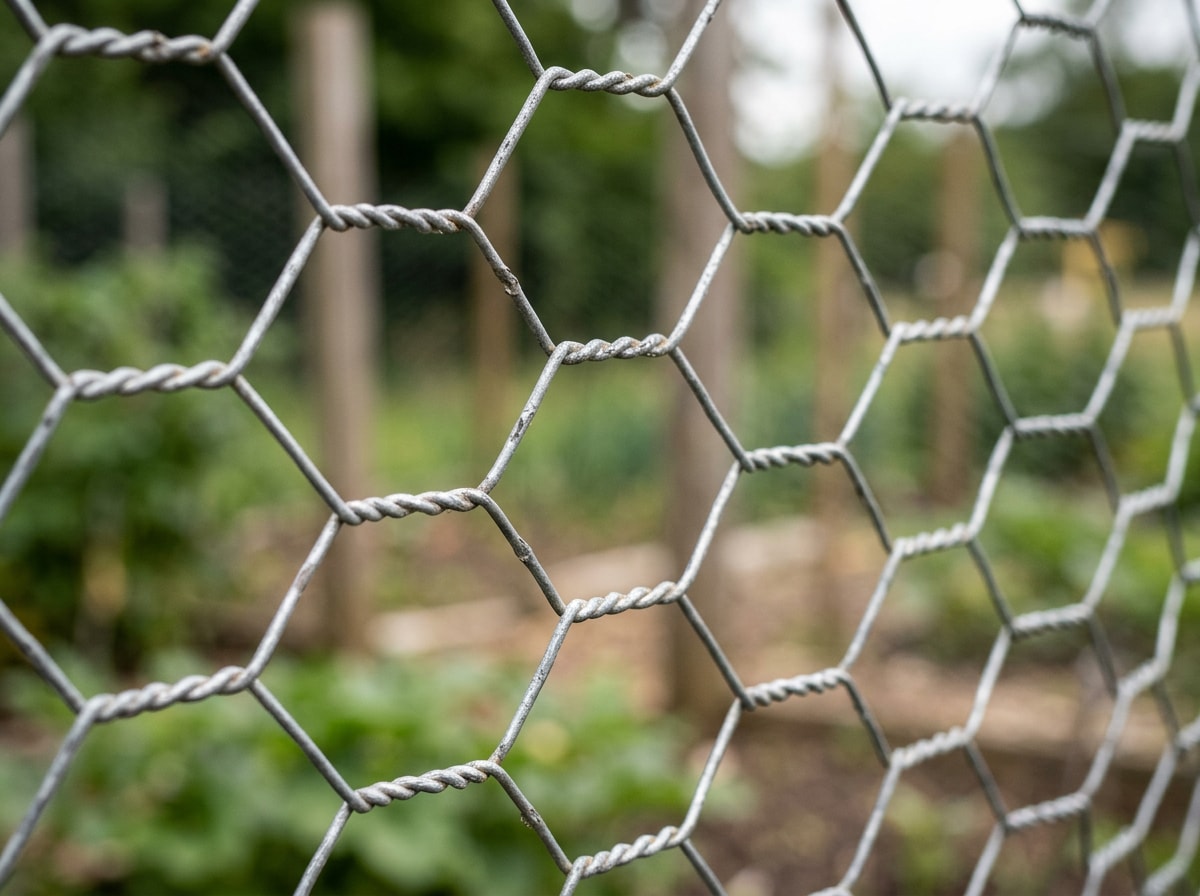
Chicken wire goes by a few names, including poultry netting and poultry wire, but it's always the same basic product.
Chicken wire, also known as poultry wire or poultry netting, is a type of galvanized wire mesh with hexagonal holes.
This lightweight and flexible material provides a basic barrier for keeping animals in and predators out.
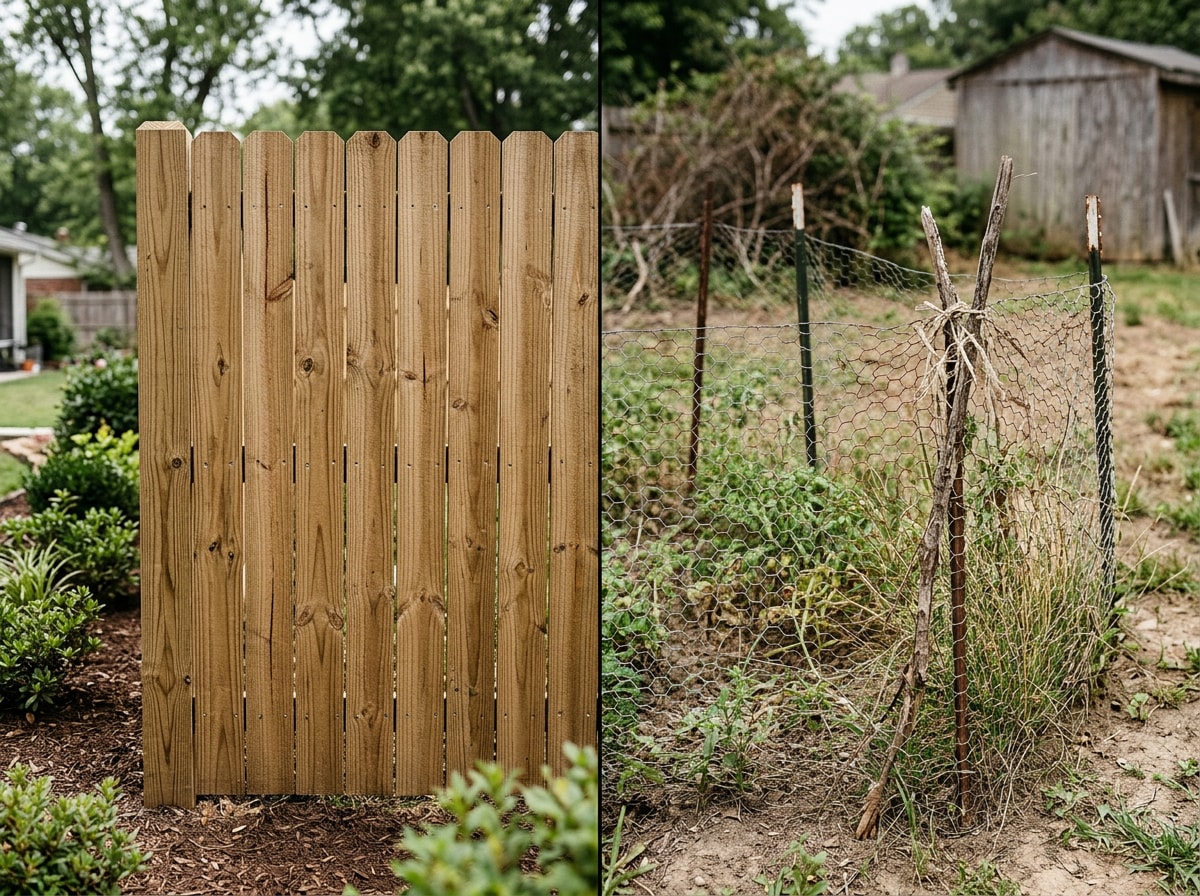
That flexibility is exactly why it's a poor choice for a property-line fence. Installing chicken wire requires only basic tools such as wire cutters and staples or ties, and it can be quickly attached to posts or frames, allowing you to build enclosures or protective barriers with minimal effort. It sags, it dents, and it doesn't hold up to the weight or wind load that a code-compliant fence needs to handle.
Is Chicken Wire Legal for a Fence in Irving, TX?
No. The City of Irving's Land Development Code names chicken wire directly as a prohibited fencing material. The ordinance lists the inspections department fee schedule in section 8B-3 of Irving's Land Development Code for fees, but the material restriction itself is even more specific: rope; string; wire products including but not limited to chicken wire, hog wire, wire fabric, and similar welded or woven wire fabrics; barbs; broken glass; chain; netting; unapproved corrugated metal panels; galvanized sheet metal; plywood; fiberglass panels; or other materials that are not manufactured specifically as fencing materials are all banned.
That last clause is the real test the city applies. It doesn't matter how a product is used elsewhere. If it wasn't manufactured and sold as a fencing product, Irving's code treats it as prohibited, chicken wire included.
This isn't unique to Irving, either. On a statewide level, Texas leaves material choices to local governments rather than regulating them directly. Our team sees this play out across every city we build in, from Grand Prairie to Cedar Hill, and the pattern holds: cities ban chicken wire, hog wire, and similar agricultural mesh for residential yard fences even though state law itself stays silent on the specific product.
Approved vs. Prohibited Fence Materials in Irving
Here's the breakdown our crews reference on every Irving project:
| Approved in Irving | Prohibited in Irving |
|---|---|
| Wrought iron and decorative metal | Chicken wire / poultry netting |
| Fired masonry, concrete, stone | Hog wire and wire fabric |
| Chain link and metal tubing | Rope, string, and loose netting |
| Wood planks (decay-resistant species) | Barbs, broken glass, chain |
| Vinyl or fiberglass composite built for fencing | Plywood, unapproved fiberglass panels |
| Galvanized sheet metal |
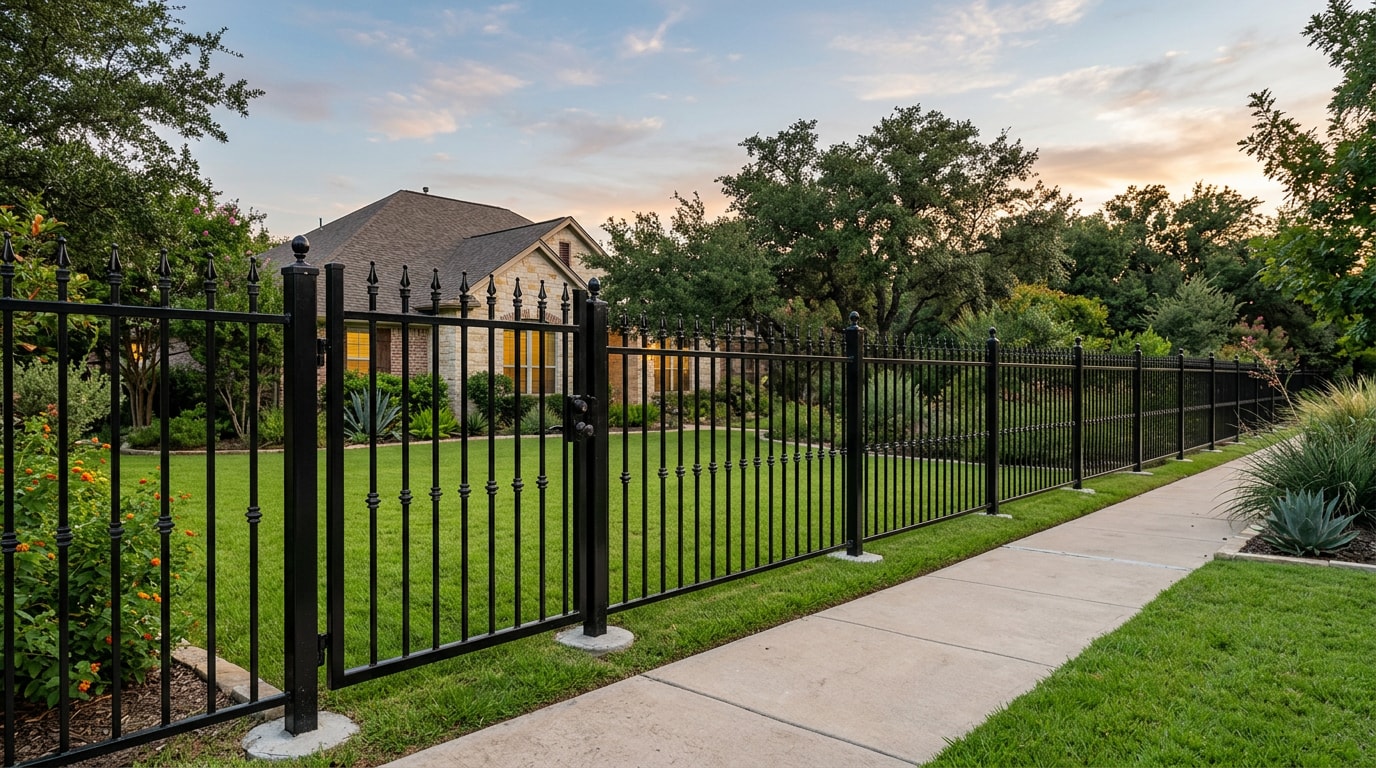
If you're deciding between approved options, our privacy fencing, wrought iron fencing, and chain link fencing pages cover the materials that actually pass Irving inspection. If your goal is a galvanized look for a garden or side-yard enclosure, our galvanized fences page covers manufactured galvanized panel systems, which are built and sold specifically as fencing and are a completely different product from chicken wire.
Irving Fence Permits: What It Actually Costs
A lot of local guides quote a flat $125 fee for Irving fence permits. That number doesn't match the city's own published fee schedule, so we're not going to repeat it here.
First, the permit requirement itself: it is unlawful for any person to construct, repair, replace, or cause to be constructed, repaired, or replaced, a fence or any part of a fence in the city without first obtaining a fence permit.
There's a useful exception most homeowners don't know about. The fee will be waived for permits for repairing, partially replacing, or constructing a new section of residential fence which complies with the requirements of this chapter and all other applicable laws, and that does not exceed fifty (50) linear feet. There's also a separate carve-out for small repairs: fence maintenance or repair such as the replacement of pickets, rails, or posts not constituting entire fence sections is exempt from both permit and fee.
For fences that do require a paid permit, Irving's own consolidated fee schedule bases the charge on linear footage, not a flat rate. A single residential lot new fence runs $0.25 per linear foot with a $50 minimum, a residential replacement runs $0.25 per linear foot with a $40 minimum, and a commercial lot new or required screening fence runs $0.35 per linear foot with a $150 minimum. For a standard 150-foot residential fence, that generally lands closer to $37.50 before the minimum kicks in, which is why most homeowners pay the $50 minimum rather than any larger flat fee.
If you want to see the published numbers directly, Irving's Fee Schedule page is the source of record. The full material and permit ordinance is posted on eCode360's Chapter 15 Fences page for the City of Irving.
Fence Height, Visibility, and Setback Rules in Irving
Materials are only half the equation. Height, transparency, and setback distance all factor into whether a fence passes inspection.
- Front yard fences are capped at four feet, and they must stay at least 50% visible through the structure.
- Posts and gates cannot extend more than six inches above the top of the fence line.
- Fences near certain state highways face extra setback rules.
It is unlawful to build, construct, erect, or reconstruct any buildings, structures or fences within thirty (30) feet of the right-of-way of roads like State Highway Loop 12, State Highway 183, and State Highway 114, and within forty (40) feet of the right-of-way of Interstate Highway 635 and State Highway Spur 348.
Outside of highway frontage, standard setback and fence-location rules apply. No person shall construct a fence, guy wire, brace or any fence post upon or protruding over public property, and a fence shall not interfere with utility lines or normal drainage. If you're planning a masonry or pier-supported fence near a utility easement, note that permission from the city engineer is required to build a masonry fence or any fence supported by piers within a utility easement.
If you're weighing a chain link upgrade against a privacy wood fence for a corner lot, our wood fences team can walk the setback and visibility math with you before you commit to a design.
Property Lines: Confirm Before You Build
Even a fully compliant, code-approved fence can cause a dispute if it sits on the wrong side of the property line.
Texas does not have a specific state statute on fence ownership and maintenance, and a landowner generally has no legal obligation to share in the costs or future maintenance of a fence built by a neighbor on the dividing property line, unless there's a prior agreement to do so. That gap is exactly why a survey matters. A fence built even a foot over the line can turn a simple install into a neighbor dispute that costs far more than the fence itself.
For more background on how Texas handles boundary questions, the Texas State Law Library's Fences & Boundaries guide is a solid starting point, and the Texas A&M AgriLife Extension's overview of Texas fencing laws covers the broader statewide framework in more depth.
Hiring a Local Contractor for Code-Compliant Fencing
Chicken wire might be fine for keeping rabbits out of a garden bed, but it won't pass an Irving fence inspection, and it won't hold up as a long-term property boundary either way. If you're planning a new fence, a replacement, or a repair that needs to stay inside the 50-linear-foot fee waiver, it pays to work with a crew that already knows the ordinance.
We've built fences across the Irving, TX area and the surrounding DFW suburbs, and we handle the permit paperwork as part of the job so you're not guessing at linear-foot math on your own. Browse our recent fencing and outdoor construction projects to see completed work, or visit our fence contractor services page for a full list of materials we install. If you're also tackling other site work nearby, our guide to commercial general contracting in Grand Prairie covers a related project type many Irving-area property owners run into at the same time.
Ready to start? Get a free estimate and we'll confirm your material options, permit cost, and setback requirements before a single post goes in the ground. You can also learn more about our full range of services on the P&S Fencing homepage.
FAQ
What is chicken wire?
Chicken wire is a thin, flexible, galvanized wire mesh woven into a hexagonal pattern. Chicken wire is perfect for lawn and garden fencing, cages, chicken coops and other projects , but it isn't manufactured as a standalone fencing product for yards.
Is chicken wire legal for a fence in Irving, TX?
No. Irving's fence ordinance specifically names chicken wire as a prohibited material, regardless of height, location on the property, or how long it's been up.
Is poultry netting the same as chicken wire?
Yes. Poultry netting is another name for the same product. Chicken wire, also known as 'poultry netting,' is a material that has found its way into various applications beyond its original use in the poultry industry, from gardening to crafting.
Do I need a permit to build a fence in Irving, TX?
In most cases, yes. It is unlawful to construct, repair, replace, or cause to be constructed, repaired, or replaced a fence or any part of a fence in the city without first obtaining a fence permit. Small repairs under 50 linear feet that meet code may qualify for a fee waiver.
How much does a fence permit cost in Irving?
Irving charges by linear foot rather than a flat rate: $0.25 per linear foot (minimum $50) for a new residential fence, $0.25 per linear foot (minimum $40) for a residential replacement, and $0.35 per linear foot (minimum $150) for a commercial or required screening fence.
How far must a fence be from a highway in Irving?
It depends on the road. Fences are restricted within thirty (30) feet of the right-of-way of highways like Loop 12, SH 183, and SH 114, and within forty (40) feet of the right-of-way of Interstate 635 and SH Spur 348.
Who is responsible for fence repair in Texas?
Texas doesn't set a blanket statewide rule. Generally, each property owner maintains the fence on their side of a shared boundary unless a written agreement between neighbors says otherwise.